10 Fashion Rules Every Stylish Man Should Know

The stylish men who consistently look put-together aren’t following more rules than everyone else — they’re following fewer, better ones, and applying them without fail.
Fit beats price, quality beats quantity, and confidence in simple choices beats anxiety over complicated ones. These ten rules cover everything that actually moves the needle, in the order they matter most.

Rule 1: Fit Matters More Than Price, Brand, or Trend
If you take one rule from this entire list, take this one. A $30 shirt that fits your shoulders, chest, and sleeve length correctly will always look better than a $300 shirt that’s a size off in any direction.
Fit is the single biggest visual signal of whether a man dresses well or just buys clothes, and it costs almost nothing to fix — a tailor can take in a waist, hem a pant, or taper a sleeve for a fraction of what most men spend on a single impulse purchase.
The reason this rule sits at the top isn’t opinion — it’s how the eye actually processes clothing.
A well-fitted outfit reads as intentional from across a room before anyone can see the fabric quality or notice the brand. A poorly fitted one reads as careless, no matter how expensive it was. Get a tailor’s number in your phone before you get another new item in your closet.

Rule 2: Buy Fewer, Better Pieces Instead of Filling Space
Wardrobes fail from clutter far more often than they fail from having too little. A closet stuffed with twenty mediocre shirts is worse than a closet with eight great ones, because the mediocre pile creates decision fatigue and dilutes the pieces that actually work.
Every item you own should either match at least three other things in your closet or serve a specific, repeated purpose — otherwise it’s just taking up space and making mornings harder.
This rule also has a financial logic behind it. A quality wool sweater that lasts eight years and gets worn weekly costs less per wear than a synthetic one that pills after a season and gets replaced three times in that same period.
Buying fewer, better pieces isn’t about spending more overall — it’s about spending more intentionally.
Read also: Streetwear vs Classic Style: Which One Fits Your Personality?
Rule 3: Build Around Neutral Colors, Then Add Accents
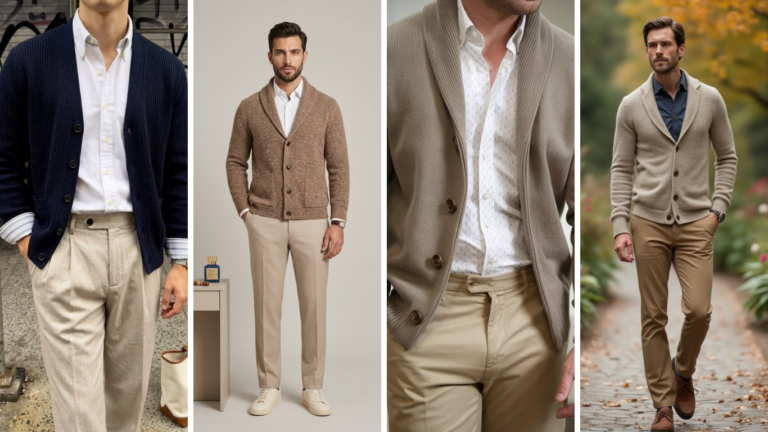
A wardrobe built primarily around navy, gray, white, black, and one or two earth tones will always mix and match more easily than one built around a rotating cast of bold, unrelated colors. Neutrals are the connective tissue of a functional wardrobe — they’re what let you throw any shirt on with any pair of trousers without a second thought.
That doesn’t mean color is off-limits. It means color should show up as an accent — a burgundy sweater, an olive jacket, a patterned tie — layered onto a neutral foundation, rather than as the base of the entire wardrobe. Men who dress well almost always have a “boring” 70% of their closet doing the heavy lifting, with the remaining 30% adding personality on top.
Rule 4: Match Your Formality Level to the Room, Not Just the Calendar
A lot of men dress for the day of the week instead of the actual room they’re walking into, and it shows. “Casual Friday” doesn’t mean the same thing at a law firm as it does at a startup, and “date night” doesn’t mean the same thing at a wine bar as it does at a rooftop lounge. The stylish move is reading the room and dressing one small notch above what’s strictly required, rather than matching the bare minimum.
This rule also protects you from the two most common formality mistakes: showing up underdressed and looking like you didn’t consider the occasion, or showing up so overdressed that you look like you’re trying too hard. A blazer you can remove, a slightly nicer shoe than sneakers, or a collared shirt instead of a tee are all low-effort ways to hedge toward “one notch up” without overcommitting.
Rule 5: Invest in Outerwear and Shoes First
If you’re building a wardrobe with a limited budget, outerwear and shoes should get priority over everything else, because they’re the two categories most visible from a distance and most damaged by cheap materials. A great coat over a mediocre outfit still reads as put-together. A cheap coat over a great outfit undercuts the whole look before anyone even sees what’s underneath it.
The same logic applies to shoes. Scuffed, cheap-looking footwear is one of the fastest ways to undo an otherwise solid outfit, while a genuinely good pair of leather shoes or boots elevates even a simple jeans-and-tee combination. If your budget forces a choice between a new shirt and better shoes, choose the shoes almost every time.
Rule 6: Texture and Layering Do More Than Extra Colors
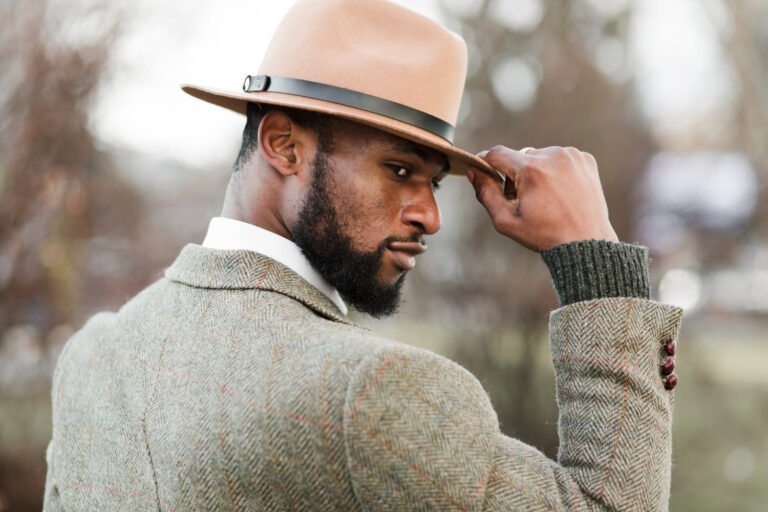
Men who feel like their outfits look “flat” are almost always missing texture, not color. A monochrome outfit built from a smooth cotton shirt, a knit sweater, and a textured wool jacket has visual depth even without a single additional color in the mix. Corduroy, tweed, suede, cable knits, and waxed cotton all add dimension that a flat palette of solid colors can’t achieve on its own.
Layering serves the same function. Two or three thoughtfully chosen layers — a shirt under a sweater under a jacket, for example — almost always look more intentional than one single piece worn alone, even in warmer months where you’re layering lighter fabrics. This is one of the fastest upgrades available to men who feel stuck in a style rut: before reaching for a new color, reach for a new texture or an extra layer instead.
Read also: How to Build a Signature Style as a Man (Step-by-Step Guide)
Rule 7: Grooming Is Part of the Outfit, Not Separate From It
The best clothing in the world can’t compensate for grooming that looks neglected. A sharp haircut, a well-maintained beard or clean shave, decent skincare, and clean, trimmed nails all factor into how “put together” a man reads before anyone even registers what he’s wearing. Stylists and photographers know this well — it’s why every red carpet look includes as much grooming prep as clothing prep.
This doesn’t mean an elaborate routine is required. It means treating grooming as a non-negotiable part of the same system as your clothes, rather than an afterthought. A five-minute daily habit — moisturizer, a trimmed beard line, product in your hair — closes the gap between “wearing nice clothes” and “looking genuinely put together” faster than almost any wardrobe purchase.
Rule 8: Accessories Should Finish a Look, Not Carry It
A great watch, a good belt, or a well-chosen bag can genuinely elevate an outfit — but they can’t save a bad one. The mistake a lot of men make is over-relying on accessories to compensate for weak fit or a disorganized color palette, when accessories are only meant to be the final five percent of a look that’s already working on its own.
The fix is simple: build the outfit first — fit, color, formality level — and only then decide what accessories genuinely add to it. If you find yourself piling on jewelry, a statement bag, and a loud watch all at once, that’s usually a sign the base outfit needs attention more than the accessories do.
Rule 9: Confidence Reads as Style, Even in Simple Outfits
Two men can wear the exact same plain white T-shirt and jeans, and one will look effortlessly stylish while the other looks like he just didn’t try. The difference is almost never the clothing itself — it’s posture, fit, and the visible confidence of someone who isn’t second-guessing what they put on. Fidgeting with an outfit, tugging at sleeves, or visibly checking your reflection all signal discomfort, and discomfort reads as badly as an actual style mistake.
This is why the men on every “best dressed” list share one trait beyond good clothing: they wear their outfits like they aren’t thinking about them. That’s a skill, not a personality trait, and it’s built the same way any other skill is — by repeating simple, well-fitted outfits until wearing them stops feeling like a performance.
Rule 10: Dress for the Body You Have, Not the One in a Photo
The single fastest way to derail an otherwise solid style is copying an outfit built for a completely different body type without adjusting the proportions. A slouchy oversized fit that looks intentional on a tall, lean frame can look sloppy on a shorter or broader one, and a slim-cut suit that looks sharp on one build can look restrictive on another. Style advice photographed on one specific body type is a starting point, not a literal instruction manual.
Knowing your own proportions — shoulder width, torso length, leg length relative to your height — and adjusting silhouettes accordingly is what separates men who dress well consistently from men who occasionally nail a look by accident. This rule underlies almost every other one on this list: fit, layering, and formality all depend on understanding your specific frame rather than someone else’s.
Why These Rules Work Better Than Chasing Trends
It’s worth explaining why a fixed set of ten rules outperforms constantly updating your wardrobe based on whatever’s trending. Trends are, by definition, temporary — they’re built to cycle out and get replaced, which means a wardrobe built entirely around them requires constant reinvestment just to look current. Rules like fit, neutral foundations, and proportion don’t expire the same way, because they’re based on how the eye reads clothing and the body, not on what’s popular in a given season.
This is also why the best-dressed men across completely different decades — a well-dressed man from the 1960s and a well-dressed man today — share more in common than you’d expect. The specific silhouettes and fabrics have changed, but the underlying rules haven’t: fit still matters more than price, neutral colors still anchor a functional wardrobe, and confidence still reads as style regardless of the era. Learning the rules instead of chasing the trends is what allows a man’s style to survive fashion cycles instead of resetting every time the algorithm shifts to something new.
There’s also a practical time-and-money argument here. A man who understands these ten rules can walk into nearly any store, in any year, and build a functional outfit from what’s available, because he’s evaluating pieces against fixed principles rather than trying to remember which specific items are “in” this season. That adaptability is worth more long-term than owning whatever’s currently trending, because trends fade and principles don’t.
How Long Does It Take to Actually Master These Rules?
Realistically, most men can absorb and start applying these ten rules within a few weeks, simply because they’re principles rather than a wardrobe to be purchased overnight. Fit and grooming can be corrected almost immediately — a trip to a tailor and a slightly more consistent grooming routine change how an outfit reads within days, not months. Building out a genuinely well-curated, neutral-based wardrobe with the right outerwear and shoe investments takes longer, usually somewhere between three and twelve months depending on budget, since quality pieces are worth waiting and saving for rather than rushing.
The men who look effortlessly put-together didn’t arrive there overnight either — they simply front-loaded the learning curve early and then spent years refining, rather than starting from scratch. Treat these ten rules as a permanent operating system for how you evaluate every future purchase, not a one-time checklist, and the payoff compounds every year instead of resetting each season.
Fashion Rules: Do This / Not That
| Do This | Not That |
|---|---|
| Get key pieces tailored to fit your exact frame | Wear things off-the-rack regardless of fit |
| Build a wardrobe around 3-4 neutral colors | Buy pieces in isolated, unrelated colors |
| Invest more in outerwear and shoes | Spend your whole budget on shirts and accessories |
| Layer textures to add depth | Rely only on flat color to create visual interest |
| Dress one notch above the minimum for the room | Match the bare minimum formality every time |
| Treat grooming as part of the outfit | Assume clothes alone carry the whole look |
Common Mistakes Men Make With These Rules
- Following the rules out of order. Buying accessories before nailing fit, or chasing color before establishing neutrals, wastes money and rarely produces a cohesive result.
- Assuming expensive automatically means well-fitted. Price and fit are unrelated. Plenty of expensive pieces are bought in the wrong size and never altered.
- Treating grooming as optional. A sharp outfit paired with neglected grooming still reads as unfinished, regardless of how much the clothes cost.
- Ignoring proportions when copying outfits from social media or magazines. What works on the model’s frame needs adjustment for yours — it’s rarely a direct copy-paste.
- Overloading on accessories to fix a weak outfit. More jewelry or a flashier watch won’t compensate for poor fit or a disorganized color palette.
- Waiting for a special occasion to apply these rules. Style habits — good fit, grooming, neutral basics — should be the daily default, not something reserved for big events.
FAQ
What is the number one rule of men’s fashion? Fit matters more than anything else — more than price, brand name, or how trendy a piece is. A well-fitted, inexpensive outfit will always outperform an expensive, poorly fitted one.
Do these fashion rules apply to casual outfits too, or just formal wear? They apply across the board. Fit, neutral color foundations, texture, and grooming all matter just as much in a T-shirt-and-jeans outfit as they do in a suit — the principles don’t change, only the specific pieces do.
How can I tell if my clothes actually fit correctly? Shoulders on a jacket or shirt should end where your shoulder actually ends, sleeves should hit the wrist bone, trousers shouldn’t pool excessively at the shoe, and nothing should pull or gape when you move naturally. If you’re unsure, a tailor can assess fit in under five minutes.
Is it possible to follow these rules on a tight budget? Yes. These rules are about principles, not price — a tight, neutral-based wardrobe of affordable, well-fitted pieces will always outperform an expensive wardrobe with no cohesive plan behind it.
Read also: