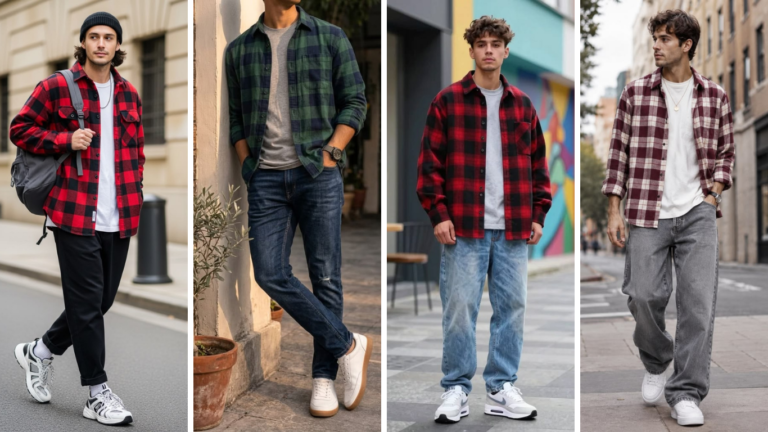
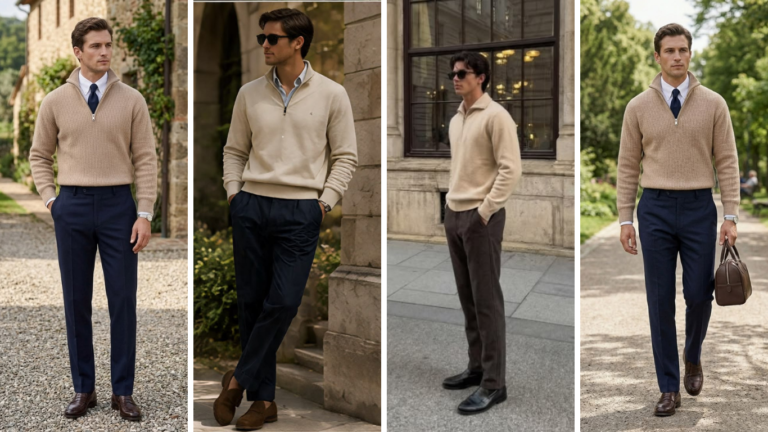
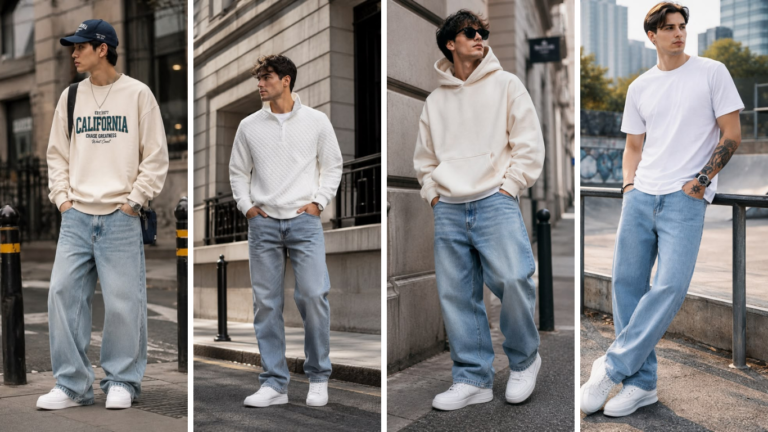
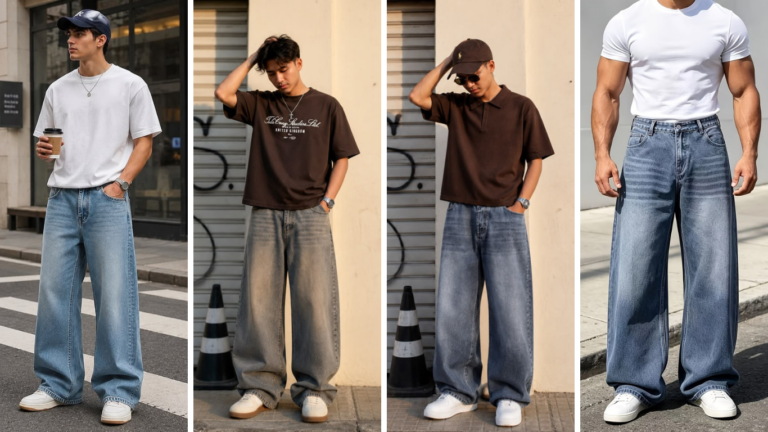
Minimalist Wardrobe for Men: Dress Better With Less
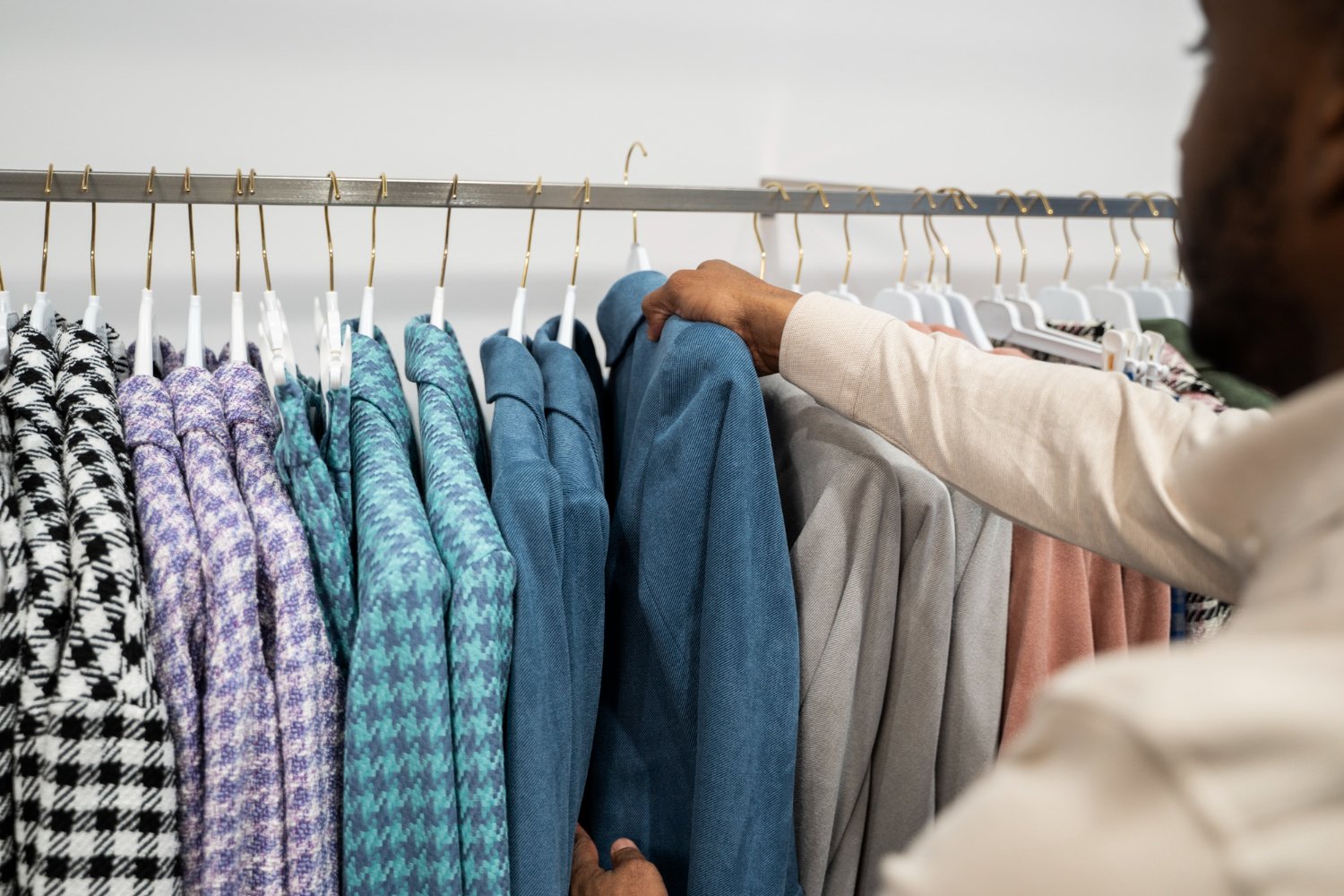
A minimalist wardrobe works by owning fewer, higher-quality pieces in a tight color palette that all mix and match with each other, so every item earns its place instead of sitting unworn.
Done right, it doesn’t mean dressing boring — it means removing the noise so fit, fabric, and small details actually get noticed.

Most men who try it end up looking more put-together, not less, because the daily decision of “what to wear” gets radically simpler.
What Actually Makes a Wardrobe “Minimalist”?
A minimalist wardrobe isn’t defined by a specific number of items or a rule about only owning black and white — it’s defined by intentionality. Every piece is chosen because it serves a clear purpose and works with multiple other pieces already in the closet.
The opposite of minimalism isn’t “owning a lot of clothes” — it’s owning clothes that don’t connect to anything else, sitting unused because they only pair with one specific outfit or don’t quite fit right.
This distinction matters because a lot of men misunderstand minimalism as deprivation, when it’s really closer to editing.

A minimalist wardrobe can absolutely include color, texture, and personality — it just requires each piece to justify its place through versatility and quality rather than being an isolated impulse buy.
The goal is a closet where you could grab almost anything and know it’ll work with something else already hanging next to it.
Read also: Travel Outfit Ideas for Men: Comfortable Airport Looks
Why Do Fewer Clothes Actually Lead to Better Style?
This sounds counterintuitive until you understand the mechanism behind it. A wardrobe stuffed with unrelated pieces creates decision fatigue every morning — too many options that don’t clearly work together forces constant, low-grade problem-solving just to get dressed.
A tightly edited wardrobe removes that friction almost entirely, because the pieces were chosen specifically to interconnect, which means nearly every combination works without much thought.
There’s also a quality argument built into minimalism by design. When you’re not spreading your clothing budget across dozens of items, you can afford to spend more per piece, which usually means better fabric, better construction, and better fit — all of which read as more “put together” than a larger wardrobe of mediocre pieces ever could.
Fewer, better clothes photograph and wear better than more, cheaper ones, almost without exception.
Finally, minimalism forces genuine self-knowledge. You can’t build an effective small wardrobe without understanding your own coloring, proportions, and lifestyle first, because there’s no room for pieces that don’t clearly serve a purpose.
That process of narrowing down tends to produce a much clearer sense of personal style than an unlimited, unedited wardrobe ever does.
How Many Pieces Do You Actually Need in a Minimalist Wardrobe?
There’s no universal magic number, but a genuinely functional minimalist wardrobe for most men lands somewhere between 30 and 40 total pieces, including outerwear and shoes — enough to cover a full range of weather and occasions without excess. Here’s a realistic breakdown:
- 5-6 tops for layering or standalone wear (T-shirts, long-sleeve tees)
- 4-5 collared shirts (a couple of oxford button-downs, one or two casual options)
- 3-4 sweaters or knitwear pieces
- 3-4 pairs of trousers (jeans, chinos, one tailored pair)
- 2-3 jackets (one casual, one blazer, one heavier coat for cold weather)
- 2-3 pairs of shoes (one everyday sneaker or loafer, one boot, one dressier shoe)
- A handful of essentials: belt, a couple of watches or accessories, undergarments and socks handled separately
This isn’t a rigid checklist — climate, lifestyle, and job all shift the exact numbers — but it illustrates the core principle: fewer categories, filled deliberately, rather than an unlimited wardrobe where most categories are overstuffed and underused.
What Colors Should Anchor a Minimalist Wardrobe?
Color discipline is the single most important mechanism that makes minimalism actually function. Build around 2-3 neutral base colors — navy, gray, and white are the most versatile combination — and add one or two accent colors that you genuinely like wearing, such as olive, burgundy, or camel. Every piece you buy from that point forward should work with at least two of those colors, ideally more.
This tight palette is what allows a small number of pieces to generate a large number of outfit combinations. A wardrobe with five tops and five bottoms, all built around the same 3-4 colors, produces dozens of workable combinations. The same ten items in ten unrelated colors would produce a fraction of that number, since most pairings simply wouldn’t work visually. Minimalism isn’t really about owning less — it’s about owning less that’s been engineered to combine more.
Which Fabrics and Materials Matter Most in a Small Wardrobe?
Fabric quality carries more weight in a minimalist wardrobe than in a larger one, because there’s less room to hide a mediocre piece among dozens of others — every item gets worn frequently, which means every item needs to hold up to repeated wear and washing. Prioritize natural fibers wherever possible: cotton, wool, linen, and cashmere all age better, breathe better, and photograph better than synthetic blends.
This also means being pickier about construction, not just material. Check seams, buttons, and stitching before buying — a well-made piece in a smaller wardrobe gets worn dozens of times a year, so flaws that might go unnoticed in an occasional-wear item become obvious fast in a piece worn weekly. Spending slightly more upfront on genuinely well-constructed basics pays off far more in a minimalist wardrobe than it would in a larger, less frequently rotated one.
How Do You Actually Downsize an Existing, Cluttered Wardrobe?
Transitioning to minimalism usually means editing down an existing closet rather than starting from a blank slate, and doing this well requires more than just donating whatever looks old. Start by pulling everything out and sorting into three piles: worn regularly, worn occasionally, and untouched for six months or longer.
The untouched pile is usually the easiest cut — if something hasn’t been worn in six months outside of a genuine seasonal reason, it’s very unlikely to become a regular piece going forward. The “worn occasionally” pile requires more honesty: ask whether each piece is occasional because it serves a rare but real purpose (a suit for weddings, heavy winter gear), or because it doesn’t actually fit well into your color palette and formulas. Keep the former, cut the latter.
Once the closet is down to genuinely well-used pieces, look for gaps — categories that are now underrepresented because you cut too aggressively, or overlaps where you own three nearly identical items and only need one. This process usually takes a few passes over a couple of weeks rather than a single afternoon, since it’s as much about learning your actual patterns as it is about physically removing clothes.
Does a Minimalist Wardrobe Actually Save Money?
In most cases, yes — but not always immediately, and not in the way people initially expect. A minimalist approach typically shifts spending from frequent, smaller purchases to less frequent, larger ones, since the whole model depends on higher quality per piece.
The savings show up over time: fewer total purchases, longer lifespan per item, and less money wasted on pieces that never got worn because they didn’t fit the existing wardrobe system.
The financial case is strongest when you calculate cost-per-wear rather than upfront price. A $150 sweater worn 60 times over three years costs $2.50 per wear. A $40 sweater worn 8 times before it pills, stretches, or gets replaced costs $5 per wear — nearly double, despite costing less upfront.
Minimalism, done properly, optimizes for this metric specifically, which is why it tends to be more economical over a multi-year timeline even though individual purchases often cost more.
What Are the Common Pitfalls of Trying to Go Minimalist?
A few predictable mistakes derail most attempts at building a minimalist wardrobe, and knowing them ahead of time makes the transition much smoother.
The first is confusing minimalism with monotony — assuming the entire wardrobe needs to be black, white, and gray with zero personality. This often produces a wardrobe that’s technically edited but genuinely boring to wear, which undermines the whole point. A well-built minimalist wardrobe still has personality; it’s just concentrated into a smaller, more intentional set of choices.
The second is cutting too aggressively without a clear system to replace what was removed. Donating half your closet without first establishing a color palette and outfit formulas often leaves you with a smaller wardrobe that still doesn’t combine well, which defeats the purpose entirely.
The third is treating minimalism as a one-time event rather than an ongoing discipline. Wardrobes naturally accumulate clutter over time through gifts, impulse buys, and pieces that seemed like a good idea in the moment. Revisiting your closet every six months or so, using the same sorting process from the downsizing step above, keeps a minimalist wardrobe from slowly drifting back toward clutter.
How Does a Minimalist Wardrobe Change Across Seasons?
One question that trips up a lot of men new to this approach: does minimalism mean owning almost nothing for every season, or does the wardrobe genuinely need to flex with the weather? The honest answer is that a minimalist wardrobe still needs to account for real seasonal changes — the discipline is in avoiding redundant, single-use pieces, not in refusing to own seasonal items at all.
A practical way to handle this is layering-based rather than category-based. Instead of owning entirely separate summer and winter wardrobes, build a core set of pieces that work across seasons through layering and supplement with a small number of season-specific items only where genuinely necessary — a heavier coat for real cold, lighter linen shirts for genuine heat.
A wool sweater over a T-shirt handles a cool fall day; the same T-shirt on its own handles summer; the same sweater under a coat handles winter. That’s three seasons covered by two pieces, layered differently, rather than three separate season-specific tops sitting mostly unused for nine months of the year.
This approach does mean your “30 to 40 total pieces” figure needs a bit of seasonal flexibility built in — a heavier coat and a couple of warm-weather-only pieces might push the number slightly higher in practice, but the underlying discipline stays the same: every seasonal addition still needs to work with the existing neutral palette and pair with multiple other pieces, rather than being an isolated, single-use item that only works with itself.
How Do You Know When Your Minimalist Wardrobe Is Actually Working?
A few honest signals tell you whether your edited wardrobe is functioning the way it’s supposed to, versus just being smaller for its own sake.
Getting dressed should feel faster, not harder. If you’re still standing in front of a smaller closet unsure what goes together, the color palette or piece selection isn’t tight enough yet — the whole point of minimalism is removing decision fatigue, not just removing volume.
You should be able to name what almost everything pairs with. Pick five random items from your closet and see if you can immediately name two or three other pieces each one works with. If you’re drawing a blank on more than a couple of items, those pieces likely don’t belong in a genuinely minimalist system.
Your “rarely worn” pile should stay small. A well-built minimalist wardrobe naturally keeps this category tiny, since every piece was chosen specifically because it integrates with the rest. If items keep drifting into rarely-worn status, it’s a sign new purchases aren’t being filtered carefully enough against the existing palette and formulas.
You should feel less anxious about looking wrong for an occasion, not more. A common fear about owning less is being caught without the “right” outfit for a specific situation. In practice, a well-built minimalist wardrobe usually reduces this anxiety, since the core pieces are versatile enough to be dressed up or down as needed, rather than requiring a highly specific, rarely-used item for every possible scenario.
If any of these signals are missing, it’s usually not a sign that minimalism doesn’t work for you personally — it’s a sign the underlying system (color palette, piece selection, seasonal layering) needs another round of refinement before the benefits fully show up.
Minimalist Wardrobe: Do This / Not That
| Do This | Not That |
|---|---|
| Build around 2-3 neutral base colors | Buy pieces in random, unrelated colors |
| Choose fewer, higher-quality pieces | Fill space with cheap, low-quality items |
| Check that new pieces pair with 3+ existing items | Buy something because it looks good in isolation |
| Prioritize natural, durable fabrics | Choose synthetic blends that wear out fast |
| Revisit and edit your closet every 6 months | Let clutter accumulate indefinitely |
| Add personality through 1-2 accent colors or textures | Assume minimalism means only black, white, and gray |
Read also: The Difference Between Slim Fit, Regular Fit, and Tailored Fit
Common Mistakes Men Make Building a Minimalist Wardrobe
- Downsizing without a color system in place first. Cutting clothes without establishing which colors and pieces should anchor the new, smaller wardrobe often leaves gaps that don’t combine well.
- Confusing “fewer items” with “cheaper items.” Minimalism works because fewer purchases allow for higher quality per item — buying fewer but still low-quality pieces undermines the entire strategy.
- Treating minimalism as a personality trait rather than a system. It’s a wardrobe strategy, not an aesthetic you either “are” or “aren’t” — anyone can apply the underlying principles regardless of their personal style.
- Over-editing into monotony. Cutting every accent color and texture in pursuit of simplicity often produces a wardrobe that’s technically minimal but genuinely uninteresting to wear.
- Never revisiting the wardrobe after the initial edit. Minimalism requires periodic maintenance, since new purchases and gifts naturally accumulate clutter over time if left unchecked.
- Ignoring lifestyle needs in pursuit of a smaller number. A hard number target that doesn’t account for climate, job requirements, or specific activities often leads to gaps that get filled with impulse purchases later.
FAQ
How many clothing items should a minimalist wardrobe actually have? There’s no fixed number, but a functional minimalist wardrobe for most men lands between 30 and 40 total pieces, including outerwear and shoes, though this varies based on climate and lifestyle needs.
Is a minimalist wardrobe boring? It doesn’t have to be. A well-built minimalist wardrobe still includes personality through accent colors, textures, and a couple of standout pieces — the difference is that everything is chosen deliberately rather than accumulated randomly.
Does building a minimalist wardrobe cost more money upfront? Often yes, since the strategy depends on buying fewer, higher-quality pieces rather than many cheaper ones. That upfront cost typically evens out or improves over time when measured by cost-per-wear rather than sticker price.
How do I start transitioning to a minimalist wardrobe without getting rid of everything I own? Start by sorting your current closet into worn regularly, worn occasionally, and untouched for six months or more. Cut the untouched pile first, then establish a tight color palette before deciding what else to remove, rather than downsizing everything at once without a plan.
Read also: