Best Shoes for Walking All Day: How to Choose Footwear That Lasts the Distance
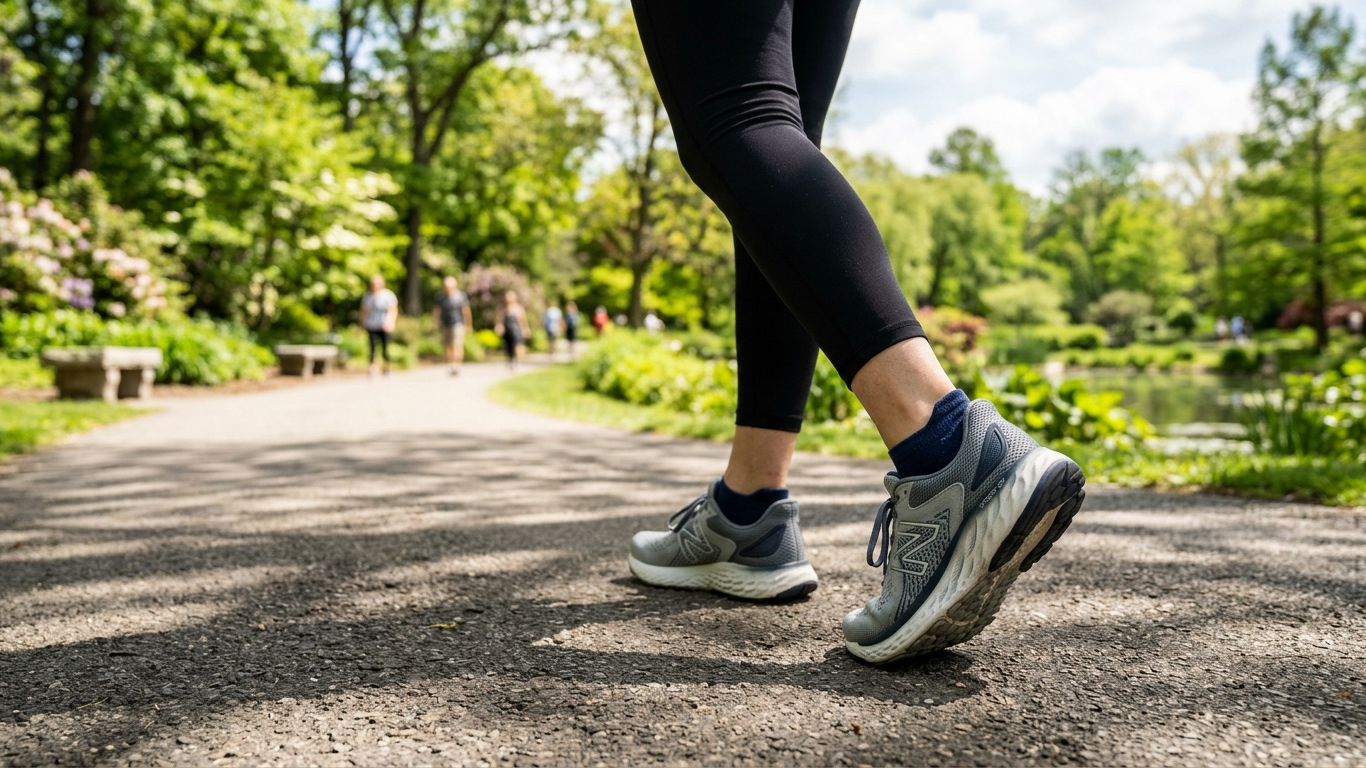
The best shoes for walking all day are lightweight, well cushioned, stable, and shaped to fit your foot with room for slight swelling.
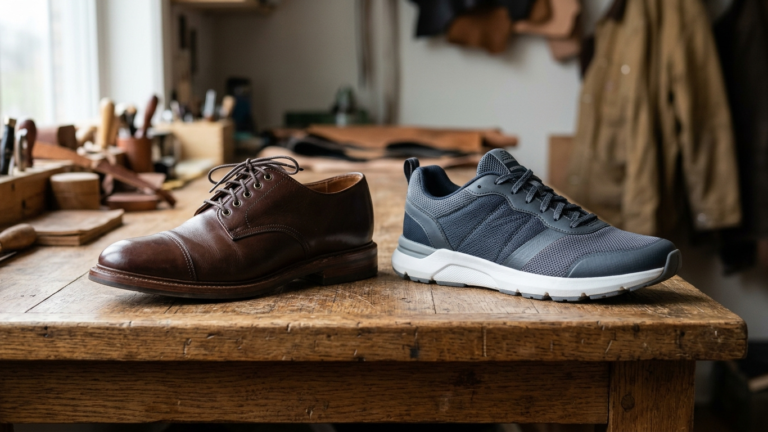
For most men that means a cushioned walking shoe or a supportive everyday sneaker. Dressier options exist too, but they work only if they have a flexible, shock-absorbing sole and a roomy enough fit.

Walking all day is different from a short stroll or a workout.
Your feet hit the ground thousands of times, they swell as the hours pass, and small problems such as a tight toe box or a slipping heel turn into blisters and aching arches.
This guide explains which types of shoes work best, what features to look for, and how to match footwear to your day, whether you are commuting, traveling, working on your feet, or exploring a city.
What Makes a Shoe Good for All-Day Walking?
Look for these qualities, in roughly this order of importance:
- A fit that allows for swelling. Feet often expand slightly over a long day, so shoes that feel perfect in the morning can feel tight by evening.
- Shock absorption. Cushioning in the midsole (the layer between your foot and the outsole) reduces the impact of repeated steps on hard surfaces.
- Stability. A firm heel counter and a sole that does not twist easily keep your foot steady and reduce fatigue.
- Forefoot flexibility. The shoe should bend at the ball of the foot, where your foot naturally flexes when you push off.
- Low to moderate weight. Lighter shoes tire your legs less, as long as support is not sacrificed.
- Breathability. Moisture and heat cause rubbing and discomfort.
- A grippy outsole. Good traction matters on wet pavement, tiled floors, and smooth surfaces.
None of these features works alone. A very soft shoe with a narrow toe box will still hurt, and a well-fitting shoe with a hard, thin sole will feel harsh on concrete.
Types of Shoes for Walking All Day
Dedicated Walking Shoes
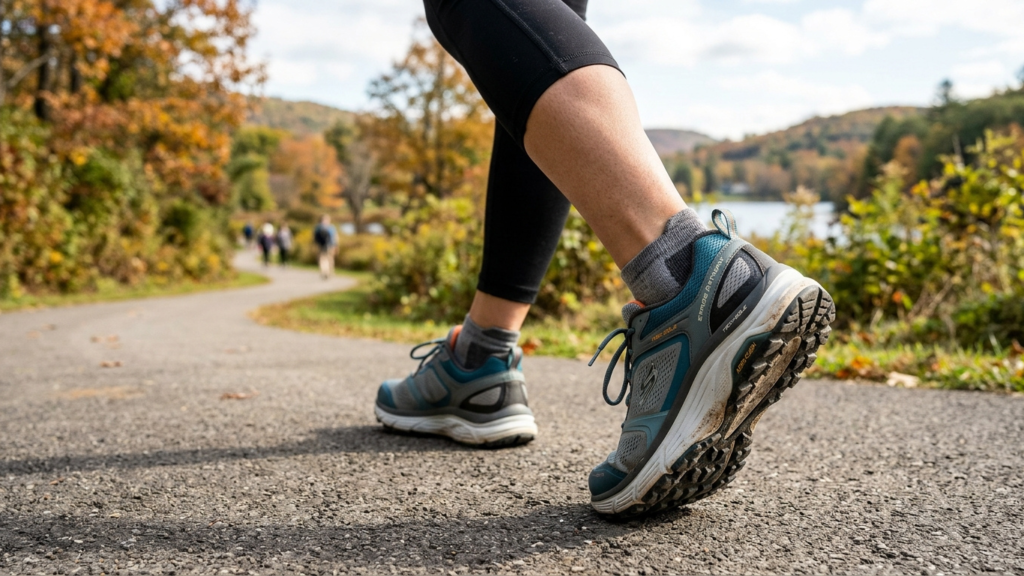
Walking shoes are designed around the way people walk: heel first, then rolling forward through the step. They usually have a cushioned midsole, a flexible forefoot, and a stable heel. If your priority is comfort over style, this is the most reliable category.
Best for: long walks, sightseeing, errands, travel days.
Watch for: some styles look sporty and may not suit formal settings.
Cushioned Running-Style Sneakers

Many men choose running shoes for everyday walking because they offer plenty of cushioning and a lightweight build. They can be an excellent option, although some are designed for forward motion and speed and may feel too soft or unstable for certain people.
Best for: men who like a soft, springy feel and walk on hard surfaces.
Watch for: very soft or tall foam soles can feel unsteady, and cushioning wears down with use.
Supportive Casual Sneakers
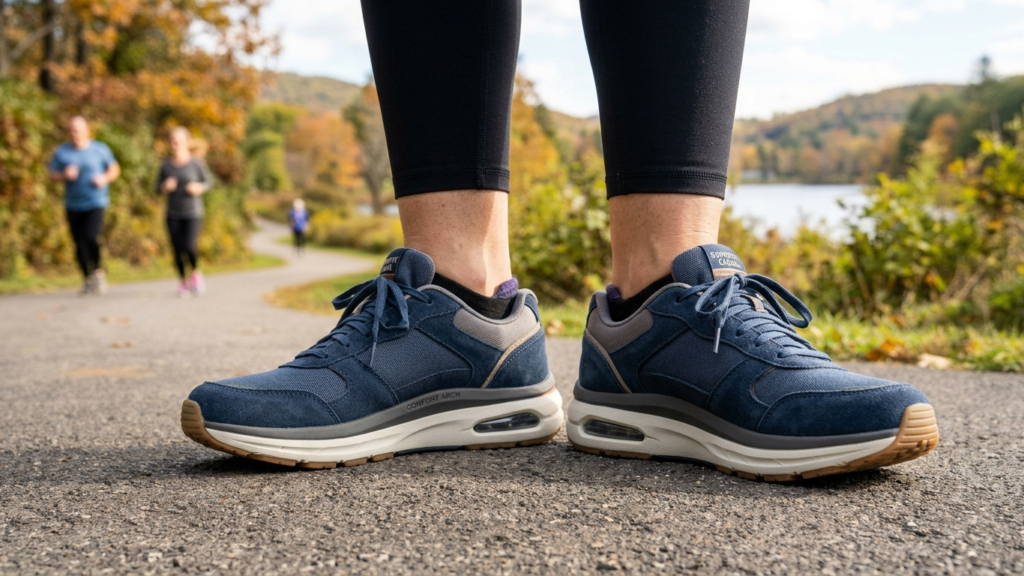
Leather or canvas sneakers with a contoured footbed and cushioned sole work well for general daily wear. They look cleaner than athletic styles and pair easily with chinos or jeans.
Best for: city days, casual workplaces, light to moderate walking.
Watch for: flat, fashion-focused sneakers with thin soles may offer little support. Check the insole and midsole before assuming they will be comfortable for hours.
Comfort Dress Shoes and Hybrid Shoes
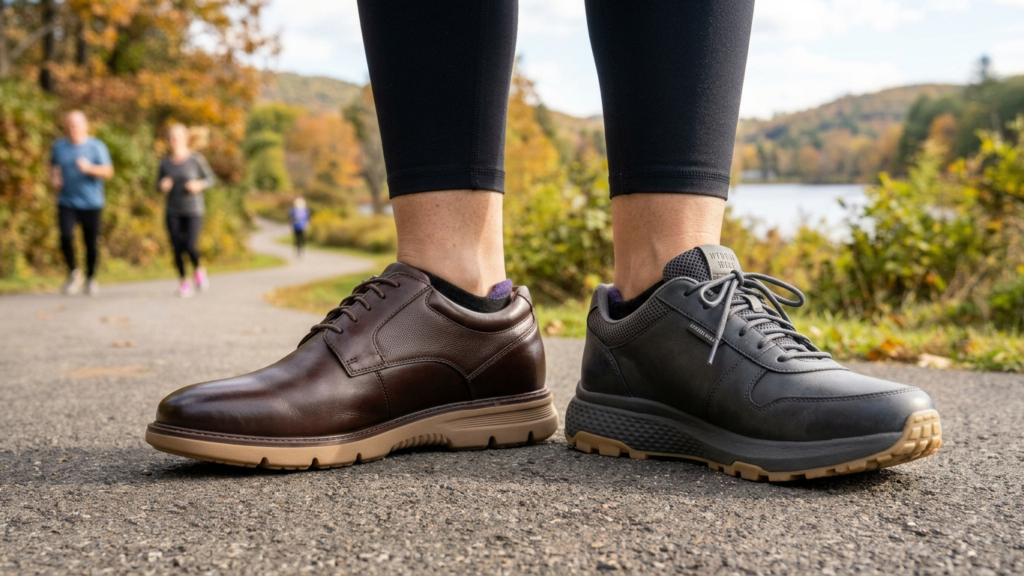
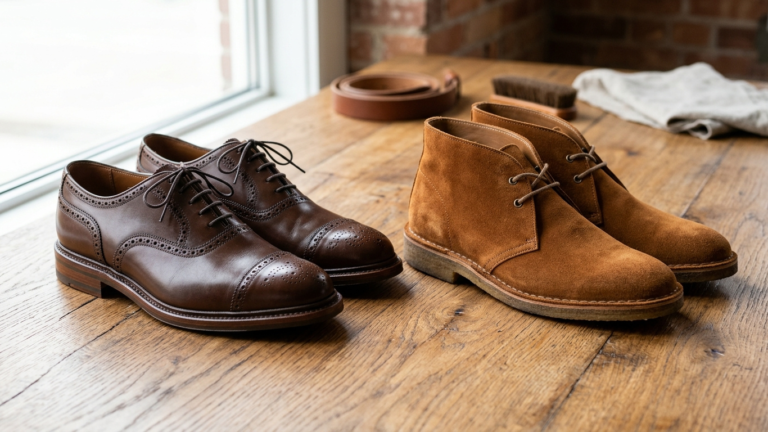
If you need to look formal but still walk a lot, look for derbies, loafers, or dress sneakers with a cushioned insole, a flexible rubber sole, and a rounded toe shape. Some brands add comfort technology to classic styles.
Best for: office days with commuting, business travel.
Watch for: narrow lasts and rigid leather soles can become tiring over long distances.
Walking Boots and Trail Shoes
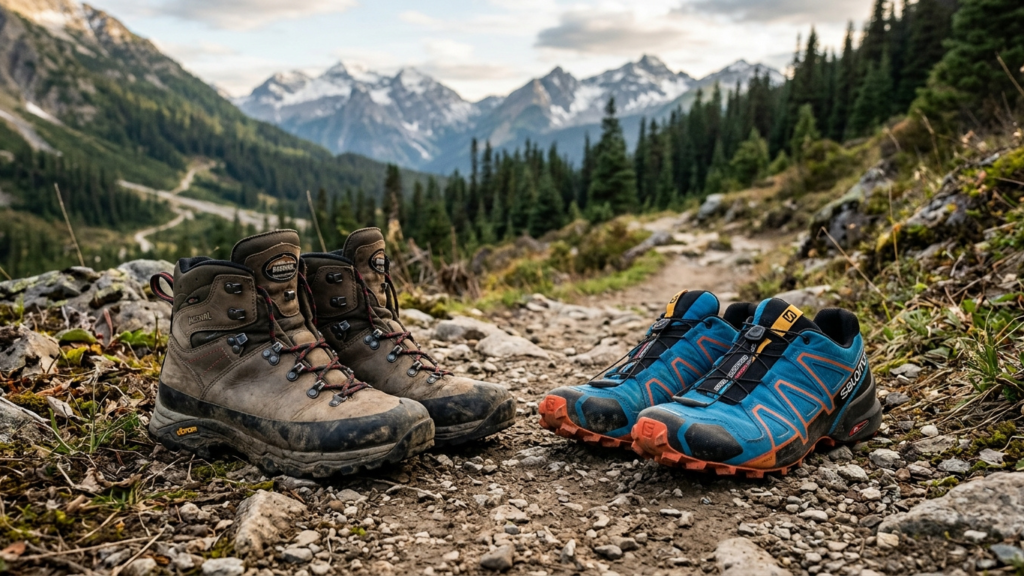
For uneven ground, wet weather, or longer outdoor walks, trail shoes or light hiking boots offer extra grip and protection. They are heavier but more stable.
Best for: rough terrain, rain, rural walking.
Watch for: extra weight and heat can be unnecessary on city pavement.
Sandals
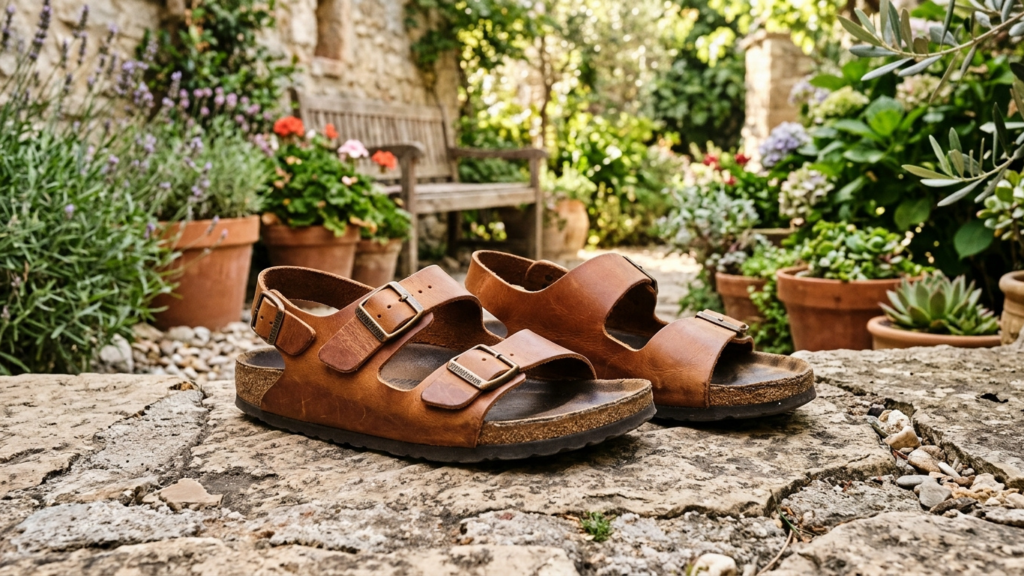
Supportive sandals with a contoured footbed and secure straps can work in hot weather and for lighter walking. Flat, flimsy flip-flops generally do not provide enough support for long days.
Best for: summer, beach holidays, short to moderate walking.
Watch for: lack of toe protection and limited arch support in many models.
Choosing Shoes by Your Day
Different days put different demands on your feet. Use this table to match your routine to the right footwear.
| Your day | Recommended type | Key features to prioritize |
|---|---|---|
| City sightseeing or travel | Walking shoes or cushioned sneakers | Lightweight, cushioned, breathable, room for swelling |
| Commuting and office work | Hybrid dress shoes or leather sneakers | Flexible sole, smooth lining, roomy toe box |
| Standing at work most of the day | Supportive shoes with a stable midsole | Firm cushioning, supportive footbed, slip-resistant outsole |
| Mixed indoor and outdoor errands | Casual sneakers or trail-inspired walking shoes | Good traction, durable outsole, easy to clean |
| Wet or cold weather | Water-resistant sneakers or light boots | Water resistance, grip, space for thicker socks |
| Hot weather | Mesh sneakers or supportive sandals | Airflow, moisture-wicking lining, lightweight |
Walking vs. Standing: Small Differences That Matter
Many men use the same shoes for walking and standing, but the demands are not identical.
- Walking all day requires a shoe that cushions repeated impact and flexes smoothly through each step.
- Standing all day puts constant pressure on the same areas of the foot, so support, a steady platform, and a supportive insole matter more than flexibility.
If your day includes both, choose a shoe with moderate cushioning, a stable base, and a supportive footbed. Avoid extremes such as very soft, tall foam soles or very thin, rigid ones.
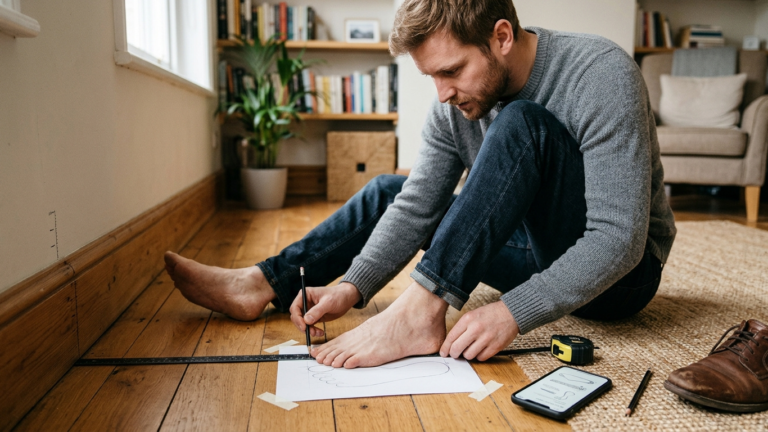
How to Check Fit for All-Day Wear
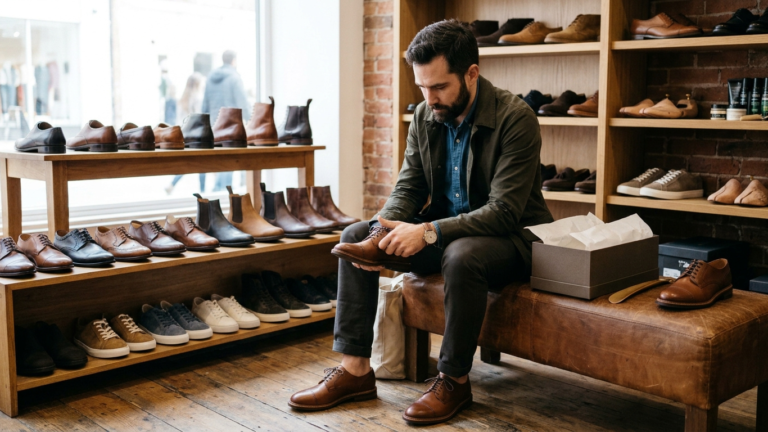
Fit is the single biggest factor in whether a shoe will last through a long day.
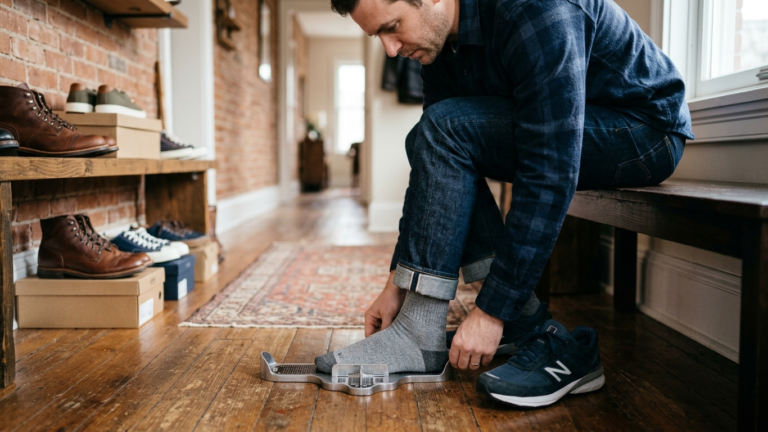
- Try shoes in the afternoon or evening, when your feet are slightly larger.
- Wear the socks you will use. Thin dress socks and cushioned walking socks change the fit.
- Leave about a thumb’s width between your longest toe and the front of the shoe when standing.
- Check the width at the ball of the foot. If it feels squeezed, try a wider option.
- Look for a secure heel. Slight movement is normal, but constant slipping causes blisters.
- Walk around for several minutes on a hard surface, and go up and down a step if possible.
If something feels wrong in the first few minutes, it will probably feel worse after hours of walking. Do not depend on a long break-in period to fix pinching or pressure.
Choosing Support Based on Your Foot Type
Foot shape affects how your body handles long days on your feet. These are general guidelines, not medical advice.
- Flat or low arches: Many men find stable shoes with a supportive midfoot more comfortable, since they limit excessive inward rolling of the foot.
- High arches: Cushioning and a footbed that makes good contact with the arch can help spread pressure.
- Neutral arches: You have more freedom of choice, but still need good cushioning and a proper fit.
- Wide feet: Choose shoes that come in wider widths or have a naturally roomy toe box.
If you have recurring foot, heel, or knee pain, or a medical condition affecting your feet, speak with a podiatrist or another qualified professional. They can recommend suitable footwear or orthotics for your needs.
Read also: Suede vs Leather Shoes: Differences, Durability, and Care
Socks, Insoles, and Small Upgrades
The shoe is only part of the equation.
- Socks: Choose moisture-wicking fabrics such as merino wool or synthetic blends. Cotton absorbs sweat and can lead to blisters when it stays damp.
- Insoles: If the shoe has a removable insole, you can replace it with a more supportive or cushioned one. Make sure the shoe still has enough depth so your foot does not feel cramped.
- Lacing: Adjust your laces for comfort. A looser lacing at the forefoot and a snugger one at the ankle can improve both room and heel hold.
- Blister prevention: Address hot spots early with a bandage or friction-reducing tape rather than waiting for them to get worse.
Mistakes That Make Long Walking Days Harder
- Wearing brand-new shoes for a long trip. Wear them for a few shorter outings first.
- Choosing style over function. Thin-soled fashion shoes are a common cause of sore feet in the afternoon.
- Buying shoes that are too small. Swelling makes tight shoes feel worse over time.
- Using worn-out shoes. Cushioning flattens with use even when the upper looks fine.
- Wearing the same pair every day. Rotating between two pairs lets each dry out and recover its cushioning.
- Ignoring width. A shoe that is the right length but too narrow causes pain at the ball of the foot.
When to Replace Your Walking Shoes
Shoes lose support gradually, and you may not notice until your feet start to ache. Consider replacing a pair when:
- The midsole feels flat or compressed.
- The tread is worn smooth or wears unevenly.
- The heel counter has softened or collapsed.
- Your feet, knees, or hips feel more tired than usual after wearing them.
How long shoes last depends on your weight, walking surface, how often you wear them, and the quality of the materials, so check the condition of the shoes instead of relying on a fixed timeline.
Final Takeaways
The best shoes for walking all day fit properly, cushion your steps, support your arch, flex at the ball of the foot, and stay breathable.
A dedicated walking shoe or a supportive cushioned sneaker will suit most men, while comfort-focused dress shoes can work for office days if their soles are flexible and their fit is generous.
Try shoes on in the afternoon, wear the right socks, walk in them before buying, and replace them when the cushioning has worn out. Choose with your routine in mind, and you will finish long days with feet that feel far better.
Read also: