Suede vs Leather Shoes: Differences, Durability, and Care
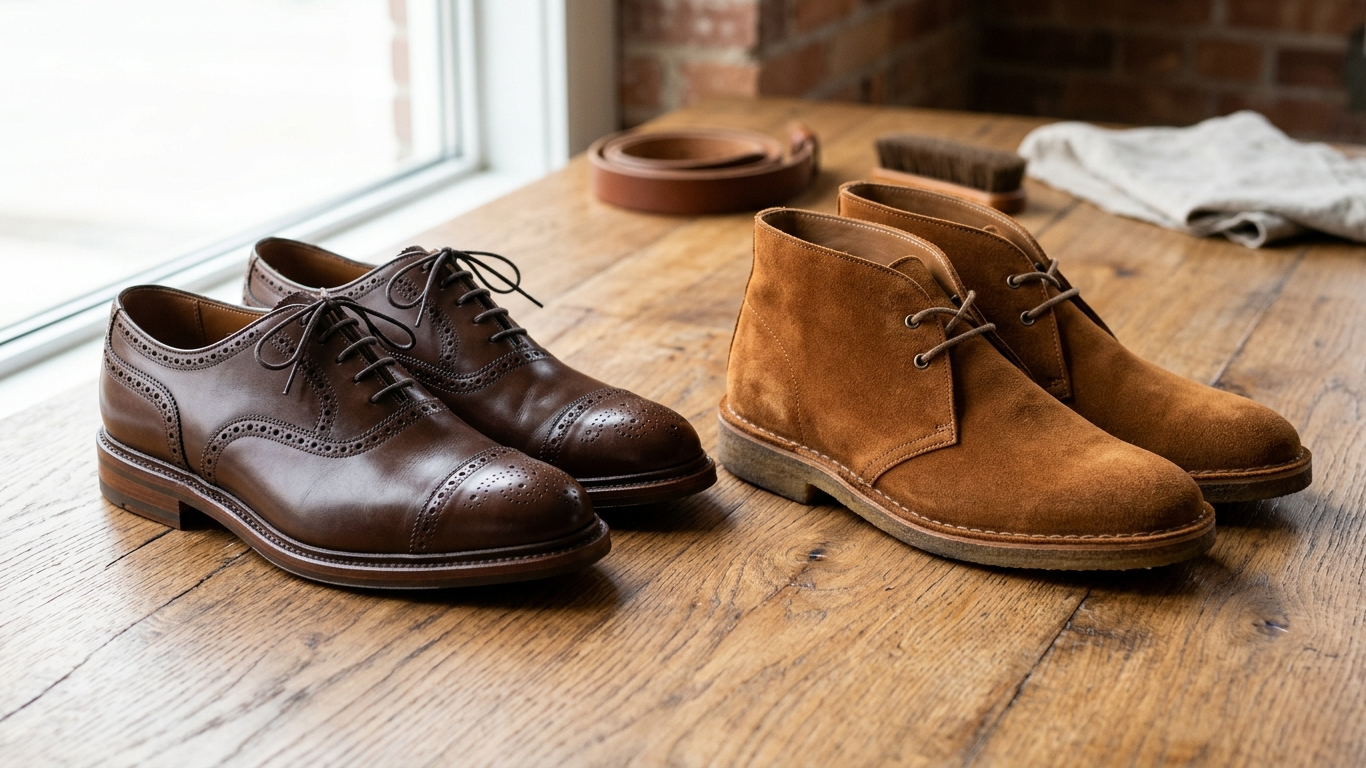
Suede and leather shoes are both made from animal hide, but they are finished differently. Smooth leather has a firm, polished surface that handles weather and scuffs well and can be shined.
Suede has a soft, velvety, napped surface that looks relaxed and textured but absorbs water and stains more easily and needs a different care routine.

Neither is simply better. Smooth leather is the more practical choice for rain, formal settings, and heavy daily wear, while suede suits dry weather, smart-casual outfits, and men who like texture and are willing to look after it.
This guide explains what suede actually is, how suede footwear compares with leather footwear in durability, comfort, and style, and how to care for suede shoes so they last.
What Is Suede, and How Is It Different From Leather?
Both materials start as tanned hide. The difference is which side of the hide you see and touch.
- Smooth leather shows the outer surface of the hide, called the grain side. This surface is dense and is usually finished with dye, wax, or polish. That is why it can be shined and why it repels some moisture.
- Suede is made from the softer underside of the hide or from a split layer that has been separated from the outer grain. The surface is buffed to raise a short, soft, fibrous texture called the nap. Because the surface is made of exposed fibers rather than a sealed grain layer, it feels velvety and takes color richly, but it also soaks up liquids and dirt more readily.
A few related terms come up when shopping:

- Nubuck is made from the outer grain side that is sanded to create a fine nap. It looks similar to suede but has a tighter, shorter nap and is often tougher.
- Reverse leather and velour are terms some brands use for napped leathers, and they can mean slightly different things between makers.
- Split leather is a lower layer of the hide. It can be napped into suede or coated to look like smooth leather, which is one reason the label “genuine leather” tells you little about quality. For more on that, see [internal link: leather vs synthetic shoes].
Quality varies within each material. A well-made suede from good hide and a well-made smooth leather are very different from a cheap version of either.
Read also: How to Buy Comfortable Shoes: What to Look For and What to Avoid
Suede vs Leather Shoes at a Glance
| Factor | Smooth leather | Suede |
|---|---|---|
| Look and feel | Smooth, structured, can be polished to a shine | Soft, matte, velvety texture |
| Formality | Suits formal, business, and casual | Generally smart-casual to casual, with some dressier styles |
| Water resistance | Moderate when polished and conditioned. Not waterproof | Low. Absorbs water and can stain or darken |
| Stain resistance | Easier to wipe clean | Marks and oil stains are harder to remove |
| Durability | Strong, handles scuffs and weather well | Can last years with care, but shows wear and dirt sooner |
| Softness and break-in | Stiffer at first, then molds to the foot | Usually softer and more flexible from the start |
| Maintenance | Brush, clean, condition, and polish | Brush, erase, and use protector spray. No polish or cream |
| Aging | Develops patina and a shine | Nap wears flat and can become shiny or bald in high-friction spots |
Leather Footwear Differences That Matter in Daily Wear
Durability
Leather shoe durability depends on the grade of leather, the construction, and the care you give the shoes. Quality full-grain and top-grain leather is strong, handles repeated flexing, and typically shows wear as creases and scuffs that can be polished or conditioned. It is also the more forgiving material if you wear shoes daily and cannot always baby them.
Suede is often mistaken for being flimsy, but that is not quite accurate. The material itself can be flexible and, in good quality, quite capable. The issue is its surface. The exposed nap picks up dirt, absorbs liquids, and flattens with friction, so suede tends to show wear and stains sooner than a polished leather surface. Where a pair of smooth leather shoes might take a dirty puddle and a quick wipe in stride, suede may stain or darken.
The practical result is that suede lasts longest when it is worn for the right conditions and cared for consistently. Treat it as a material that rewards attention, not abuse.
Water resistance
This is the biggest practical difference. Smooth leather that is polished and conditioned handles light rain better, although it is not waterproof and can still be damaged by soaking. Suede is more vulnerable to water, which can leave marks and rings and may stiffen the material as it dries. A protector spray designed for suede helps water bead off, but it does not make the shoe waterproof. Heavy rain, puddles, and wet snow are best avoided, even with treatment.
Comfort
Suede is generally softer and more flexible, so many men find it comfortable straight away. It is common in loafers, desert boots, and casual sneakers, where a relaxed feel is part of the appeal. Smooth leather is often stiffer at first, particularly in structured dress shoes, but it softens and conforms to the foot with wear. Either can be comfortable if the fit is right, so check the fit before you check the material. [internal link: how should shoes fit]
Breathability
Both are natural materials with a porous structure, so both can breathe better than a coated plastic imitation. Differences in breathability between suede and leather in a finished shoe depend more on the lining, construction, and any finish applied than on the material name alone.
Style and when to wear each
- Smooth leather is the safer choice for business, formal events, interviews, and wet weather. Black or dark brown Oxfords and Derbies are classic examples.
- Suede adds texture and softness, and it works well with chinos, denim, wool trousers, and smart-casual outfits. Suede loafers, chukka boots, and desert boots are popular examples. Darker suede can look more polished than light tan or sand.
- Season matters. Suede is often associated with autumn and spring, and lighter suede looks good in warm, dry weather. It is less suited to wet winter conditions, though many men do wear suede boots in winter with care.
Be aware that suede is generally seen as less formal than polished leather, although dark suede in a dressier shape can work in relaxed office settings. If your workplace or event has a strict formal dress code, polished leather is the safer option.
Read also: Leather vs Synthetic Shoes: Which Is Better for Men?
How to Care for Suede Shoes
Suede shoe care is different from leather shoe care. You do not polish suede or apply cream to it, and you generally clean it dry. A basic suede kit includes a suede brush, a suede eraser, and a protector spray made for napped leather.
Before the first wear
Apply a suede protector spray. Do it in a well-ventilated area, holding the can at the distance given on the label, and let the shoes dry fully before wearing them.
The spray adds some water and stain resistance but does not make suede impervious. Reapply it periodically. Product directions and recommended intervals vary, so follow the instructions on the can and apply it more often if you wear the shoes frequently.
After each wear
- Brush the shoes gently with a suede brush to remove dust and lift the nap. Brush in one direction for an even finish.
- Insert shoe trees if you have them. They help hold the shape and absorb moisture.
- Rest the pair. Rotating between shoes gives each pair time to dry out.
Removing scuffs and light marks
- Use a suede eraser, rubbing gently over the mark like you would with a pencil eraser.
- Brush away the crumbs and lift the nap again.
- Do not use abrasive tools or sandpaper, which can damage the surface.
Dealing with stains
- Dry dirt and mud: Let mud dry completely, then break it up and brush it away before using an eraser.
- Grease or oil: Act quickly. Cover the spot with cornflour or talcum powder, leave it for several hours to absorb the oil, then brush it off. Avoid water, which can spread an oil stain.
- Heavier stains or salt marks: Use a cleaner made for suede, applied sparingly, or take the shoes to a professional cleaner. Some sources suggest a very lightly dampened cloth or a mild soap solution for stubborn marks, but this carries a risk of water rings, so test somewhere hidden first.
- Be cautious with home remedies. Toothpaste and undiluted vinegar are sometimes recommended online, but they can leave rings or lighten the color. A proper suede eraser and cleaner are safer.
If your suede shoes get wet
- Blot off excess water with a clean cloth without rubbing.
- Stuff the shoes with plain paper or insert shoe trees to hold the shape.
- Let them dry naturally at room temperature, away from radiators, hairdryers, and direct sunlight. Heat can stiffen and shrink the material.
- Once fully dry, brush the nap back up.
- Reapply protector spray if needed.
Do not use regular shoe polish or wax cream on suede. It can flatten the nap, darken the color, and permanently change the surface.
How to Care for Smooth Leather Shoes
Leather care is a little different and, for many men, a little more familiar:
- Brush off dust and dirt after wearing.
- Wipe with a slightly damp cloth if needed.
- Condition periodically so the leather does not dry out and crack.
- Polish or wax to restore color and add some protection and shine.
- Use shoe trees and rotate pairs.
- Let wet shoes dry naturally, away from heat.
For a full routine, see [internal link: how to clean and maintain shoes].
Common Mistakes With Suede and Leather
Suede:
- Skipping the protector spray
- Wearing them in heavy rain or through puddles
- Using polish, cream, or too much water
- Drying them on a radiator
- Rubbing hard at stains, which can make the nap patchy
Leather:
- Never conditioning the leather
- Storing damp shoes
- Wearing the same pair every day without rest
- Choosing a very low-priced pair labeled “genuine leather” and expecting top-grade durability
Which Should You Choose?
- You want one versatile pair for work, events, and most weather: Choose smooth leather, preferably in black or dark brown.
- You want a relaxed, textured look for casual or smart-casual outfits: Choose suede. Navy, olive, dark brown, and charcoal are practical colors that hide marks better than sand or light tan.
- You live somewhere wet or snowy: Lean toward leather, or choose water-resistant treated options and be prepared to protect and clean suede carefully.
- You wear shoes hard every day: Smooth leather is more forgiving. If you choose suede, rotate pairs and care for them consistently.
- You dislike maintenance: Smooth leather generally takes less worry, since it can be wiped clean and polished, though both need some regular care.
- You want a longer-lasting wardrobe: Consider owning both and rotating them according to weather and outfit. Rotation extends the life of any shoe.
Final Takeaways
Suede and leather come from the same raw material but behave very differently.
Smooth leather offers a polished look, better resistance to water and stains, and a more forgiving, formal-friendly profile.
Suede offers softness, texture, and a relaxed style, but it needs protection from water and dirt and a care routine that avoids polish and cream.
If you can only buy one pair, choose smooth leather for versatility. If you want a second pair with more character, add suede, protect it before the first wear, brush it regularly, and keep it away from heavy rain.
Whichever you buy, quality of the hide, the construction, and the fit will affect how long the shoes last more than the label alone.
Read also: