How to Choose the Right Shoes: A Practical Buying Guide for Men
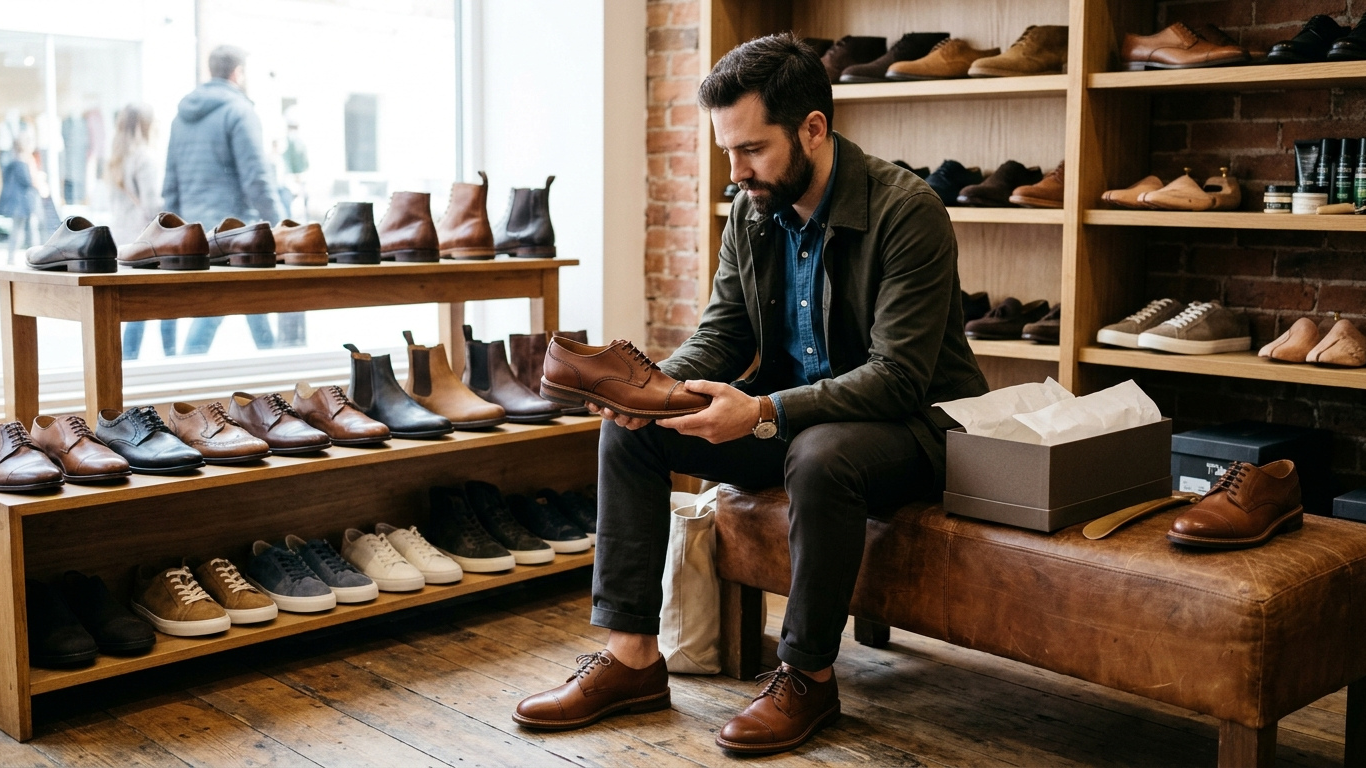
The right pair of shoes fits your foot, suits what you will actually do in them, and is built well enough to last.
Get those three things right and you avoid most of the blisters, sore arches, and wasted money that come from buying on looks alone.
Most bad shoe purchases follow the same pattern: someone falls for a style, picks their usual size, and assumes the shoes will “break in.” Sometimes they do. Often they never fit properly, and they end up at the back of the wardrobe.
This guide walks through how to choose the right shoes step by step, from measuring your feet to judging construction, so you can buy with confidence in a store or online.
What Makes a Shoe “Right”?
A shoe is right for you when it meets these five conditions:
- It fits your foot’s length, width, and shape, not just your usual size number.
- It suits the occasion, whether that is work, running, casual wear, or formal events.
- It is made from materials and construction that match your budget and expectations.
- It is comfortable within minutes, not “after a few weeks.”
- It works with the rest of your wardrobe, so you will actually wear it.
The rest of this article explains how to check each one.

Start With Fit: How Shoes Should Fit
Fit matters more than brand, price, or style. A well-fitting inexpensive shoe will feel better than an ill-fitting expensive one.
The Five Fit Checkpoints
When you try on a shoe, check these areas in order:
- Toe room: You should have roughly a thumb’s width (about 1 cm or 3/8 inch) between your longest toe and the end of the shoe when standing. Your toes should be able to wiggle without pressing against the top or sides.
- Ball of the foot: The widest part of your foot should sit at the shoe’s widest point. If the shoe pinches here, it is too narrow. If your foot slides side to side, it is too wide.
- Heel: Your heel should be held firmly. A small amount of slip is normal in new leather dress shoes, but it should not lift out with every step.
- Instep (top of the foot): The laces or upper should hold your foot snugly without pressure points or numbness.
- Arch: The shoe’s arch support should line up with your own arch. A mismatch is a common cause of aching feet by the end of the day.
Measure Your Feet Properly
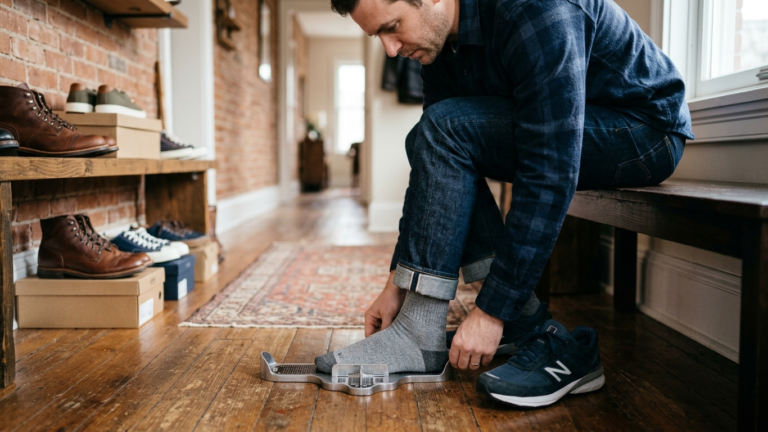
Many men wear the wrong size for years. Feet can change over time because of age, weight changes, or activity, so check your measurements every year or two instead of relying on an old size.
To measure at home:
- Stand on a sheet of paper against a wall, with your heel touching the wall.
- Mark the tip of your longest toe (it is not always the big toe).
- Measure from the wall to the mark.
- Repeat for both feet and use the larger measurement.
- Compare it with the brand’s size chart, because sizing varies between manufacturers.
It is normal for one foot to be slightly larger than the other. Always fit to the larger foot.
Don’t Forget Width
Length gets all the attention, but width is where many fit problems begin. Many brands offer standard, wide, and extra-wide options, usually labeled with letters or terms such as D, E, or EE in US sizing, though labels vary by brand and region.
If shoes feel long enough but squeeze the sides of your foot, going up a full size is usually the wrong fix. Look for a wider fit instead, or try a brand known for a roomier toe box.
Try Shoes On at the Right Time
Feet tend to swell slightly over the course of the day, especially after walking or standing. Shopping in the afternoon or evening gives you a more realistic fit than trying shoes in the morning. Wear the kind of socks you plan to wear with the shoes, whether thin dress socks or thicker athletic ones.
Walk Before You Decide
Don’t judge a shoe by standing still. Walk around the store for a few minutes, ideally on a hard surface as well as carpet. Climb a step if there is one. Pay attention to:
- Heel slipping
- Pinching or rubbing
- Pressure on the toes when walking downhill or down stairs
- Whether the sole feels too stiff or too soft for your needs
If a shoe is uncomfortable in the first few minutes, do not count on it improving. Leather can stretch slightly and cushioning can soften, but a shoe that is the wrong shape for your foot will not become the right one.
Read also: 20 Men’s Zip-Up Hoodie Outfit Ideas
Match the Shoe to How You’ll Use It
A shoe that is perfect for the office may be a poor choice for a long walk. Think about where you will spend most of your time in them.
| Use | What to look for | Common mistake |
|---|---|---|
| Office and formal wear | Leather or quality synthetic uppers, a clean silhouette, and a sole with enough grip for hard floors | Choosing a very sleek shape that is too narrow for your foot |
| Everyday casual wear | Flexible soles, breathable materials, cushioning that suits long days | Wearing fashion sneakers with minimal support for all-day walking |
| Walking and travel | Cushioned midsole, stable heel, lightweight build | Picking a stiff shoe that needs breaking in right before a trip |
| Running and workouts | Sport-specific design, proper cushioning and support for your gait | Using lifestyle sneakers for running or gym training |
| Wet or cold weather | Water-resistant leather or treated materials, deeper tread, room for thicker socks | Relying on suede or canvas in rain |
| Work and safety footwear | Protective toe caps or soles where your job requires them, slip resistance | Choosing on style when the workplace has safety requirements |
If you are buying only one or two pairs, versatility helps. Clean leather sneakers or a simple derby or loafer in a neutral color cover a wide range of situations. A single pair rarely does everything well, though, and rotating between pairs also helps shoes last longer.
Understand Shoe Materials
Material affects comfort, durability, appearance, and maintenance.
- Full-grain leather: The top layer of the hide with its natural grain intact. It is durable, breathable, and tends to develop character with age. It usually costs more and needs occasional conditioning.
- Genuine or corrected-grain leather: Cheaper than full-grain and often sanded or coated for a uniform look. It can be perfectly serviceable but generally does not age as well. Note that “genuine leather” is a label that sounds better than it is: it only tells you the product contains real leather, not that it is high grade.
- Suede and nubuck: Soft, textured leathers with a casual look. They are comfortable but absorb water and stain easily, so they suit dry weather and need protective treatment.
- Canvas and textile uppers: Light, breathable, and affordable, but typically less durable and less protective in wet conditions.
- Synthetic materials and mesh: Common in athletic shoes. They are light, breathable, and low maintenance, though they do not mold to the foot like leather and can wear out faster.
- Rubber and EVA soles: Rubber is generally more durable and grippy. EVA foam is lightweight and cushioned but compresses with wear. Leather soles look elegant on formal shoes but offer less grip in wet conditions.
Look at How the Shoe Is Built
Construction is often the biggest difference between a shoe that lasts one season and one that lasts for years. It also affects whether a shoe can be repaired.
- Cemented construction: The sole is glued to the upper. It is lightweight and cost-effective, but usually cannot be resoled easily. Most sneakers and many budget shoes are made this way.
- Blake stitched: The upper is stitched directly to the sole. It gives a sleek profile and can be resoled, though by fewer repair shops.
- Goodyear welted: A strip of material (the welt) is stitched to the upper and the sole, which makes resoling straightforward. These shoes tend to be sturdier and more expensive, and often need more time to feel comfortable.
- Vulcanized: Common in classic canvas sneakers. Rubber is bonded to the upper using heat, creating a flexible, durable bond.
You do not need a Goodyear-welted shoe to be well dressed, but if you plan to wear a pair of dress shoes for many years, resolable construction can be good value even at a higher price.
Quick Quality Checks Anyone Can Do
You can judge quality in a store without being a specialist:
- Bend the shoe at the ball of the foot. It should flex there, not in the middle of the arch.
- Press the heel counter (the back). It should feel firm and supportive, not collapsible.
- Look at the stitching. It should be even and tight, with no loose threads.
- Check the lining and insole. Smooth lining without rough seams reduces rubbing.
- Inspect the sole bond. There should be no visible gaps between the sole and upper.
- Check symmetry. Place the shoes side by side on a flat surface and make sure they look the same.
Consider Comfort and Support Features
Comfort is not simply cushioning. It is how well the shoe suits the shape of your foot and your movement.
- Arch type: Flat feet, neutral arches, and high arches have different needs. If you have a persistent foot, heel, or knee pain, or a diagnosed condition, a podiatrist can recommend footwear or orthotics for your situation. Shoe shopping advice cannot replace that.
- Insole removability: If you use custom orthotics, choose shoes with a removable insole and enough depth.
- Weight: Lighter shoes reduce fatigue over long wear, but extremely light shoes may sacrifice support.
- Heel height and drop: A very high or very flat heel can change how the shoe feels. Choose what feels natural to you, and avoid dramatic differences from your usual footwear without allowing time to adjust.
- Breathability: Mesh, perforations, and natural leather help reduce sweating. Poor ventilation can contribute to odor and discomfort.
Set a Smart Budget
A higher price does not automatically mean a better shoe, but very low prices often mean compromises in materials or construction. Instead of asking what the cheapest option is, think about cost per wear.
- A shoe you will wear several times a week for years can justify a higher price.
- A trend-driven pair you will wear occasionally may not.
- Repairable shoes can lower long-term cost, because a new sole is often cheaper than a new pair.
Sales and outlet stores can offer good value, but only if the shoe fits properly. A discounted pair that hurts your feet is not a bargain.
Tips for Buying Shoes Online
Online shopping saves time but removes the chance to try shoes before purchase. To reduce the risk:
- Use your measurements, not just your usual size, and check the brand’s size chart.
- Read reviews for fit comments such as “runs small,” “narrow toe box,” or “roomy.” Focus on reviewers whose foot descriptions match yours.
- Check the return policy before buying, including who pays for return shipping and how long you have.
- Try shoes indoors on a clean surface first. Many retailers will not accept returns of shoes that show outdoor wear.
- Order two sizes if the return policy allows, then send back the one that does not fit.
Common Shoe-Buying Mistakes to Avoid
- Buying by size number alone. Sizes vary between brands and even between styles from the same brand.
- Expecting an extreme break-in period. Some stiffness is normal in structured leather shoes. Pain is not.
- Ignoring width. Many “too small” complaints are really width problems.
- Choosing style over use. The shoe has to work in the setting you bought it for.
- Skipping the second foot. Try on both shoes, because small differences in foot size are common.
- Wearing the same pair every day. Shoes need time to dry out between wears, and rotation extends their life.
- Neglecting care. Even good shoes deteriorate without cleaning, conditioning, and the use of shoe trees where appropriate.
When to Replace Your Shoes
Even well-chosen shoes do not last forever. Consider replacing a pair when:
- The sole tread is worn smooth or uneven.
- The midsole feels flat or no longer absorbs impact.
- The upper has cracked, split, or lost its shape.
- The shoes feel different underfoot than when new, or you notice new aches after wearing them.
For resolable leather shoes, a worn sole alone does not mean the end. A cobbler can often replace it.
Final Takeaways
Choosing the right shoes comes down to a handful of habits that are easy to apply:
- Measure your feet and fit to the larger one, paying attention to width as well as length.
- Shop later in the day and try shoes with the socks you plan to wear.
- Walk in them before buying, and do not count on pain disappearing later.
- Choose by purpose first, then by style.
- Check materials and construction to judge how long the shoes will last and whether they can be repaired.
- Look after them, since good care protects your investment.
Next time you shop, start with fit, not the style. Once you have found a shape and size that suit your feet, you will find it much easier to choose shoes you enjoy wearing for years.
Read also: