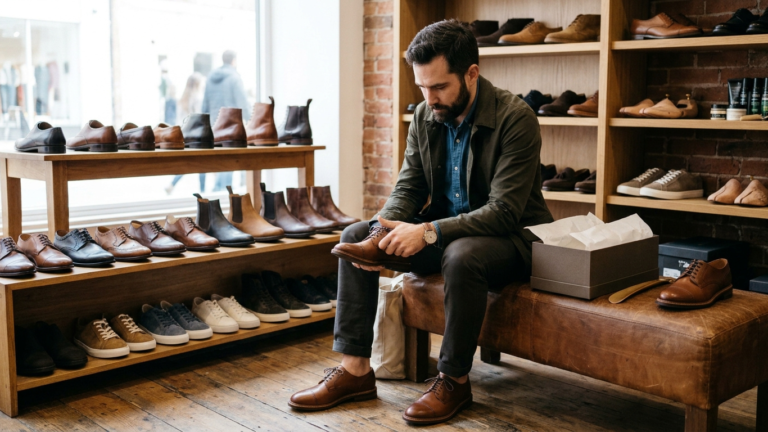
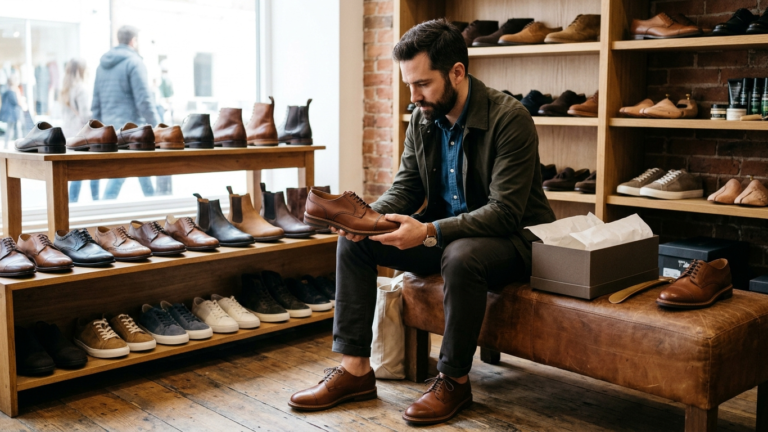
How to Buy Comfortable Shoes: What to Look For and What to Avoid

Comfortable shoes start with a good fit, then add the right amount of cushioning, support, and flexibility for how you use them.
No single feature makes a shoe comfortable on its own. A heavily padded sneaker can still hurt if the toe box is too narrow, and a beautifully made leather shoe can still blister your heel if the shape does not match your foot.
If you want comfortable footwear for long days on your feet, the goal is simple: find a shoe that feels right in the store, stays comfortable after hours of wear, and does not rely on a painful break-in period.
This guide explains the features that matter, how to test them before you buy, and which common shortcuts lead to sore feet.
What Makes a Shoe Comfortable?
A comfortable shoe usually has these qualities:
- A shape that matches your foot, with enough room for your toes and a secure hold at the heel
- Support that suits your arch without pressing into it
- Cushioning that absorbs impact without feeling unstable
- Flexibility in the right place, which is the ball of the foot, not the middle of the shoe
- Reasonable weight, so your legs do not tire as quickly
- Breathable materials that limit heat and moisture
- Smooth interior finishing, with no rough seams or hard edges
Comfort is also personal. Foot shape, body weight, walking habits, and the surfaces you walk on all change what feels good. A shoe that works for one man may not work for another, so use the features below as a checklist, not a guarantee.

Start With Fit, Because Nothing Else Fixes a Bad One
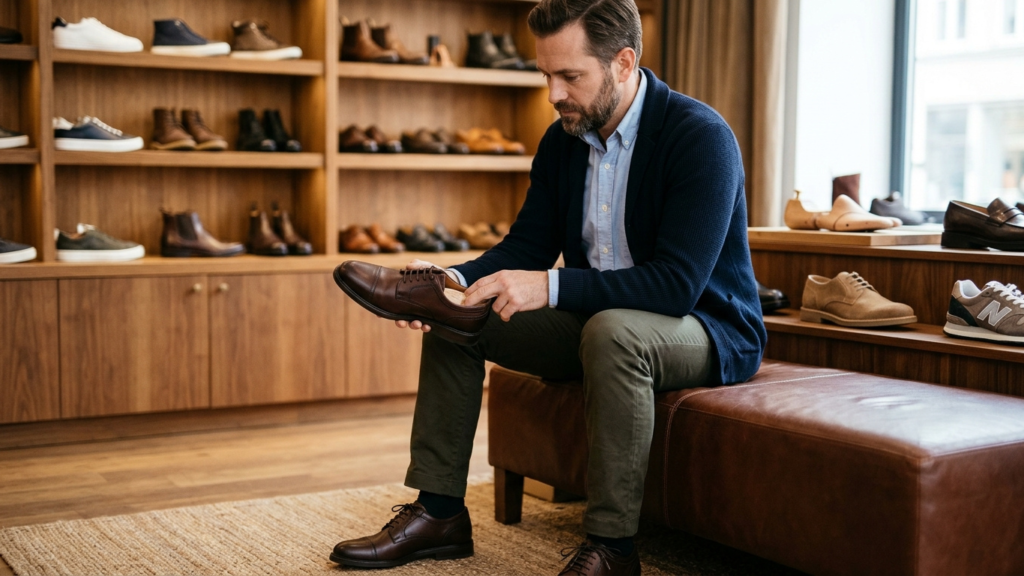
Cushioning and arch support cannot compensate for a poor fit. Before you evaluate any other feature, check these points:
- Toe room: There should be about a thumb’s width between your longest toe and the front of the shoe when you stand. Your toes should be able to spread and move.
- Width: The shoe should not squeeze the sides of your foot at the ball. If it does, choose a wider fit instead of simply going up a size.
- Heel hold: Your heel should stay mostly in place when you walk. Constant slipping causes friction and blisters.
- Instep pressure: The top of the foot should feel held but not compressed. Pressure here can cause numbness or aching.
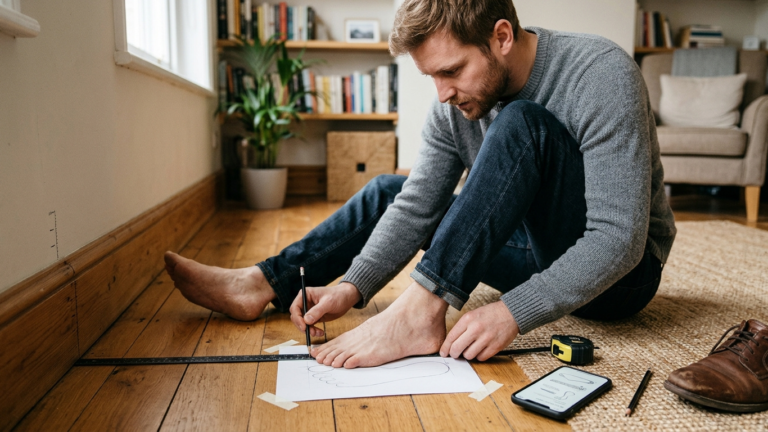
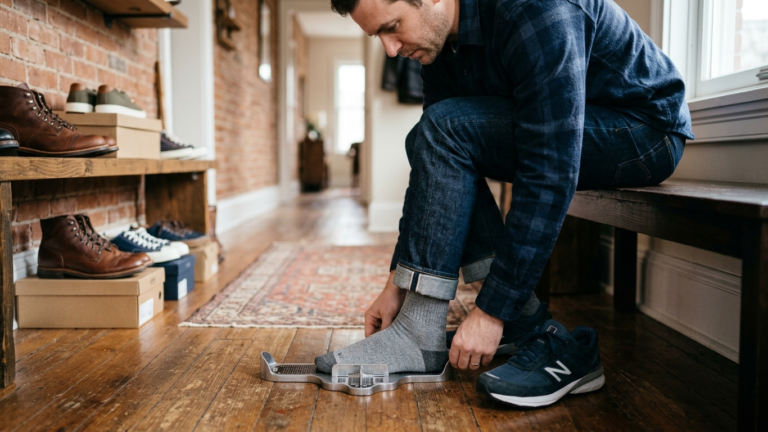
If you are unsure of your size, measure both feet standing, in the afternoon or evening, and use the larger measurement with the brand’s own size chart.
Sizing varies between brands, so a number that worked in one shoe may not carry over to another.
Read also: How to Choose the Right Shoes: A Practical Buying Guide for Men
Key Features of Comfortable Shoes
1. A Roomy, Well-Shaped Toe Box
The toe box is the front section of the shoe that surrounds your toes. A shape that follows the natural outline of the foot lets your toes sit comfortably and reduces rubbing. Very pointed or tapered fronts can look sleek but crowd the toes, especially during long wear. If you like narrower styles, look for models with a slightly rounder last or a soft upper that gives a little.
2. A Firm Heel Counter
The heel counter is the stiffening piece around the back of the shoe. Press the back of the shoe between your fingers. It should resist collapsing. A firm counter helps hold your heel steady, while a floppy one can allow your foot to slide and wobble.
3. Appropriate Cushioning
Cushioning is the soft layer in the midsole and insole that absorbs impact when your foot hits the ground. More is not always better:
- Too little cushioning can make hard floors and pavement feel harsh by the end of the day.
- Too much soft foam can feel unstable and tiring, especially if the shoe has a high, squishy sole with little structure.
For most all-day wear, look for a balance: noticeable cushioning that returns to shape when pressed, combined with a stable platform that does not roll your foot sideways.
4. Arch Support That Fits Your Foot
Arch support is the contour in the insole that supports the middle of your foot. The right amount depends on your foot shape:
- Flat or low arches often feel better with some stability and a supportive midfoot.
- High arches usually need cushioning and a footbed that makes good contact with the arch.
- Neutral arches have more flexibility in choice, but still benefit from a contoured footbed.
Press your foot into the shoe and see whether the arch contour lines up with your own. If it presses uncomfortably or leaves a gap, try another model. If you have persistent foot, heel, or knee pain, or a diagnosed condition, a podiatrist can give advice that shopping tips cannot.
5. Flexibility in the Right Place
Hold the shoe by the heel and toe and bend it. A comfortable walking shoe should bend at the ball of the foot, where your foot naturally flexes. If it folds in the middle of the arch, it may offer too little support. If it barely bends at all, it may feel stiff and tiring for walking, although some rigid footwear is useful for work boots and safety shoes.
6. A Reasonable Weight
Lighter shoes can reduce fatigue over long days, but extremely thin, light shoes may offer little support. When you pick up a pair, consider whether the weight feels balanced with the amount of protection and cushioning you need.
7. Breathable Materials
Heat and moisture build-up make feet uncomfortable and can lead to rubbing and odor. Look for:
- Leather, which is breathable and tends to adapt to your foot over time
- Knit and mesh uppers, which allow airflow and flex with the foot
- Moisture-wicking linings, which help manage sweat
Waterproof membranes are useful in wet weather but can feel warmer in hot conditions, so choose according to your climate.
8. A Smooth Interior
Run your hand inside the shoe. Rough stitching, ridges, or hard seams near the toes and heel are common sources of blisters. A clean, smooth lining is a sign of careful construction.
9. A Removable Insole
A removable insole lets you replace the factory footbed with a more supportive one or use custom orthotics. This also makes it easier to dry the shoe between wears. If you use orthotics, make sure the shoe has enough depth to hold them without squeezing your foot.
10. A Sole That Suits the Surface
Outsoles affect grip, durability, and how the shoe feels underfoot:
- Rubber outsoles are generally more durable and provide good traction.
- Foam outsoles are lightweight and soft but can wear faster.
- Leather soles look elegant on formal shoes but can feel firm and slippery in wet conditions.
For city walking, a sole with moderate tread and shock absorption usually performs well. For wet or uneven ground, choose deeper tread and a more stable structure.
Read also: How to Choose the Right Shoes: A Practical Buying Guide for Men
Choosing Comfortable Shoes for Different Situations
Comfort depends on how you use the shoe. This table shows what to prioritize for common situations.
| Situation | Prioritize | Be careful with |
|---|---|---|
| Long days at a desk or office | Soft leather or flexible uppers, moderate cushioning, a rounder toe shape | Narrow dress shoes with firm, thin soles |
| Standing for long hours | Cushioned midsole, supportive footbed, stable heel | Flat, thin-soled shoes with little shock absorption |
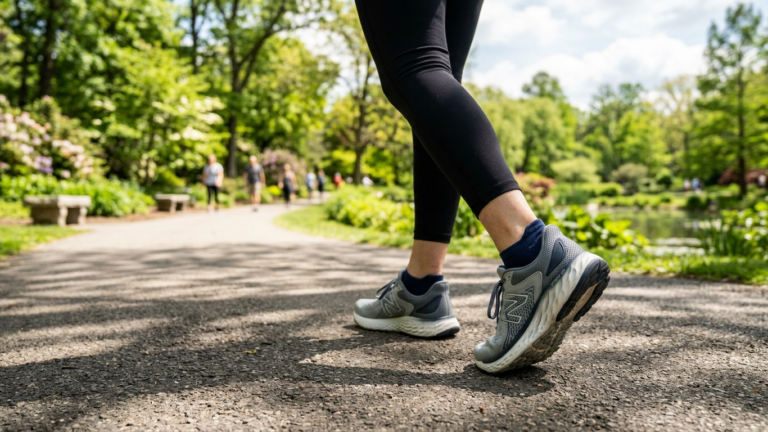
| Walking and commuting | Lightweight build, flexible forefoot, good grip | Stiff soles that need a long break-in |
| Travel days | Easy on-and-off design, breathable upper, room for slight swelling | Brand-new shoes you have not worn before |
| Casual weekends | Comfortable sneakers or loafers with removable insoles | Fashion sneakers with minimal support |
| Hot weather | Breathable mesh, perforated leather, light colors | Heavy, unlined, or waterproof-membrane shoes |
| Cold or wet weather | Insulation, water resistance, room for thicker socks | Tight fit that restricts circulation |
How to Test Shoes Before You Buy
A few minutes in the store, or at home with online orders, can save you from months of discomfort.
- Shop later in the day. Feet tend to swell slightly, so afternoon or evening gives a more realistic fit.
- Wear the right socks. Bring the socks you plan to wear with the shoes.
- Try both shoes. Feet are not always the same size, so check each one.
- Stand and walk. Walk on a hard surface and carpet, and take a few steps up and down if you can.
- Check pressure points. Pay attention to the toes, the sides of your feet, the top of the foot, and the back of the heel.
- Flex your toes. You should be able to wiggle them freely.
- Spend several minutes in them. Some problems only appear after a short time.
- Compare two or three pairs. Differences in comfort become clearer side by side.
A good rule is that a shoe should feel comfortable right away. A little stiffness in new leather is normal, but sharp pain, numbness, or pinching is a sign to try something else. Do not rely on a break-in period to fix a shape problem.
Buying Comfortable Shoes Online
Online shopping makes comfort harder to judge, but you can improve your chances:
- Use your foot measurements and check the brand’s size chart.
- Read reviews carefully, especially comments about width, arch support, and heel fit. Look for reviewers whose foot type is similar to yours.
- Check the return policy before you order, including the time limit and who pays for shipping.
- Try shoes on indoors on a clean surface, so you can still return them if they do not work out.
- Order a second size if returns are free, then send back the one that does not fit.
Common Mistakes That Lead to Uncomfortable Shoes
- Choosing based on style alone. A shoe you love to look at can still be wrong for your foot.
- Buying too small and hoping they stretch. Leather may give slightly, but synthetic materials and rigid soles usually do not.
- Ignoring width. Many cases of “my shoes are too small” are actually width problems.
- Assuming more cushioning always means more comfort. Excess softness can reduce stability.
- Wearing worn-out shoes. Cushioning flattens over time, even if the upper still looks good.
- Not rotating pairs. Shoes need time to dry out and recover between wears.
- Skipping socks that suit the shoe. Thin, moisture-wicking socks and thick cushioned socks change how the same shoe feels.
How to Keep Shoes Comfortable Over Time
Even well-chosen shoes lose comfort if they are not looked after.
- Rotate between pairs so each pair can dry and decompress.
- Use shoe trees in leather shoes to help them keep their shape and absorb moisture.
- Clean and condition leather according to the manufacturer’s guidance.
- Replace insoles when they flatten or become worn.
- Watch for signs of wear, such as uneven tread, a collapsed heel counter, or a midsole that feels flat. These mean the shoe is no longer giving the support it once did.
For repairable leather shoes, a worn sole can often be replaced by a cobbler, which can restore comfort at a lower cost than buying new.
When to Get Professional Advice
Shoes alone cannot solve every foot problem. Talk to a podiatrist or another qualified healthcare professional if you have:
- Persistent heel, arch, or forefoot pain
- Numbness or tingling in the feet
- Recurring blisters, corns, or calluses despite well-fitting shoes
- Diabetes or circulation problems
- A foot injury or a foot condition that affects how you walk
They can recommend footwear features or orthotics suited to your situation.
Final Takeaways
To buy comfortable shoes, put fit first, then look for a roomy toe box, a firm heel, balanced cushioning, arch support that matches your foot, flexibility at the ball of the foot, and breathable materials.
Test shoes in the afternoon, with the right socks, and walk in them before deciding. If a pair hurts in the store, do not expect it to improve at home.
The most comfortable shoe is the one that suits your feet and your daily routine. Choose accordingly, and your feet will thank you at the end of a long day.
Read also: