What Your Clothes Say About You: A Style Psychology Guide
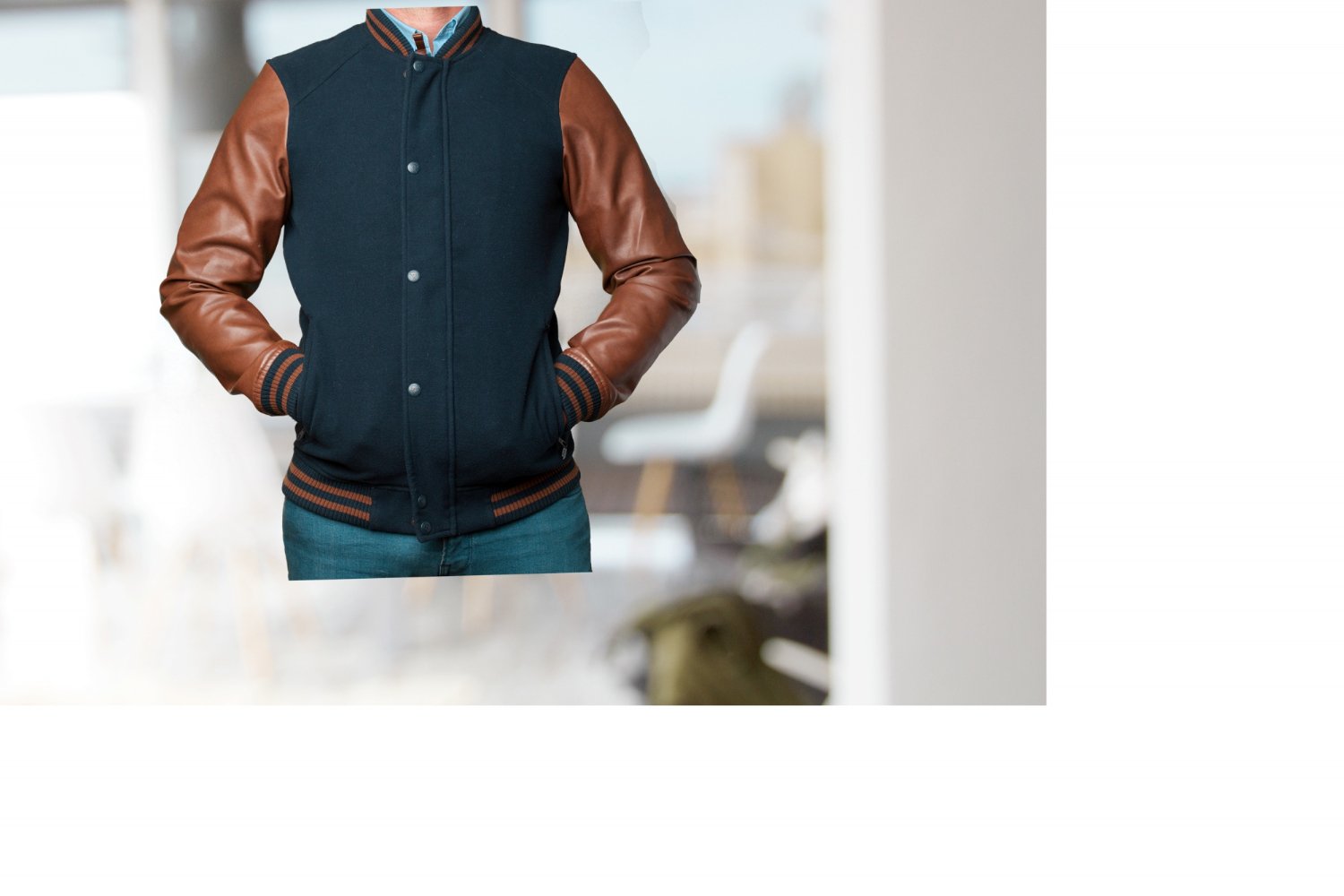
Clothing sends signals before you say a single word — about your confidence, your attention to detail, your values, and how much you care about the impression you’re making.
Other people read those signals in seconds and largely unconsciously, and research on the psychology of dress shows those first impressions are surprisingly accurate and surprisingly hard to undo.

Understanding what your specific choices communicate is the fastest way to make sure they’re saying what you actually mean.
Why Does Clothing Send Such a Strong Psychological Signal?
Humans form impressions of other people remarkably fast — often within a few seconds of seeing them — and clothing is one of the very first data points available before anyone has heard you speak or seen how you behave.
Because there’s so little other information to go on in those first seconds, the brain leans heavily on visual cues: fit, color, formality, and condition of the clothing all get processed almost instantly into assumptions about competence, trustworthiness, and social status.
This isn’t shallow or unfair so much as it’s simply how human perception works under uncertainty. In the absence of deeper information, people default to the most available signal, and clothing happens to be one of the most visible and information-dense signals available.

The psychological research on this phenomenon consistently shows that these snap judgments, while not always accurate, are strong enough to influence how seriously someone is initially taken in professional, social, and even romantic contexts — which is exactly why understanding your own signaling matters, regardless of how “unfair” the underlying mechanism might feel.
What Does Fit Actually Communicate About You?
Fit is arguably the single strongest psychological signal in clothing, because it reads as a direct proxy for self-respect and attention to detail.
Well-fitted clothing suggests a person who takes care of themselves and thinks through their choices; poorly fitted clothing — whether too tight, too loose, or visibly mismatched to the body — tends to read as carelessness, regardless of how much the item actually cost.
This connects to a well-documented psychological principle sometimes called the halo effect: a single strong positive signal (in this case, a well-fitted outfit) causes people to unconsciously assume other positive traits are also present — competence, organization, discipline — even without direct evidence for any of them. The reverse is equally true. A poorly fitted outfit can trigger a “reverse halo,” where one obvious flaw causes people to assume additional flaws that may not actually exist.
This is part of why fit gets emphasized so heavily in style advice: it’s not vanity, it’s one of the most efficient psychological levers available for shaping a first impression.
What Does Color Choice Say About Your Personality and Mood?
Color psychology is a genuinely researched field, though it’s often oversimplified into rigid claims like “red means power” or “blue means trust.” The more accurate picture is that color influences perception in context-dependent, associative ways — built from cultural conditioning as much as any universal biological response.
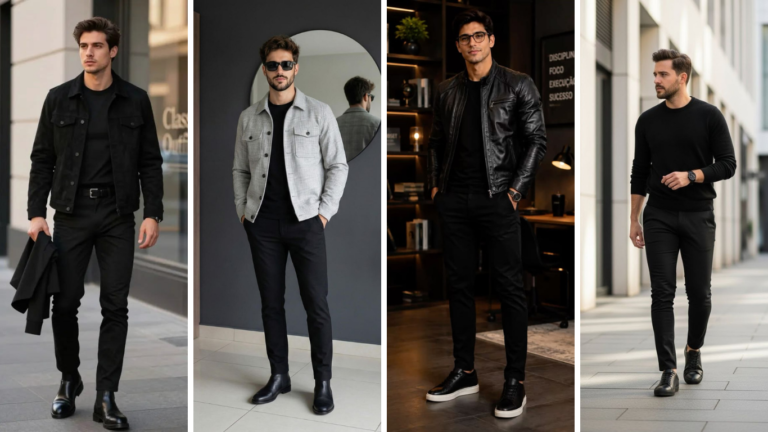
Darker, muted colors (navy, charcoal, black) tend to read as serious, controlled, and authoritative — which is exactly why they dominate professional and formal wardrobes across cultures. Warmer, earthier tones (camel, olive, burgundy) tend to read as approachable and grounded, often associated with reliability rather than dominance. Brighter, more saturated colors tend to read as energetic, confident, or attention-seeking, depending on context — the same red that reads as “powerful” in a boardroom can read as “look at me” at a quiet dinner.
The psychological nuance worth understanding is that color communicates relative to its context. A bright color in a sea of neutrals reads as a deliberate, confident choice. The same bright color in an environment where everyone else is also wearing bright colors barely registers as a signal at all. Color psychology isn’t really about the color in isolation — it’s about the color relative to the expectations of wherever you’re wearing it.
Read also: Men’s Streetwear Outfit Ideas: 20 Looks to Copy
What Do Logos and Branding Signal?
Visible branding sends a specific and fairly well-studied psychological signal: it communicates that you want the value of the item to be immediately recognized by others, rather than discovered through quality alone.
This isn’t inherently negative — plenty of legitimate reasons exist to want that recognition, from genuine brand loyalty to using fashion as a form of belonging to a specific subculture or community.
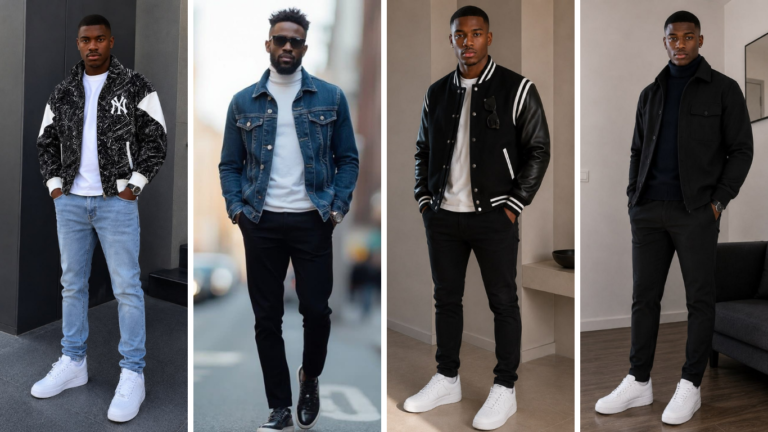
That said, heavy reliance on logos does create a specific perception risk. Research on conspicuous consumption suggests that overt branding can sometimes read as compensating for insecurity about status, rather than genuine confidence in it — the psychological theory being that truly secure status doesn’t need constant visible validation. This is part of why “quiet luxury” and unbranded, quality-focused dressing has gained so much cultural traction recently: it signals confidence in the substance of the choice (fabric, fit, construction) rather than requiring a recognizable logo to communicate that value externally.
Neither approach is objectively better — a graphic-heavy streetwear outfit can be just as intentional and confident as an unbranded minimalist one. The psychological difference is what each approach is optimizing for: external, immediate recognition versus internal, closer-inspection quality.
How Does Formality Level Affect How Competent You Appear?
Research on dress and cognitive perception has consistently found that formality level influences how competent, trustworthy, and authoritative someone appears to others — often independent of their actual expertise.
This effect is strong enough that it shows up across professional contexts: studies on workplace dress have found that more formal attire is associated with perceptions of higher competence and authority, even when the underlying qualifications are identical.
This doesn’t mean formality should always be maximized — overdressing for a casual context carries its own negative signal, often read as being out of touch with the room or trying too hard, which can undercut credibility just as effectively as underdressing does.
The psychological sweet spot tends to be matching, or dressing one small notch above, the formality level of a given environment: enough to signal competence and attentiveness, without so much that it reads as disconnected from the actual context.
Can Changing What You Wear Actually Change How You Feel and Behave?
This might be the most genuinely surprising finding in the psychology of dress: clothing doesn’t just influence how others perceive you — it measurably influences how you perceive yourself and even how you perform on certain tasks.
This phenomenon is studied under the term “enclothed cognition,” and the foundational research on it found that people wearing a lab coat they believed belonged to a doctor performed better on attention-related tasks than people wearing the same coat when told it was a painter’s coat — the physical garment was identical, but the meaning attached to it changed measurable behavior.
The practical takeaway isn’t that any specific item has magical properties — it’s that the psychological meaning you personally attach to what you’re wearing genuinely affects your mindset.
Men who report feeling more confident, focused, or “in character” when wearing a specific kind of outfit — a sharp suit before an important meeting, workout clothes before a training session — aren’t imagining that effect. It’s a documented psychological mechanism, and it’s part of why so much style advice emphasizes dressing intentionally even when no one else’s opinion is directly at stake: the person most affected by your clothing choices might genuinely be you.
What Do Specific Style Categories Signal to Other People?
Different broad style categories tend to carry fairly consistent associative meanings, shaped by decades of cultural context around each one.
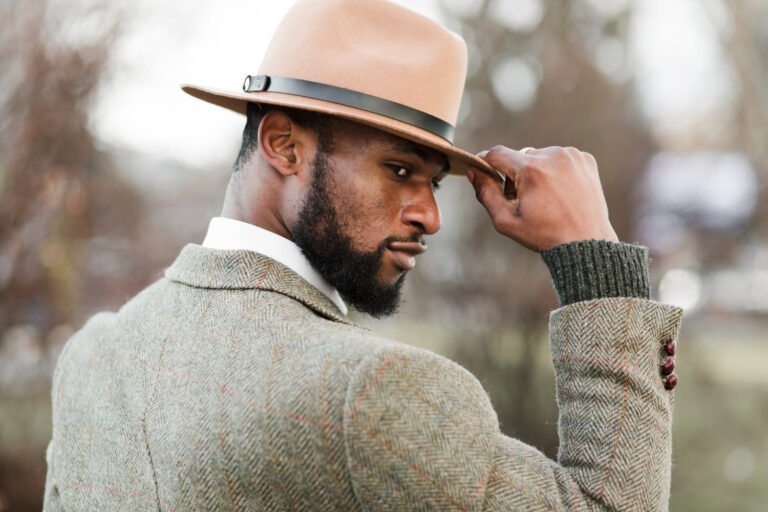
Classic, tailored style tends to signal reliability, tradition, and formality — associations built from its long history in professional and institutional settings. It’s often read as trustworthy, though it can occasionally be perceived as reserved or conservative if worn without any personal variation.
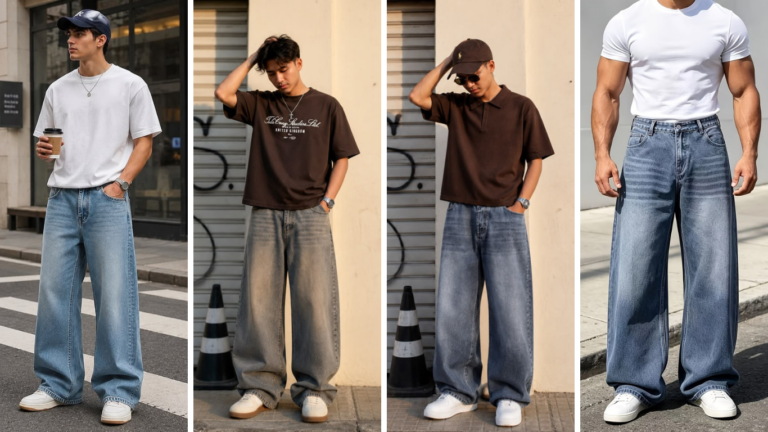
Streetwear tends to signal cultural awareness, individuality, and connection to youth or creative communities — associations built from its roots in music, skate, and art subcultures. It can occasionally be read as less formal or less “serious,” particularly in more traditional professional contexts, regardless of the actual thoughtfulness behind the specific choices.
Minimalist style tends to signal confidence and intentionality, since it requires letting fewer elements carry the entire impression. It can occasionally be misread as low effort by people unfamiliar with how much deliberate editing minimalism actually requires.
Vintage or eclectic style tends to signal creativity and individuality, often associated with valuing personal expression over convention. It can occasionally be read as unpredictable in more conservative environments, simply because it doesn’t map cleanly onto familiar, expected categories.
None of these associations are universal laws — they shift by culture, industry, and generation — but understanding the general direction each style tends to signal helps you choose more intentionally based on the specific impression you’re actually trying to create in a given context.
How Do You Use Style Psychology Intentionally Instead of Accidentally?
Most men absorb these signals unconsciously without ever examining them directly, which means they’re often sending messages they didn’t actually intend. The fix isn’t overthinking every outfit — it’s occasionally auditing your default choices against the impression you actually want to create.
Start by identifying the two or three contexts where impressions matter most to you — work, dating, a specific social circle — and get specific about what you want those impressions to be. Competent and approachable? Creative and confident? Traditional and trustworthy? Then look honestly at your current default wardrobe and ask whether it’s actually built to communicate that, or whether it’s just an accumulation of whatever felt convenient at the time.
This audit often reveals a mismatch worth correcting. A man who wants to be read as detail-oriented and reliable in his career, but who defaults to ill-fitting, heavily logoed casualwear, is sending mixed signals without realizing it.
Aligning the psychological message of your wardrobe with your actual intentions is a far more effective use of style effort than simply following trends or rules disconnected from what you’re actually trying to communicate.
Does Style Psychology Change Across Cultures and Generations?
It’s worth being honest that none of these signals are fixed or universal — they shift meaningfully depending on culture, generation, and even region within the same country.
A heavily tailored suit reads as standard professional dress in one industry or country and as noticeably overdressed in another where business casual has become the unquestioned norm.
Visible tattoos, once read almost universally as a rebellious or unconventional signal, have shifted dramatically in perceived meaning across younger generations, where they’re now far more likely to be read as simply a personal aesthetic choice rather than a statement.
Generational shifts matter just as much as cultural ones. Older professional norms often placed heavy weight on formality as the primary signal of competence and respect. Younger workplace cultures, particularly in creative and tech-driven industries, have shifted enough that thoughtful casualwear can now signal the same competence a suit once did, provided it’s clearly intentional rather than careless.
This is exactly why context-reading matters more than memorizing fixed rules: the underlying psychological mechanisms (fit signaling care, formality signaling respect for the occasion) stay fairly consistent, but what counts as “formal enough” or “put-together” shifts substantially depending on who’s actually in the room.
This is also why blindly importing style advice from a different country, generation, or industry without adjusting for context can backfire. A signal that reads as sharp and appropriate in one setting can read as either overdressed or oddly disconnected in another, even though the underlying psychological principle behind it hasn’t actually changed.
Read also: Gym to Street Outfit Ideas for Men
What Your Clothes Say: Signal vs. Common Misread
| Choice | Intended Signal | Common Misread |
|---|---|---|
| Well-fitted classic tailoring | Competent, reliable, put-together | Reserved or overly formal |
| Bold streetwear and graphics | Creative, culturally aware, individual | Less serious or unprofessional |
| Heavy logo branding | Brand loyalty, status confidence | Insecurity about status |
| Minimalist, unbranded basics | Intentional, quietly confident | Low effort or disinterested |
| Overdressing for a casual setting | Respect for the occasion | Out of touch, trying too hard |
| Ill-fitting clothing, regardless of cost | Neutral | Careless, low self-respect |
Common Mistakes Men Make With Style Psychology
- Assuming clothing signals don’t matter because “it’s just fabric.” The research on first impressions consistently shows clothing meaningfully shapes perceived competence and trustworthiness, whether or not that feels fair.
- Sending an unintentional signal by defaulting to convenience. A wardrobe built entirely around “whatever’s clean” often communicates a message the wearer never actually chose on purpose.
- Overcorrecting into a costume rather than a message. Trying too visibly to project a specific trait — excessive luxury branding to signal success, for example — often reads as compensating rather than confident.
- Ignoring context when choosing formality or style category. The same outfit can read completely differently depending on the room, and failing to account for that context undercuts even a well-chosen outfit.
- Underestimating the effect of clothing on your own mindset. Dismissing “dressing for confidence” as superficial ignores real psychological research showing that clothing choices measurably affect self-perception and performance, not just how others see you.
- Reading too much into a single outfit. Style psychology operates on patterns and consistent signals over time, not one outfit in isolation — a single mismatched choice rarely defines how someone is perceived long-term.
FAQ
Does what I wear really affect how people perceive my competence? Yes — research on dress and perception consistently finds that formality, fit, and overall polish influence how competent and trustworthy someone appears, often within the first few seconds of meeting them, independent of their actual skills or qualifications.
Is it shallow to care about what my clothes communicate? Not really. Clothing is one of the primary sources of information available before anyone has spoken to you or seen you in action, so it’s a natural and practical thing to be intentional about, the same way you’d be thoughtful about tone of voice or body language.
Can dressing a certain way actually change how confident I feel? Yes. This is a documented psychological effect called enclothed cognition — the meaning you personally attach to an outfit can genuinely influence your mindset and even measurable performance on certain tasks, not just how others perceive you.
What’s the most important style psychology principle to understand? That clothing sends signals whether or not you intend it to. The goal isn’t obsessing over every choice — it’s occasionally checking that your default wardrobe is actually communicating what you want it to, rather than whatever accumulated by accident.
Read also: