The History of the Suit: How Classic Menswear Evolved
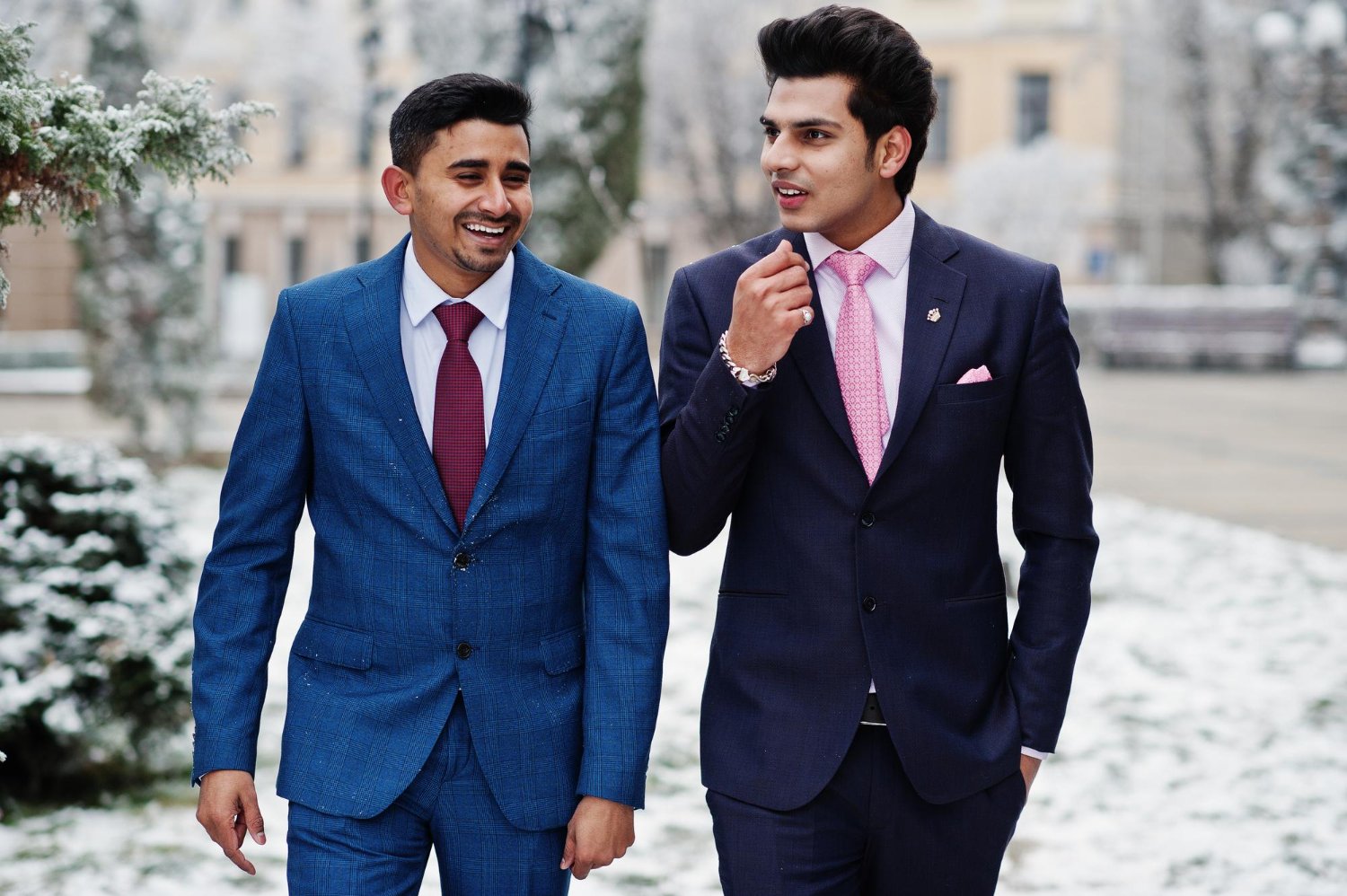
The modern suit descends from a single decisive break with 18th-century fashion: the early-1800s shift toward plain wool tailoring, tighter fit, and understated color, championed by Regency dandy Beau Brummell and later formalized into the three-piece “lounge suit” by the 1860s.
Everything a man wears to the office today — jacket, trousers, waistcoat, matching cloth — is a direct descendant of that one 19th-century revolution.

Quick Rules: The Suit’s Evolution at a Glance
- The suit was born from restraint, not excess. It replaced 18th-century silk, lace, and bright color with plain wool and dark, muted tones.
- Beau Brummell set the template. Precise cut, immaculate fit, and subtle detail over ornamentation became the new definition of elegance.
- The three-piece lounge suit (jacket, waistcoat, trousers in matching cloth) emerged in the mid-19th century as informal daywear and gradually displaced the frock coat and morning coat.
- Each era reshaped the silhouette, not the concept. Shoulders, waist suppression, and trouser width have cycled repeatedly, but jacket-plus-trousers has stayed the constant unit.
- War and rationing permanently simplified tailoring, stripping extra cloth and detail in ways that carried into postwar fashion.
- The suit has survived by adapting fit, not function — it remains, over 200 years later, the default uniform of Western business and formal life.
Before the Suit: 18th-Century Extravagance
To understand why the suit mattered, it helps to see what it replaced. In the 18th century, upper-class European men dressed in a manner that would look theatrical by today’s standards: silk coats embroidered with floral patterns, powdered wigs, knee breeches, buckled shoes, and waistcoats in bright brocade.
Color, texture, and ornamentation signaled status. Clothing was a display of wealth first and a statement of taste second.
This style of dress was expensive to produce and impractical for anything beyond court life and formal socializing. It was built for a world of aristocratic leisure, not for the increasingly commercial, industrial society that was beginning to take shape across Britain and, later, the rest of Europe.
The Great Male Renunciation and Beau Brummell
Historians and dress theorists refer to the shift away from decorative menswear as the “Great Male Renunciation” — a term used to describe how men, over the late 18th and early 19th centuries, largely gave up bright colors, rich fabrics, and elaborate ornament in favor of sober, tailored clothing. Several forces converged to drive this change:

- Social upheaval. The French Revolution made aristocratic display politically dangerous and culturally suspect across much of Europe.
- The rise of industry and commerce. A growing merchant and professional class wanted clothing that signaled seriousness and competence rather than inherited wealth.
- A new ideal of masculinity. Restraint, discipline, and understatement became markers of good taste, replacing overt luxury.
No single figure shaped this new sensibility more than George “Beau” Brummell, the Regency-era arbiter of style in early 1800s London. Brummell was not a designer or a tailor — he was a private gentleman whose personal habits of dress became the model that others copied.
His approach favored dark wool coats, close and precise tailoring, and crisp white linen, with virtually no visible ornamentation. The elegance was in the cut and the cleanliness of the look, not in embellishment.
Brummell’s influence pushed English tailoring toward a discipline it has never fully abandoned: fit as the primary expression of quality. This is the philosophical root of everything that followed, from the frock coat to the modern two-piece suit.
Read also: The Complete Guide to Men’s Classic Style Essentials
The Frock Coat and Victorian Formality
Through the mid-19th century, formal daywear for men centered on the frock coat — a fitted, knee-length coat, typically double-breasted, worn with matching or contrasting trousers and a waistcoat. It was the standard for business, professional, and formal social occasions during the Victorian era.
The frock coat retained much of the structure and formality of earlier tailoring traditions while continuing the Brummell-era move toward sobriety. Colors remained dark — black, charcoal, navy — and the emphasis stayed on precise construction rather than decoration.
Alongside the frock coat, the morning coat (cutaway at the front, tailed at the back) developed as the standard for more formal daytime events, a role it still occupies today at events like formal weddings and royal ceremonies.
What the frock coat did not offer was comfort or practicality for everyday movement. It was structured, heavy, and formal by design — clothing built for a world where public dress was still expected to project status and occasion at all times.
The Birth of the Lounge Suit
The garment that would become the modern suit emerged not from formal tailoring circles but from leisure and country dress. In the mid-1800s, a shorter, less structured jacket — cut straight rather than fitted at the waist — began appearing as informal daywear for country pursuits and relaxed social settings. This was the lounge jacket, and when paired with matching trousers and waistcoat in the same cloth, it became the lounge suit.
Compared to the frock coat, the lounge suit was:
- Shorter, ending at the hip rather than the knee.
- Less structured, with softer shoulders and less waist suppression.
- More practical, allowing easier movement for everyday activity.
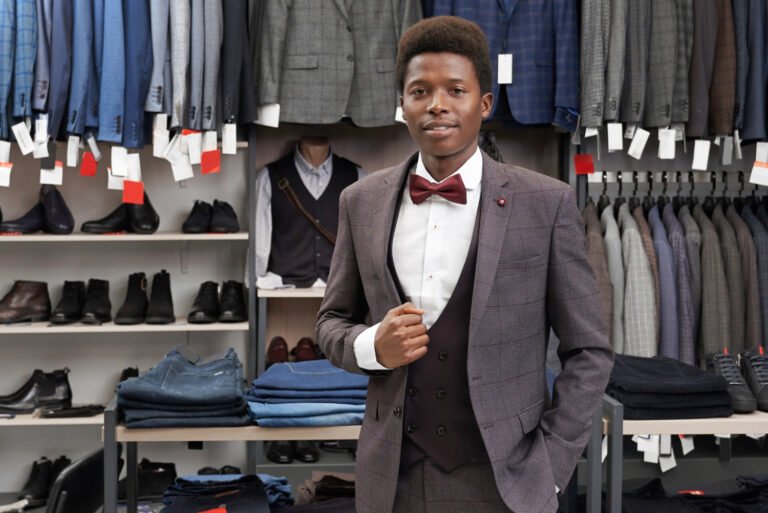
- Uniform in cloth, with jacket, waistcoat, and trousers cut from matching fabric — a defining feature that distinguishes a true “suit” from separates.
Initially considered too casual for business or formal occasions, the lounge suit spent the latter half of the 19th century gradually climbing the social ladder. By the early 20th century, it had displaced the frock coat as standard daywear, and the frock coat receded into ceremonial and highly formal use before disappearing from everyday life almost entirely.
This is the point at which the suit, in essentially the shape we would recognize today — jacket, trousers, and often a waistcoat, all in one cloth — became the default garment of the professional and social world.
The Golden Age of Tailoring: The Drape Cut
The 1920s and 1930s are often considered the high point of classic tailoring craft, particularly on London’s Savile Row, which had established itself over the preceding century as the center of English bespoke tailoring. This period produced the drape cut — a silhouette with fuller room through the chest and shoulders that tapered to a suppressed waist, creating a sculpted, athletic line while remaining comfortable to move in.
Key developments of this era include:
- Softer shoulders with roped sleeve heads, replacing the stiffer construction of earlier decades.
- Wider lapels, often peaked, reflecting a bolder overall silhouette.
- Higher-waisted, fuller-cut trousers, frequently worn with pleats and cuffs (turn-ups).
- A broader range of pattern and texture — chalk stripes, herringbones, and flannel became fashionable — though color remained largely restrained.
This period also cemented the three-piece suit (jacket, trousers, waistcoat) as the standard for business and formal daywear, and it established most of the vocabulary — drape, suppression, roped shoulder, peak lapel — that classic tailoring still uses today.
War, Rationing, and the Utility Suit
The Second World War interrupted the trajectory of tailoring in a way no fashion movement had before. Wool and other textiles were rationed for military use across Britain, the United States, and much of Europe, and governments issued formal restrictions on civilian clothing production to conserve material.
The results reshaped the suit permanently:
- Trousers lost their cuffs and lost width, since cuffs and excess fabric were considered wasteful.
- Double-breasted suits declined in favor of single-breasted cuts, which used less cloth.
- Jackets became shorter and less structured, with less padding and lining.
- Waistcoats became less common in everyday business dress, as the two-piece suit became the practical norm.
These weren’t stylistic choices; they were regulatory necessities. But once a generation of men had worn simpler, less cloth-intensive suits through the war years, the trimmer silhouette carried into postwar fashion rather than reverting fully to prewar excess. Wartime scarcity permanently nudged the suit toward the leaner shapes that would define the following decades.
Postwar Reinvention: Ivy, Mod, and Continental Cuts
The two to three decades following the war produced some of the most distinct regional variations in suit history, as American, British, and Italian tailoring traditions diverged and then cross-pollinated:
- The American Ivy League/Sack suit, associated with East Coast collegiate style, favored a soft, natural shoulder, minimal waist suppression, single-breasted three-button jackets (often cut so the top button was rarely fastened), and flat-front trousers — a relaxed, unstructured alternative to the tailored drape of prior decades.
- The Italian Continental cut, particularly from Rome and Naples, emphasized a closer, higher-waisted fit, narrower lapels, and lighter construction suited to warmer climates — a lean, body-conscious alternative to both British drape and American softness.
- British Mod tailoring of the 1960s took the slim silhouette further, with narrow lapels, tapered trousers, and sharper shoulders, worn by a youth culture that used sharp tailoring as a form of urban identity rather than establishment conformity.
This period matters because it is when “the suit” stopped being a single evolving silhouette and became a set of competing regional traditions — American, British, and Italian — that tailors and menswear brands still reference by name today.
The Peacock Revolution and the Power Suit
The late 1960s and 1970s brought a deliberate reversal of a century and a half of restraint. The so-called Peacock Revolution saw men’s fashion embrace bold color, wide lapels, flared trousers, and patterned fabrics that would have been unthinkable under the understated codes established by Brummell. Suits in this era featured exaggerated proportions: wide lapels, flared or “bell-bottom” trousers, and vivid colors including browns, mustards, and even patterned fabrics previously reserved for casualwear.
The 1980s swung toward a different kind of boldness: the power suit. Broad, padded shoulders, strong silhouettes, and a return to structured tailoring reflected the decade’s association between clothing and corporate authority and ambition. Double-breasted suits saw a significant revival during this period, worn as a visual shorthand for status and confidence in business environments.
Both movements demonstrate the same underlying pattern: the suit’s core structure (jacket plus trousers) stayed constant, while shoulder width, lapel size, and trouser cut swung dramatically to reflect the cultural mood of the moment.
Minimalism and the Modern Return to Tailoring
The 1990s reacted against the excess of the 1980s with minimalism — softer shoulders, single-breasted two-button jackets, and understated palettes returned to dominance, echoing (though not replicating) the softer American sack silhouette of decades earlier.
The 2000s and 2010s saw a pronounced return to slimmer, closer-fitting tailoring, drawing heavily on Italian proportions: narrower lapels, higher armholes, shorter jacket lengths, and slimmer trousers. This era also saw a broader revival of interest in classic tailoring generally — bespoke and made-to-measure services, heritage cloth mills, and traditional construction techniques all saw renewed attention as a counterpoint to fast fashion.
Today, the suit exists in a wider range of forms than at almost any point in its history — from soft, unstructured Neapolitan-influenced jackets to closely tailored, structured business suits — but every version still traces its DNA back to the same 19th-century decision: replace ornament with cut, and let fit do the talking.
Common Misconceptions About Suit History
- “The suit has always looked roughly the same.” In reality, shoulder shape, waist suppression, lapel width, and trouser cut have swung dramatically across eras — the only true constant is the jacket-and-trousers structure itself.
- “Beau Brummell invented the suit.” He didn’t design a specific garment; he popularized an aesthetic — precision, restraint, and impeccable fit — that later tailors built the lounge suit around decades after his influence peaked.
- “The three-piece suit is the ‘complete’ or ‘correct’ version, and two-piece is a shortcut.” The waistcoat’s decline was largely driven by wartime cloth rationing, not a loss of formality standards; the two-piece suit is a legitimate, historically established form in its own right.
- “Pinstripes, chalk stripes, and flannel are timeless suit fabrics.” They’re historically significant and enduring, but they became closely associated with tailoring specifically during the 1920s–1930s golden age, not from the suit’s earliest years.
- “Double-breasted suits are old-fashioned.” They have moved in and out of fashion repeatedly — dominant in the 1930s, largely absent postwar, revived in the 1980s power-suit era, and periodically fashionable since.
FAQ
Is the classic suit still relevant today? Yes. Despite two centuries of shifting silhouettes, the suit remains the default formal and business garment across most of the Western world, and its core structure — matching jacket and trousers — has never been seriously displaced by an alternative.
What’s the difference between a lounge suit and a business suit? They’re effectively the same garment; “lounge suit” is the historical and formal-dress-code term (still used on British invitations) for what is now generally just called a business suit or two/three-piece suit.
Why did men stop wearing waistcoats with suits? Primarily wartime cloth rationing in the 1940s, which discouraged the extra fabric a waistcoat required. The two-piece suit became the practical postwar norm and has remained standard business dress since, though three-piece suits never disappeared entirely.
What’s the difference between a frock coat and a modern suit jacket? The frock coat was knee-length, fitted at the waist, and worn for formal daywear through the Victorian era. The modern suit jacket descends from the shorter, less structured lounge jacket, which was originally considered informal but eventually replaced the frock coat as standard dress.
Which country’s tailoring tradition is “correct” — British, Italian, or American? None is more historically correct than the others; they’re parallel traditions that developed after the war with different priorities — British structure and drape, Italian close fit and lightness, American soft shoulders and comfort. Modern tailoring often borrows elements from all three.
Read also: