How to Dress Like a Gentleman: Timeless Style Rules
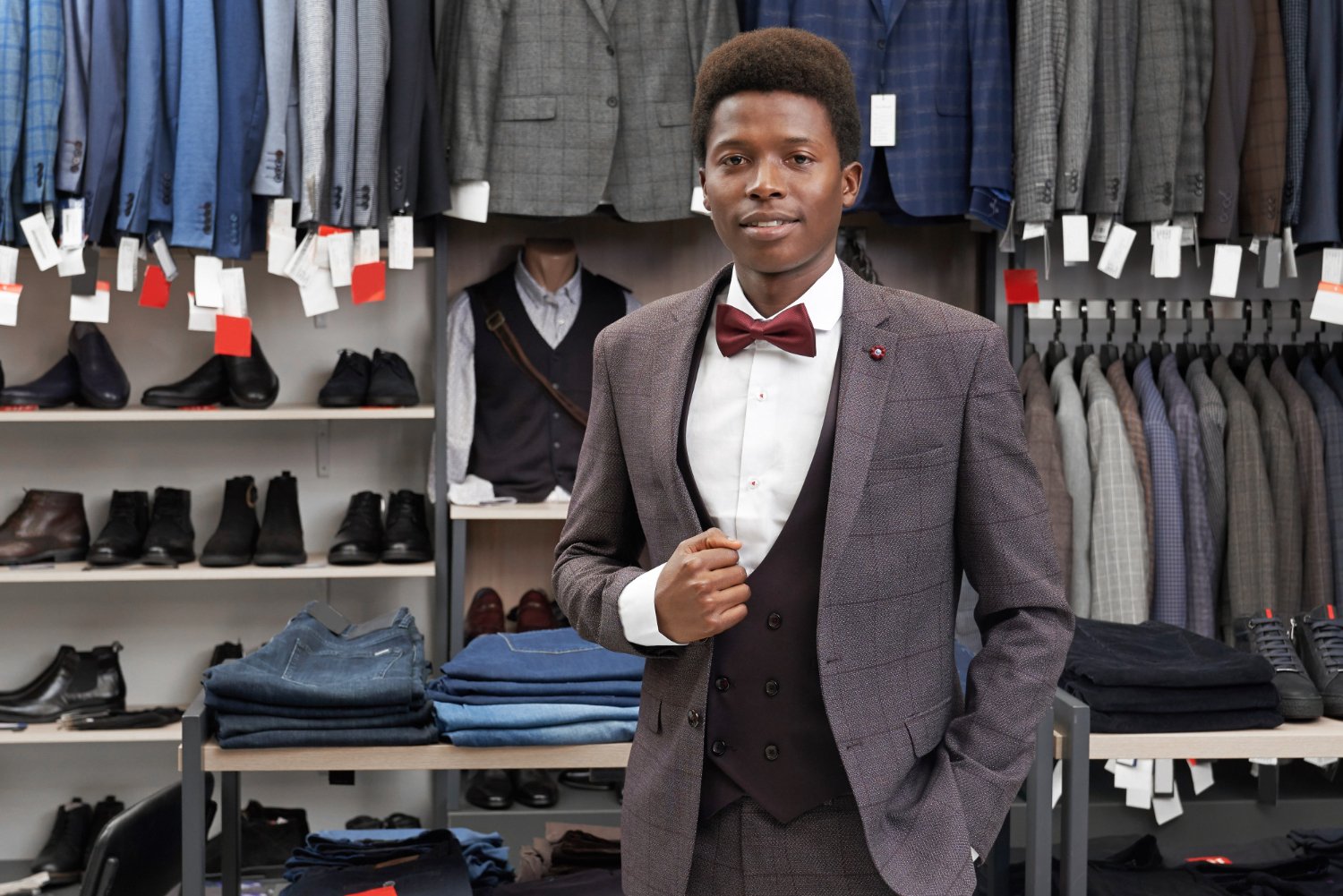
Dressing like a gentleman means prioritizing correct fit, occasion-appropriate clothing, and consistent grooming over trends, logos, or price tags. It is a system built on restraint and precision, not spectacle.
A man who follows these principles will look composed in nearly any setting, because the rules were designed to outlast fashion cycles rather than chase them.

This is not about owning a closet full of suits or knowing arcane tailoring terminology. It’s about a small number of decisions, made correctly and repeated consistently, that together produce the effect people describe as “put together” or “well-dressed”.
Below is the complete framework — the rules, the reasoning behind them, and the specific mistakes that undo them.
Quick Rules: Gentleman’s Style at a Glance
- Fit outranks everything else. A $150 shirt that fits perfectly will always look better than a $1,500 shirt that doesn’t.
- Dress for the occasion, not for your own comfort or preference. The setting dictates the dress code, not the reverse.
- Grooming is part of the outfit. Clean nails, a fresh haircut, and pressed clothing matter as much as the garments themselves.
- Buy fewer, better pieces. A gentleman’s wardrobe is built around versatility and construction quality, not volume.
- Limit yourself to a small number of proven color and pattern combinations. Predictability in this area reads as confidence, not lack of imagination.
- Consistency separates a gentleman from someone who is “dressed up” for one event. The standard should hold on an ordinary Tuesday, not just for weddings and interviews.
1. Fit Is the Foundation of Gentlemanly Dress
No rule on this list matters more than fit. Clothing that is too large reads as sloppy; clothing that is too tight reads as either ill-informed or trying too hard. Correct fit is the single fastest way to look more expensive and more deliberate without spending more money.
There are five checkpoints worth learning, regardless of the garment:

- Shoulders. The seam of a jacket or shirt shoulder should sit exactly at the point where your shoulder meets your arm. This cannot be altered easily by a tailor, so it should be correct at the point of purchase.
- Chest and torso. You should be able to close a jacket button without strain or excess fabric pooling at the sides. A closed fist should fit between your chest and the fabric, no more.
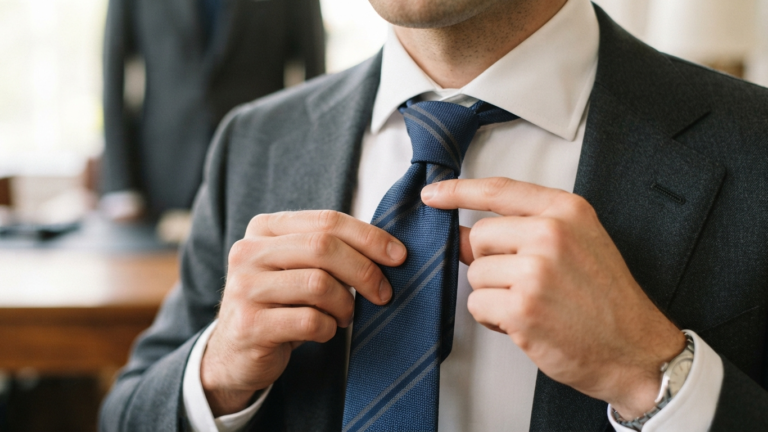
- Sleeve length. Jacket sleeves should end at the wrist bone, allowing a quarter to half an inch of shirt cuff to show. Shirt sleeves alone should end at the same point when the arm is extended.
- Trouser break. Trousers should have a slight break — a small fold — where the fabric meets the shoe, or a “no break” full stack for a more modern silhouette. Puddling fabric at the ankle is a fit failure, not a style choice.
- Rise and seat. Trousers should sit at the natural waist without gaping at the back or digging in at the front when seated.
If you take away one action item from this entire article, make it this: find a tailor before you spend money on new clothes. A basic hem, waist adjustment, or sleeve shortening costs a fraction of what most men spend on the garment itself, and it closes the gap between “off the rack” and “tailored” almost entirely.
2. Understanding Dress Codes and Occasion-Appropriate Attire
A gentleman reads the room before he gets dressed. Dress codes exist to remove ambiguity, and ignoring them — in either direction — signals a lack of social awareness rather than personal style.
Here is how to interpret an invitation or setting correctly:
- Identify the stated dress code, if one is given (white tie, black tie, formal, business formal, business casual, smart casual, casual).
- Cross-reference the venue and time of day. Evening events generally call for darker, more formal clothing than daytime events, even at the same stated dress code level.
- Match your formality to your host or the most senior person present, not your peers. It is safer to be slightly overdressed than underdressed.
- When no dress code is stated, default one level up from what you’d normally wear, then adjust down if you’re clearly out of step once you arrive.
- Consider the specific culture of the setting — a client dinner, a family gathering, and a industry conference with an identical “business casual” label can call for different interpretations.
A rough hierarchy, from most to least formal, that most Western dress codes fall along: white tie, black tie, formal/business formal, business casual, smart casual, casual. Learning to place any invitation on this scale is more valuable than memorizing rigid outfit formulas, because it teaches judgment that transfers to situations with no explicit dress code at all.
Read also: 18 Baggy Jeans Outfit Ideas for Men
3. The Wardrobe Fundamentals Every Gentleman Owns
A gentleman’s wardrobe is not large — it is efficient. The goal is a set of pieces that combine with each other in multiple ways, all built around neutral, durable colors.
The core pieces worth owning, roughly in order of priority:
- A well-fitted navy or charcoal suit — the single most versatile garment in menswear, appropriate for interviews, weddings, funerals, and business settings alike.
- White and light-blue dress shirts in a breathable cotton, which pair with any suit or sport coat and any tie.
- A navy blazer, distinct from a suit jacket, for smart casual and business casual settings.
- Gray flannel or wool trousers, which bridge formal and casual wardrobes.
- Dark brown or black leather dress shoes — oxfords for the most formal occasions, derbies or loafers for smart casual.
- A leather belt matching your shoe color, since mismatched belt and shoe leather is one of the most visible fit-and-finish errors a man can make.
- A quality overcoat in navy, charcoal, or camel, since outerwear is seen before anything underneath it.
Notice what is absent from this list: novelty items, seasonal trends, and anything that only works with one other piece in the closet. Every item above should combine with at least three or four others already in your wardrobe. That interchangeability is what allows a small wardrobe to produce dozens of distinct, correct outfits.
4. Color and Pattern: How to Combine Without Guesswork
Color coordination intimidates more men than any other part of dressing well, but the underlying system is simple once learned.
- Anchor every outfit in a neutral — navy, charcoal, gray, black, or brown. These colors form the base of the outfit and rarely clash with anything.
- Use the shirt to introduce a secondary color, typically white, light blue, or a muted pastel. Shirts are close to the face and should stay understated.
- Reserve bold color and pattern for the tie or pocket square only. These are the smallest pieces of the outfit and can carry the most visual energy without overwhelming it.
- Never combine more than two patterns of similar scale. A fine-striped shirt with a fine-checked tie will visually vibrate against each other; a fine stripe with a larger check or solid tie will not.
- Match metals. Belt buckle, watch case, and any other visible hardware should be the same tone — silver-toned or gold-toned, not mixed.
- When in doubt, default to texture instead of pattern. A textured wool tie against a plain shirt achieves visual interest with none of the risk of a clashing pattern.
This system removes the need to memorize specific color-wheel pairings. If the base is neutral, the shirt is muted, and only one accessory carries pattern or brightness, the outfit will almost always work.
5. Grooming and Accessories: The Details That Signal Care
Clothing alone does not make a gentleman. Grooming and accessories are what separate a correctly dressed man from a genuinely well-dressed one, because they are the details people notice at close range — in conversation, at a dinner table, during a handshake.
Non-negotiable grooming standards:
- Hair should be cut on a regular schedule, not allowed to grow out between haircuts until it looks unintentional.
- Facial hair, if worn, should be deliberately shaped, not simply left unshaven.
- Nails should be clean and trimmed. This is one of the first things noticed in a handshake or during a meal.
- Shoes should be polished and free of visible scuffing. Scuffed shoes undermine an otherwise correct outfit faster than almost any other single detail.
- Clothing should be pressed, not just clean. Wrinkled cotton and linen photograph and read as careless, even when the fit is correct.
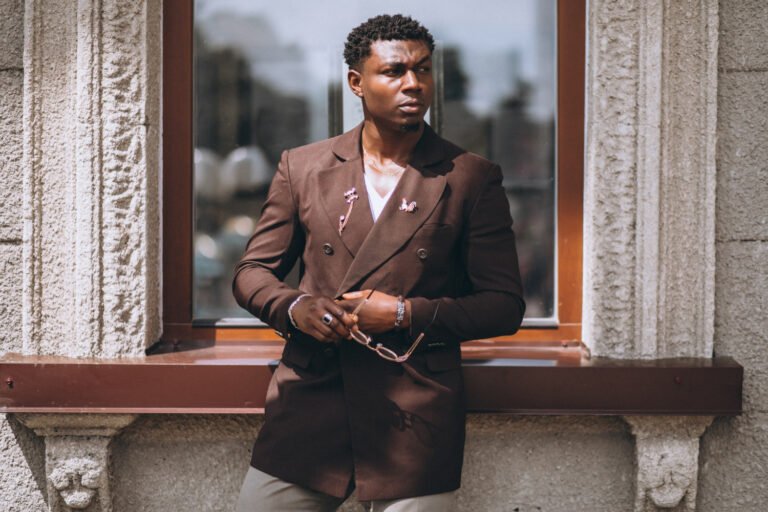
On accessories, restraint is the rule. A gentleman wears a watch, and perhaps one other piece — a signet ring, a simple bracelet, or cufflinks for formal occasions — rather than multiple statement pieces competing for attention. The goal of every accessory is to be noticed a beat after the whole outfit is noticed, not before it.
6. Building a Gentleman’s Wardrobe on a Budget
Dressing like a gentleman is not synonymous with spending heavily. It is synonymous with spending correctly.
- Prioritize fit and fabric over brand name. A well-fitted, natural-fiber garment from a mid-range retailer will outperform a designer piece that fits poorly or uses synthetic blends.
- Buy fewer items, more deliberately. Five versatile, well-fitted pieces produce more usable outfits than fifteen mismatched ones.
- Budget for tailoring as part of the purchase price, not as an afterthought. A $10–$40 alteration often does more for an outfit’s appearance than an extra $200 spent on the garment itself.
- Invest first in the pieces closest to the body and face — shirts, suits, and outerwear — since these have the greatest visual impact and the least room for compromise.
- Treat shoes as an exception to minimalism. Quality leather footwear, properly cared for, lasts for years and is one purchase where higher upfront cost is consistently justified.
7. Etiquette Rules That Complement the Clothes
Clothing operates alongside a small set of behavioral conventions, and ignoring them undercuts even a technically correct outfit.
- Remove your jacket only when the most senior person present does, or when the setting clearly calls for it.
- Unbutton a suit jacket when seated, and re-button it when standing, following the “sometimes, always, never” rule for a three-button jacket (sometimes button the top, always the middle, never the bottom) or simply never buttoning the bottom button of a two-button jacket.
- Remove hats indoors, with the exception of religious or medical necessity.
- Match your formality to the most formal element of the day, such as a ceremony or client meeting, even if casual events surround it.
Common Mistakes to Avoid
- Wearing clothes that are the wrong size “for now” while waiting to lose or gain weight. Dress for your current body, not a future one.
- Buttoning the bottom button of a suit or sport coat, which breaks the intended silhouette of the jacket.
- Mismatching belt and shoe leather color or finish.
- Over-accessorizing with multiple bracelets, rings, or a visible pattern clash across shirt, tie, and pocket square simultaneously.
- Neglecting shoe care, since scuffed or unpolished shoes undercut an otherwise correct outfit faster than any other detail.
- Chasing trends over fundamentals, resulting in a wardrobe with no internal consistency or long-term durability.
- Ignoring the stated or implied dress code of an event in either direction — arriving underdressed or conspicuously overdressed.
Frequently Asked Questions
Is dressing like a gentleman still relevant today? Yes. The specific garments have changed over the decades — collar shapes, trouser cuts, and jacket silhouettes evolve — but the underlying principles of fit, occasion-appropriateness, and grooming have remained the basis of well-regarded men’s style for well over a century. What changes is fashion; what stays constant is the framework.
What’s the difference between “gentleman style” and “business casual”? Gentleman style is a set of underlying principles — fit, occasion-appropriateness, quality, restraint — that can be applied at any formality level. Business casual is one specific formality tier within that framework, typically meaning a collared shirt with dress trousers or chinos, without a full suit. A gentleman can dress business casual, but business casual alone doesn’t guarantee gentlemanly execution if fit or grooming are neglected.
Do I need a tailor to dress like a gentleman? You don’t need a bespoke tailor building garments from scratch, but you do need access to alterations. Even off-the-rack clothing from mainstream retailers requires basic adjustments — hemming trousers, taking in a waist, shortening sleeves — to achieve correct fit for most body types. This single step closes most of the gap between average and excellent dressing.
What’s the single most important rule? Fit. A correctly fitted, inexpensive garment will consistently outperform an expensive, ill-fitting one in how put-together a man appears. If a wardrobe budget must be allocated to only one priority, it should go toward fit and alterations.
Can dressing like a gentleman be affordable? Yes. The framework rewards deliberate, infrequent purchasing of versatile, well-fitted pieces over frequent purchasing of trend-driven items. A smaller, correctly fitted wardrobe built over time is both more affordable in the long run and more consistent in appearance than a larger, inconsistent one.
Read also: