The Complete Guide to Men’s Classic Style Essentials
Classic men’s style is built on a fixed set of wardrobe essentials — the suit, the dress shirt, the blazer, the trouser, the leather shoe, and the outerwear piece — chosen in neutral colors, natural fabrics, and correct fit, and worn according to occasion.
These essentials do not change with seasonal trends because they were selected, over more than a century of use, for versatility rather than novelty.

This guide catalogs every essential a classic wardrobe requires, explains why each one earns its place, and lays out the order in which to acquire them if building a wardrobe from scratch.
Quick Rules: Classic Style Essentials at a Glance
- Neutral colors form the base of every essential — navy, charcoal, gray, black, brown, and white — because neutrals combine with the widest number of other pieces.
- Natural fibers outperform synthetics in classic style: wool, cotton, linen, and leather age well and hold shape; polyester and other synthetics do not.
- Every essential should combine with at least three or four other pieces already owned. If a garment only pairs with one other item, it isn’t earning its place in a classic wardrobe.
- Fit determines quality of appearance more than price does. A correctly fitted, mid-range essential outperforms an ill-fitting expensive one every time.
- Build outward from the suit, not the accessories. The suit, shirt, and shoe form the foundation; ties, pocket squares, and jewelry are refinements added afterward.
- Buy fewer essentials, but buy them in the best fabric and construction affordable. A classic wardrobe rewards depth of quality over breadth of quantity.
1. The Suit: The Foundation of the Classic Wardrobe
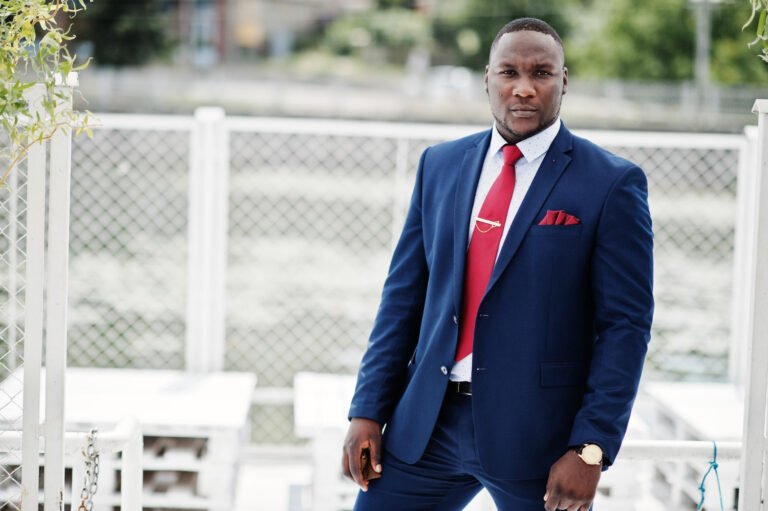
The suit is the single most important essential in a classic wardrobe because it is the most versatile formal garment a man can own — appropriate for interviews, weddings, funerals, client meetings, and formal social events alike.
The first suit to own should be:
- Solid navy or charcoal gray, since either color pairs with the widest range of shirts, ties, and shoes.
- A two-button, notch-lapel jacket, the most broadly appropriate cut across formal and business settings.
- Made from wool, ideally a mid-weight worsted wool suitable for year-round wear rather than a seasonal fabric.
- Fitted through the shoulders and chest, since these areas cannot be altered by a tailor after purchase.
- Hemmed to break correctly at the shoe, an alteration nearly every off-the-rack suit requires.
A second suit, once the first is established, should be the opposite of the first in color — if the first is navy, the second should be charcoal, or vice versa — to maximize the range of occasions covered by only two garments.

2. The Dress Shirt: The Most-Worn Essential
The dress shirt is worn more often than any other classic essential, since it pairs with suits, blazers, and trousers alike, both with and without a tie.
Core dress shirt essentials:
- White, in a spread or semi-spread collar — the single most versatile shirt in existence, appropriate under any suit or blazer for any formality level.
- Light blue, in the same collar style — nearly as versatile as white, with slightly more casual range.
- 100% cotton, in a mid-weight weave such as poplin or twill, which breathes well and holds a crisp appearance after pressing.
- A collar style matched to face shape and tie knot preference — narrower collars suit narrower ties and knots, wider spread collars suit larger knots like the Half-Windsor or Full Windsor.
Beyond the first two shirts, additional colors and light patterns (fine stripes, small checks) can be added, but white and light blue should always represent the majority of a classic shirt collection, since they are the only two colors that pair correctly with every suit, tie, and occasion.
Read also: How to Tie a Tie: 8 Classic Knots Every Man Should Know
3. The Blazer: The Bridge Between Formal and Casual
The navy blazer is distinct from a suit jacket — it is designed to be worn with odd (mismatched) trousers rather than as part of a matching two-piece — and serves as the essential bridge between business formal and smart casual dressing.
What makes a blazer classic rather than a suit separate:
- Metal or horn buttons, rather than the plastic or fabric-covered buttons typical of suit jackets.
- A slightly heavier or more textured wool than a typical suit fabric, since it is meant to be worn on its own rather than matched to trousers of the same cloth.
- A single-breasted, two-button cut for the most versatile, broadly wearable silhouette.
A navy blazer pairs correctly with gray flannel trousers, khaki chinos, or dark jeans (in more casual settings), making it one of the highest-value pieces in a classic wardrobe relative to its cost.
4. Trousers: The Most Overlooked Essential
Trousers receive less attention than jackets and shirts, but a classic wardrobe depends on having the right trouser fabrics and colors to pair correctly with jackets, blazers, and casual tops alike.
Essential trousers to own:
- Gray flannel or wool trousers, which pair with a navy blazer for business casual settings and with a suit jacket in a pinch for a mismatched formal look.
- Khaki or tan chinos, the standard smart casual trouser, appropriate with a blazer, a polo, or an oxford shirt.
- Dark, unwashed denim, reserved for the most casual end of a classic wardrobe, worn with a blazer only in relaxed smart casual settings.
Trousers should be hemmed to the correct break for the shoe they’ll most often be worn with, since a single pair of trousers hemmed for dress shoes will not break correctly with sneakers or boots.
5. The Leather Shoe: Where Quality Cannot Be Compromised
Footwear is the essential category where spending more is most consistently justified. Quality leather shoes, properly cared for, last for years or decades; low-quality shoes wear out within a single season of regular use and cannot be resoled or repaired.
The three essential shoe types:
- Black oxfords, cap-toe or plain-toe — the standard for the most formal occasions and dark suits.
- Brown derbies or brogues — one step more casual than the oxford, appropriate for business casual and smart casual settings, and correct with brown or navy suits.
- Brown or burgundy penny loafers — the essential smart casual and warm-weather shoe, worn without socks or with no-show socks in casual settings, and with trousers or chinos rather than a full suit.
Basic shoe care essentials every classic wardrobe requires:
- Cedar shoe trees, inserted immediately after each wear to absorb moisture and preserve shape.
- A horsehair brush, used before and after polishing to remove surface dust.
- Leather conditioner, applied periodically to prevent the leather from drying and cracking.
- Polish in a color matched to each pair of shoes, applied regularly rather than only when scuffing becomes visible.
6. Outerwear: The First Thing People See
Outerwear is worn over every other essential in cold weather, making it the first garment observed and the last one that should be treated as an afterthought.
Essential outerwear pieces:
- A wool overcoat in navy, charcoal, or camel — long enough to cover a suit jacket, appropriate over both business and formal attire.
- A field jacket or waxed cotton jacket in a neutral color, for smart casual and weekend wear.
- A lightweight trench coat, particularly useful in transitional weather and correct over both suits and casual clothing alike.
The overcoat should be sized to comfortably fit over a suit jacket without restricting movement, which typically means sizing one step larger than a suit jacket would require on its own.
7. Accessories: The Finishing Layer
Accessories are added only after the core garments above are established. Their role in classic style is to refine an outfit that is already correct, not to compensate for one that isn’t.
Essential accessories:
- A leather belt in both black and brown, matched to the shoe color being worn that day.
- A simple analog watch, worn as the sole piece of jewelry in most classic outfits.
- Silk ties in navy, burgundy, and a single subtle pattern, covering the majority of business and formal occasions.
- White linen or cotton pocket squares, the most versatile and universally correct option for formal settings.
- Dress socks in navy, charcoal, and black, long enough to cover the calf when seated, avoiding any visible skin between trouser and sock.
Building the Wardrobe: Recommended Order of Acquisition
For a man building a classic wardrobe from nothing, the following order maximizes the number of usable outfits at each stage:
- One navy or charcoal suit, properly tailored.
- Two dress shirts — one white, one light blue.
- One pair of black leather oxfords and a matching belt.
- One navy blazer.
- One pair of gray flannel trousers and one pair of khaki chinos.
- One pair of brown derbies or loafers and a matching brown belt.
- Two or three ties in navy, burgundy, and a subtle pattern.
- A wool overcoat in navy or charcoal.
By the end of this sequence, a man owns roughly fifteen individual pieces capable of producing dozens of distinct, correct outfits across formal, business, and smart casual occasions — the defining efficiency of a classic wardrobe.
Common Mistakes to Avoid
- Buying accessories before the core essentials are established, resulting in ties and pocket squares with nothing correct to pair them with.
- Choosing trend colors or patterns over neutrals for foundational pieces like the first suit or overcoat, limiting how many other items they can pair with.
- Under-investing in shoes relative to other essentials, despite footwear being the category where quality most directly affects both appearance and longevity.
- Owning only one suit color, which limits outfit options and requires more frequent dry cleaning and wear on a single garment.
- Neglecting alterations, treating tailoring as optional rather than a required final step in acquiring any essential.
- Mixing metal tones or leather colors across belt, shoes, and watch within a single outfit.
Frequently Asked Questions
How many essentials does a classic wardrobe actually need? A functional classic wardrobe can be built from roughly 15 to 20 core pieces — two suits, four to six shirts, one blazer, two or three trouser options, two or three pairs of shoes, and a small set of accessories and outerwear. The goal is interchangeability, not volume, so a well-chosen 15-piece wardrobe outperforms a poorly chosen 40-piece one.
Is classic style the same as “business formal”? No. Classic style is a broader set of principles — neutral colors, natural fabrics, correct fit, versatility — that spans multiple formality levels, from black tie down through smart casual. Business formal is one specific tier within that range, not the entirety of classic style.
Do classic style essentials go out of fashion? The specific cuts and silhouettes shift gradually over decades — lapel widths, trouser tapering, and jacket lengths have all evolved — but the essentials themselves (the suit, the white shirt, the leather oxford, the navy blazer) have remained constant fixtures of classic style for well over a century, which is precisely why they qualify as essentials rather than trends.
What’s the difference between a suit jacket and a blazer? A suit jacket is cut from the same cloth as a matching pair of trousers and is designed to be worn as a two-piece set. A blazer is a standalone jacket, typically in a heavier or more textured fabric with metal or horn buttons, designed to be worn with odd (non-matching) trousers.
Where should a limited budget be spent first? On the first suit and the first pair of leather dress shoes, since these two items unlock the widest range of formal and business occasions and are the hardest to substitute with less expensive alternatives. Shirts, belts, and accessories can be acquired more gradually without limiting what occasions the wardrobe can cover.
Read also: