Old Money Aesthetic: The Ultimate Men’s Style Guide
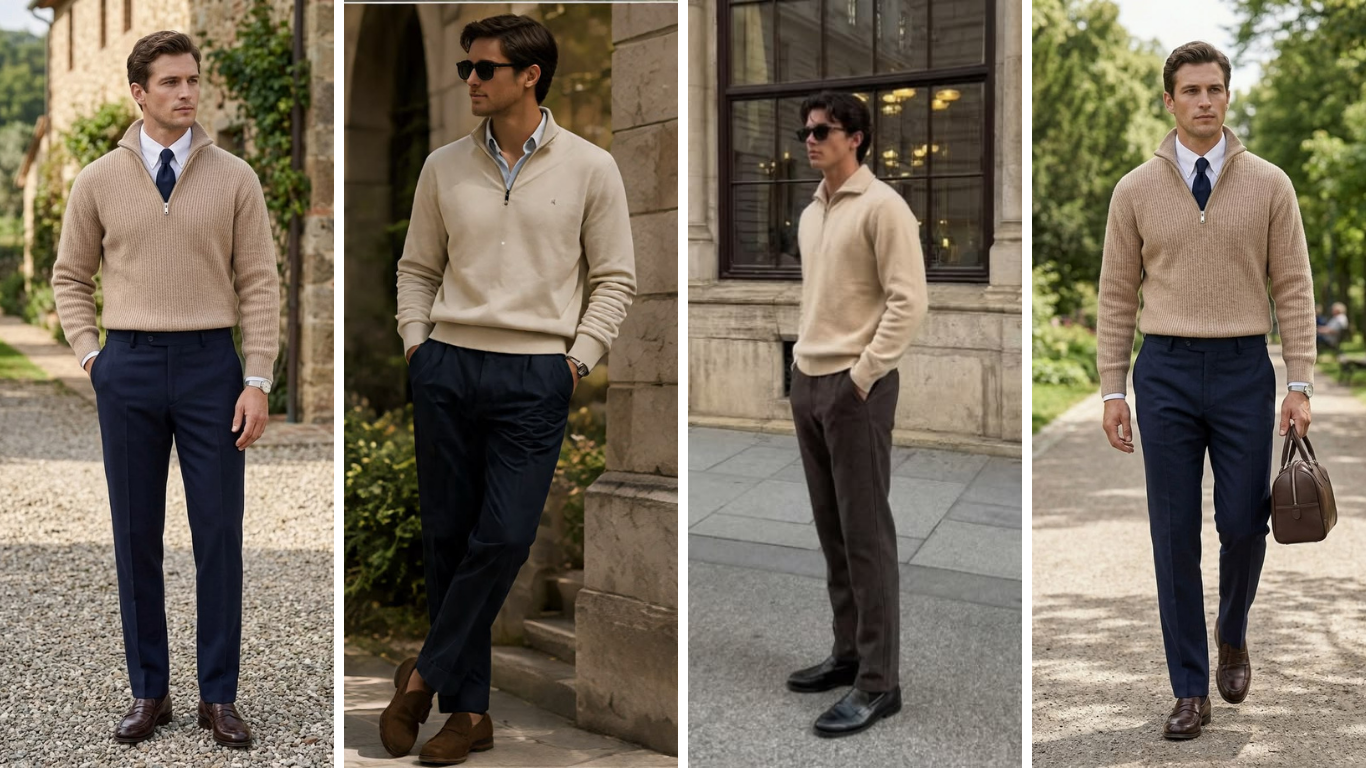
The old money aesthetic for men is built on quiet, high-quality basics — think tailored chinos, crewneck sweaters, loafers, and unstructured blazers in neutral tones — worn with zero logos and zero effort to look expensive on purpose.
It’s less about specific brands and more about a whole philosophy: understated fabrics, classic silhouettes, and pieces that look like they’ve been worn (and cared for) for years, not bought last week.
What Exactly Is the Old Money Aesthetic?
Old money style comes from a specific idea: real wealth doesn’t need to announce itself.
The look originated with East Coast prep schools, Ivy League campuses, and country club culture — think tennis whites, boat shoes, and tweed jackets passed down rather than bought new.
The modern version, popularized heavily on social media, borrows that same restraint but applies it to everyday dressing: fewer pieces, better materials, and an almost total absence of visible branding.
The core idea to understand is that old money dressing signals status through quality and fit, not through logos or trend pieces.

A $600 cashmere crewneck and a $60 cotton one can look nearly identical from across a room — the difference shows up in drape, color, and how well it’s cared for over time. That’s the entire game.
What Are the Key Pieces in an Old Money Wardrobe?
You don’t need fifty items to nail this look — you need the right dozen, worn on repeat. Here’s the core lineup:
- Oxford cloth button-down shirts — white, light blue, and a subtle stripe cover almost everything
- Crewneck and V-neck sweaters — merino or cashmere, in navy, cream, or forest green
- Unstructured navy blazer — the single most versatile piece in this entire aesthetic
- Flat-front chinos — camel, navy, and stone
- Tailored trousers — wool in gray or navy for anything semi-formal
- Penny loafers or driving loafers — brown suede or leather, no exceptions on quality here
- Quarter-zip pullovers — layered over a collared shirt, a genuine old money uniform
- Trench coat or wool overcoat — camel or navy, worn as your default outerwear
- Leather belt with a simple buckle — no visible logo, no oversized hardware
- A classic watch — leather or metal strap, understated face, nothing flashy
Notice what’s missing: no graphic tees, no logo-heavy streetwear, no statement sneakers. That’s not an accident — it’s the whole point.
What Colors Define Old Money Style?
Old money color palettes stay tight and earthy on purpose. Think navy, cream, camel, forest green, burgundy, gray, and white. Black shows up occasionally but is used sparingly, since it can read a little sharp and modern compared to the softer, richer tones that define this look.
Bright colors and neon are essentially banned — if a color would look at home on a hunting estate, a sailboat, or a golf course, it belongs in this wardrobe.
The trick is picking colors that all mix with each other. If every piece you own works with navy, camel, and cream, you’ll never have a “nothing goes together” morning again — which is a big part of why this aesthetic photographs as so put-together.
What Fabrics Should You Look For?
Fabric does more heavy lifting in old money style than almost anything else, because the silhouettes are intentionally simple — the quality has to show up somewhere. Prioritize:
- Cashmere and merino wool for sweaters and knitwear
- Heavyweight cotton for shirts and chinos (avoid anything thin or shiny)
- Wool and wool-blend for blazers, trousers, and outerwear
- Suede and full-grain leather for shoes, belts, and bags
- Corduroy and tweed for texture in colder months
Avoid synthetic blends, anything with a visible sheen, and fast-fashion cotton that pills after a few washes. If a fabric feels flimsy in your hands, it will look flimsy in photos — and it’ll undercut everything else you’re doing right.
Read also: How to Build a Signature Style as a Man (Step-by-Step Guide)
How Should Old Money Clothing Fit?
Fit is where a lot of men get old money style wrong. This isn’t a baggy or oversized aesthetic, and it’s not slim-fit-skinny either — it sits squarely in the middle. Blazers should be unstructured and comfortable through the shoulder, never boxy.
Trousers should sit at the natural waist with a slight taper, never skinny, never pooling at the ankle. Shirts should skim the body without being tight.
The general rule: everything should look like it was made for you specifically, without looking tight, trendy, or like you’re trying too hard. If in doubt, size up slightly on knitwear and blazers, and get chinos and trousers tailored to your exact leg — that single adjustment does more for this look than any individual purchase.
How Do You Build an Old Money Wardrobe on a Budget?
You don’t need luxury labels to pull this off — you need to shop smart and prioritize the right categories. Here’s where to spend and where to save:
Spend more on: outerwear (a good coat lasts a decade), shoes (cheap leather looks cheap fast), and knitwear (fabric quality is instantly visible).
Save on: basic tees and undershirts, socks, and anything you’ll layer under other pieces where fabric quality is less visible.
Thrift stores and secondhand platforms are genuinely useful here, since older pieces from mid-range heritage brands were often made with better fabric than what’s sold new today at the same price point.
A secondhand wool blazer in good condition will usually beat a brand-new fast-fashion one, both in quality and in how well it fits the aesthetic.
Old Money vs. Quiet Luxury: What’s the Difference?
These two terms get used interchangeably online, but they’re not quite the same thing. Old money style is rooted in a specific cultural reference point — prep schools, country clubs, East Coast heritage — and leans slightly more traditional, with pieces like tweed, argyle, and boat shoes.
Quiet luxury is the broader, more modern umbrella term: it’s about understated, high-quality dressing in general, without the specific preppy references.
Every old money outfit could be described as quiet luxury, but not every quiet luxury outfit is old money — a minimalist black turtleneck and slim trousers is quiet luxury, but it isn’t really old money.
How Do You Style Old Money Outfits for Different Occasions?
The beauty of this aesthetic is that the same core pieces stretch across almost every part of your life — you’re just adjusting the combination, not buying a separate wardrobe for each scenario.
For the office: a wool blazer over an oxford shirt, tailored trousers, and loafers reads as polished without looking like a costume. Swap the tie for an open collar in most modern workplaces — old money style has always favored a slightly undone formality over anything too stiff.
For weekend errands: a quarter-zip or crewneck sweater over a collared shirt, paired with chinos and clean white or tan sneakers, hits the exact “effortless but put together” note this look is known for.
For a dinner or date night: swap the sneakers for loafers, add a navy blazer, and consider a pocket square in a muted tone. This is where texture — a corduroy jacket, a cable-knit sweater — earns its keep, since it adds visual interest without needing a single loud color.
For colder months: lean on outerwear to carry the look. A camel overcoat or a waxed field jacket over the exact same base pieces instantly reads as seasonal without requiring a new wardrobe.
The pattern across all four: the base pieces barely change. You’re rotating outerwear, footwear, and one or two accent pieces, which is exactly how this aesthetic manages to look effortless — because, once the wardrobe is built, it actually is.
How Do You Accessorize the Old Money Look?
Accessories in this aesthetic follow the same rule as everything else: understated over statement. A few that consistently work:
- A leather watch with a simple dial — steer clear of oversized cases or anything with a visible logo on the face
- A signet ring or simple gold band, worn singly rather than stacked
- A structured leather bag or briefcase in brown or black, used instead of a branded backpack
- A wool scarf in a neutral tone for colder months, draped rather than tightly wrapped
- Sunglasses with a classic frame — tortoiseshell or thin metal, avoiding anything oversized or logo-heavy
The through-line with every accessory here is the same as with clothing: if it draws attention to itself rather than to how well the whole outfit works together, it doesn’t belong in this aesthetic. Old money dressing rewards restraint at every level, right down to the smallest details.
Read also: Weekend Outfit Ideas for Men: Comfortable Yet Stylish
Common Mistakes Men Make With Old Money Style
- Buying logo-heavy pieces. Old money dressing is defined by the absence of visible branding — a giant embroidered logo undoes the entire look instantly.
- Going too formal, too often. This isn’t a suit-and-tie aesthetic for daily wear. It’s chinos and a sweater, not a full three-piece suit to run errands.
- Ignoring texture. A wardrobe of flat, smooth fabrics in the right colors still falls flat without texture — corduroy, tweed, and cable knits add the depth this look needs.
- Wearing pieces that are too tight or too trendy. Skinny-fit anything reads as modern streetwear, not old money — the silhouette needs to stay classic.
- Skipping outerwear. A great sweater and chinos combo can be undone by a cheap, modern puffer jacket thrown over it. Outerwear needs to match the rest of the look.
- Forgetting the details. A scuffed shoe, a stretched-out collar, or a frayed belt breaks the “well cared for” illusion this entire aesthetic depends on.
Old Money Style: Do This / Not That
| Do This | Not That |
|---|---|
| Wear a navy blazer with chinos and loafers | Wear a logo hoodie with joggers |
| Choose cashmere, wool, and heavyweight cotton | Choose synthetic blends or thin, shiny fabric |
| Stick to navy, camel, cream, and forest green | Wear neon or heavily saturated color |
| Get trousers tailored to break cleanly at the shoe | Wear skinny or overly baggy trousers |
| Pick a classic, understated watch | Wear a flashy, oversized statement watch |
| Layer a quarter-zip over a collared shirt | Wear a graphic tee as your top layer |
FAQ
What is considered old money style for men? Old money style for men is a quiet, understated wardrobe built around tailored basics — think navy blazers, chinos, crewneck sweaters, and loafers — in a tight neutral color palette with no visible logos or branding.
Can you achieve old money style without spending a lot of money? Yes. The look is more about color palette, silhouette, and fabric choice than brand names. Shopping secondhand for wool and cashmere pieces, and getting basics like chinos tailored to fit, gets you most of the way there without a luxury budget.
What’s the difference between old money and preppy style? They overlap heavily, but preppy style tends to be a bit brighter and more playful — think collegiate stripes and bold color blocking — while old money style leans quieter and more restrained, favoring neutral tones and minimal detailing over anything eye-catching.
What shoes go with old money style? Penny loafers, driving loafers, and clean leather derby shoes are the core options. Sneakers aren’t off-limits entirely, but they should be minimal, low-profile, and in a neutral color like white or tan rather than anything flashy or logo-heavy.
Read also: