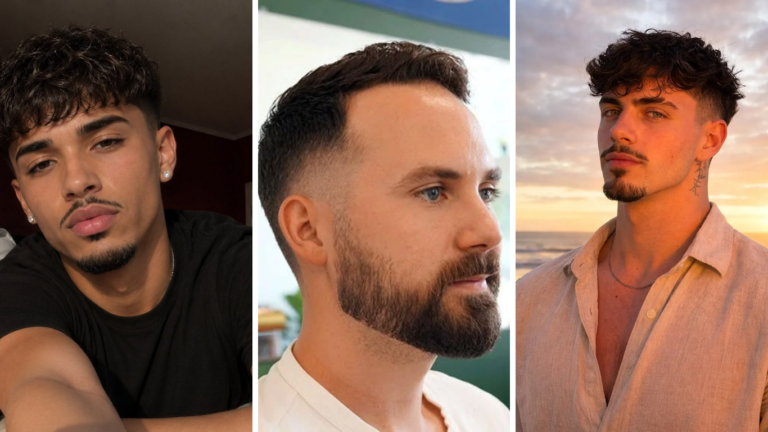
30 Best Haircuts for Men in 2026 (By Face Shape & Hair Type)
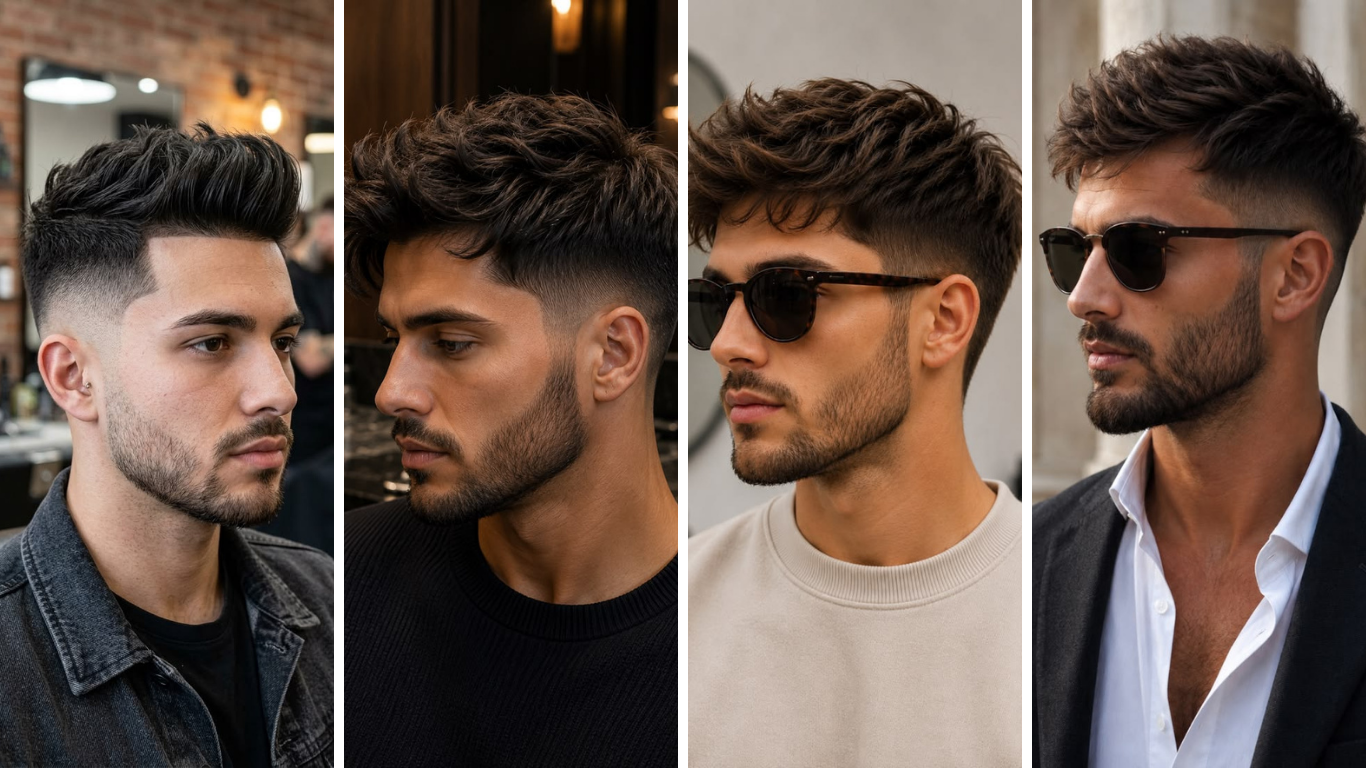
The right haircut in 2026 comes down to three things: your face shape, your hair’s natural texture, and how much time you’re realistically willing to spend styling it each morning.
Get those three right and almost any trend on this list will work on you — get them wrong and even the “best” haircut of the year will fight you every day, no matter how good it looks on the guy in the photo.
A textured crop that looks effortless on someone with thick, wavy hair can look thin and patchy on fine, straight hair. A curly shag that frames a round face beautifully can add unwanted width to a face that’s already wide at the cheeks. This is why “just show your barber a picture” only gets you halfway there — the picture doesn’t know your hairline, your growth pattern, or your bone structure.
That’s the approach this guide takes. Instead of ranking haircuts by how often they show up on Pinterest, it groups them by who they’re actually built for, so you can skip straight to the cuts worth bringing into your next appointment.
Below you’ll find 30 haircuts for 2026, organized loosely from lowest-maintenance to most involved, each with the specific language to use at the barber chair so you walk out with what you pictured — not a rough approximation of it.
How to Tell Your Face Shape (and Hair Type) Before You Pick a Cut
Before you screenshot a haircut, do this 60-second check in front of a mirror. It won’t be perfectly clinical, but it will be accurate enough to rule out the cuts that won’t work for you and point you toward the ones that will.

Face shape: Pull your hair back with a headband or your hands so your hairline is fully visible. Look straight on and mentally compare the width of your forehead, your cheekbones, and your jawline, along with the overall length of your face from hairline to chin.
- Oval: Face is roughly 1.5 times longer than it is wide, with a jaw slightly narrower than the forehead and softly rounded edges. This is considered the most versatile shape — nearly every cut on this list will work.
- Round: Width and length are close to equal, the jawline is soft rather than angular, and the fullest point of the face is at the cheeks. You’ll generally want a cut with height on top to visually lengthen the face.
- Square: Forehead, cheekbones, and jaw are all similar in width, with a strong, angular jawline and minimal taper toward the chin. Textured, slightly longer styles on top soften the hard angles.
- Diamond: A narrow forehead and narrow jaw with wide, prominent cheekbones in between. A fringe or a defined side part helps balance out the width at the cheeks.
- Rectangle (Oblong): Similar to oval but noticeably longer, with a straighter line running from cheek to jaw rather than a curve. Avoid adding extra height on top; keep some width and fullness at the sides instead.
- Heart: A wider forehead tapering down to a narrower, sometimes pointed chin. Side-swept fringes and cuts with volume at the jawline help balance the proportions.
Hair type: Wash your hair, apply no product at all, and let it air-dry completely. Then look closely at the shape of an individual strand rather than the hair as a whole, since texture can look different in a full head of hair than it does strand by strand.
- Falls straight with no visible bend anywhere along the strand: Straight (Type 1)
- S-shaped bends along the strand, but no full closed loops: Wavy (Type 2)
- Loose to tight loops that spring back into shape after you stretch them: Curly (Type 3)
- Tight coils, a zigzag pattern, or a springy “z” shape with significant shrinkage: Coily (Type 4)
Once you know your face shape and hair type, cross-reference them against the “best for” notes in each entry below. Most cuts on this list are flexible across two or three hair types, but face shape tends to be the bigger factor in how a cut ultimately reads, so weigh that a little more heavily if the two ever pull in different directions.
The 30 Best Haircuts for Men in 2026
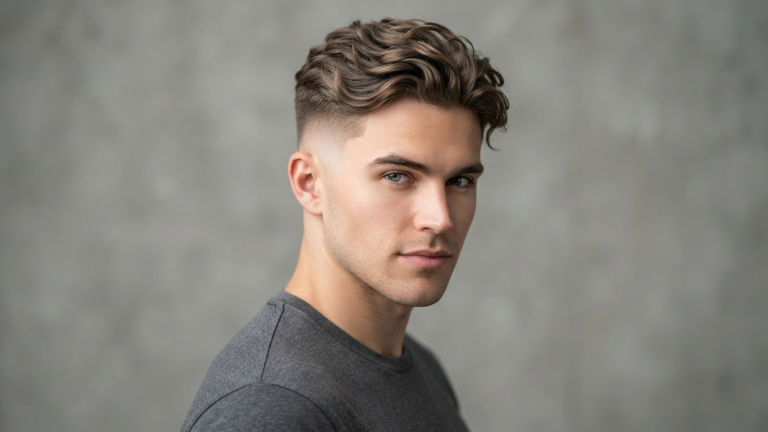
1. Textured Crop
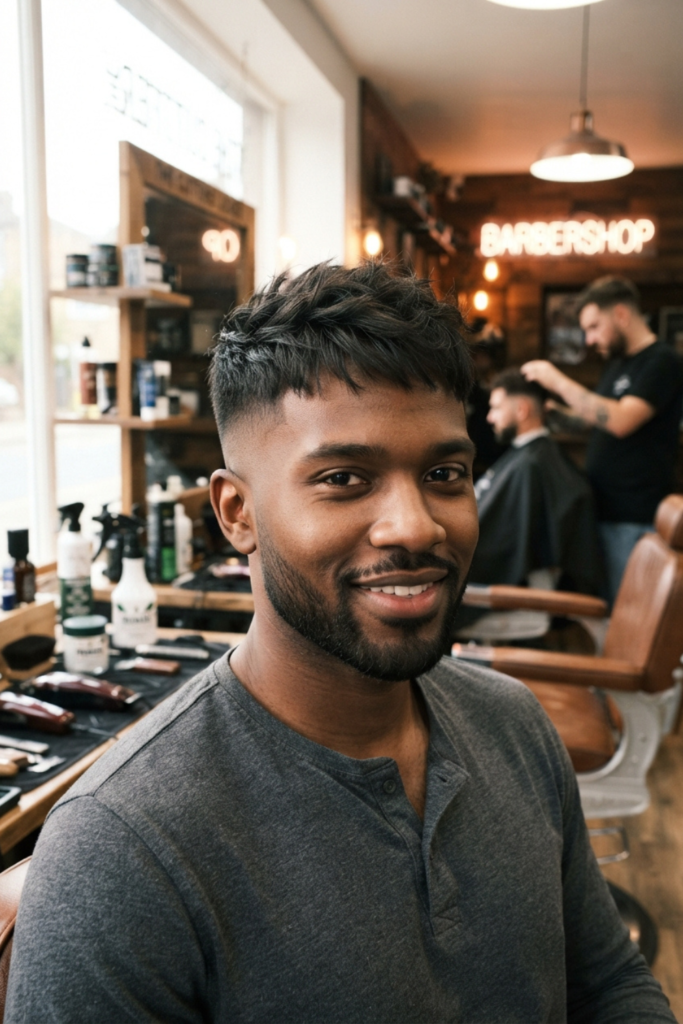
The textured crop pairs short, tapered or faded sides with a slightly longer, choppy top that’s cut with a razor or point-cutting shears to create movement, then finished with a matte texturizing paste or clay for a piecey, undone look.
It’s one of the most requested cuts of the last several years because it works with the hair’s natural texture instead of fighting it, which means less daily styling time.
It’s especially strong on straight or wavy hair and flatters nearly every face shape, with a particular benefit for round faces because the added height and texture on top visually elongates the face.
Ask your barber for: “a textured crop, scissor-cut on top with point-cutting for texture, skin fade on the sides.”
2. Classic Crew Cut
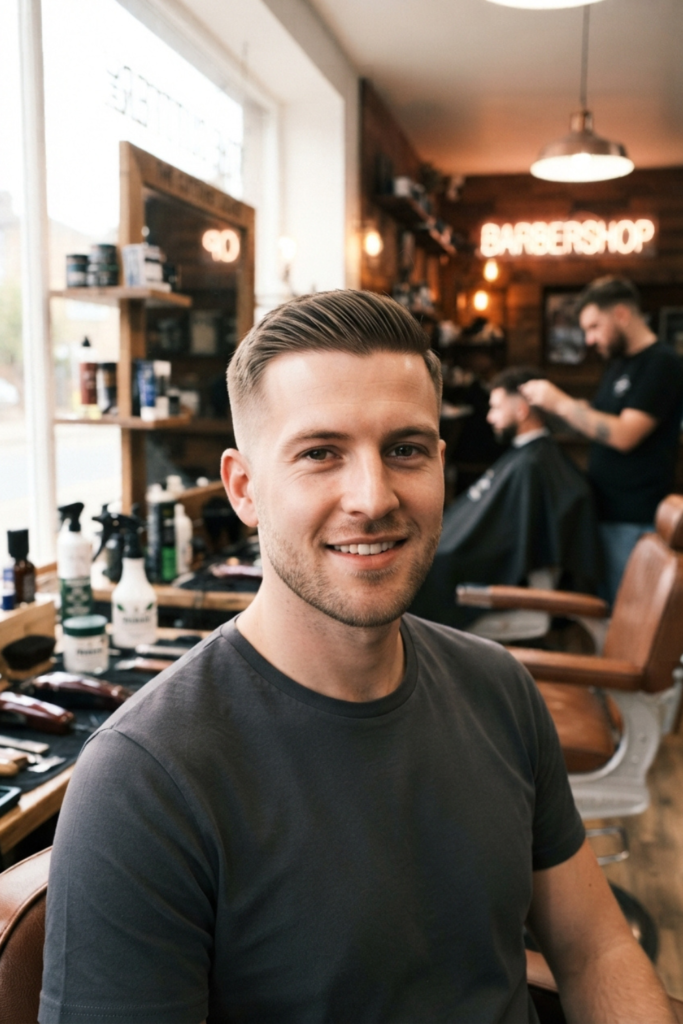
The crew cut keeps a short, uniform length across most of the head with slightly longer hair left at the front, tapering down into short sides and back.
It’s a military-derived style that has stuck around because it’s genuinely low maintenance — a quick run of the fingers through damp hair is often all the styling it needs.
It works particularly well with straight or fine hair, since there isn’t enough length for texture to create unwanted volume, and it suits most face shapes without drawing extra attention to any one feature. Ask for: “a crew cut, quarter-inch on top tapering to skin on the sides.”
3. Buzz Cut
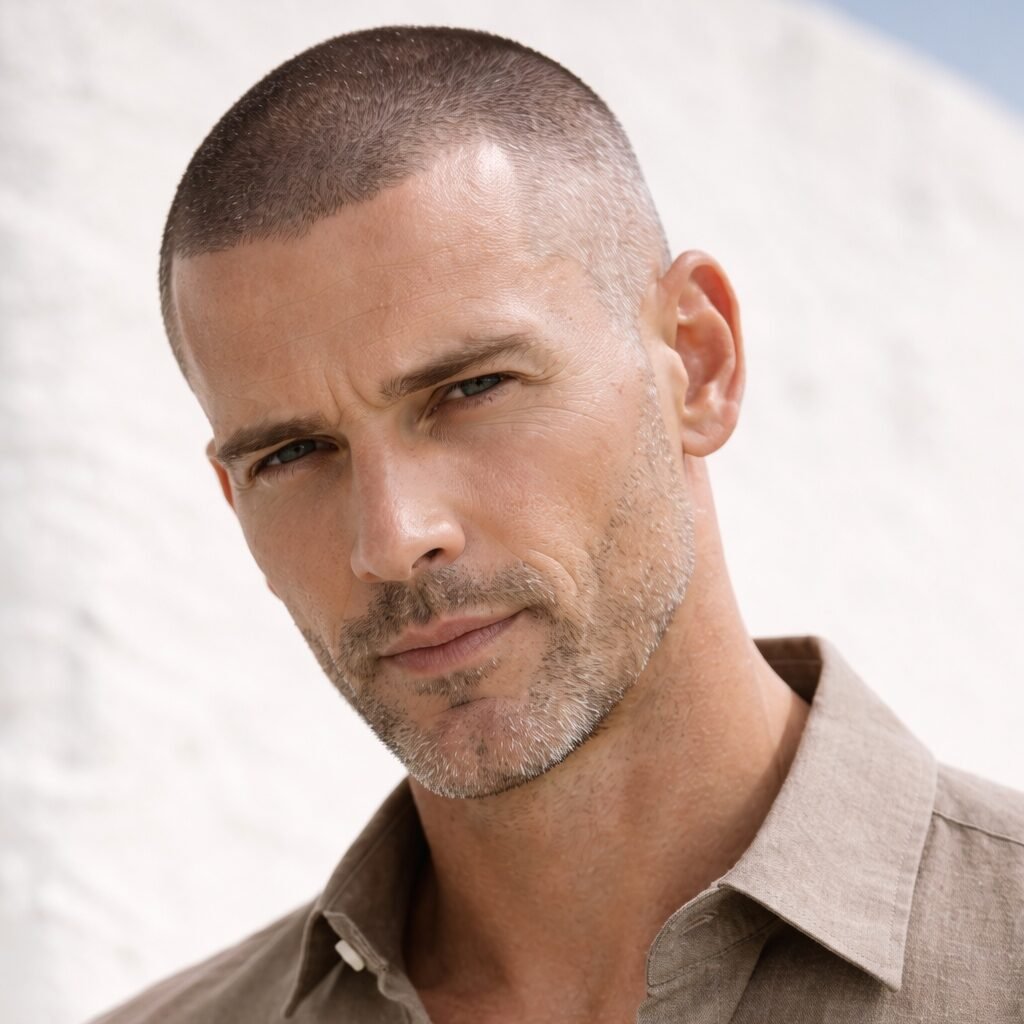
The buzz cut trims hair to one uniform length all over, typically somewhere between a #2 and a #4 guard depending on how much coverage you want, and requires essentially zero styling once it’s cut.
It’s the lowest-maintenance option on this entire list and works well on square or oval faces in particular, since the short length draws attention to bone structure rather than softening it.
It’s also a strong choice if you’re noticing thinning hair, since shorter lengths make thinning far less visible than longer styles do. Ask for: “a buzz cut, number 3 on the sides, number 4 on top, no line-up needed.”
4. Ivy League
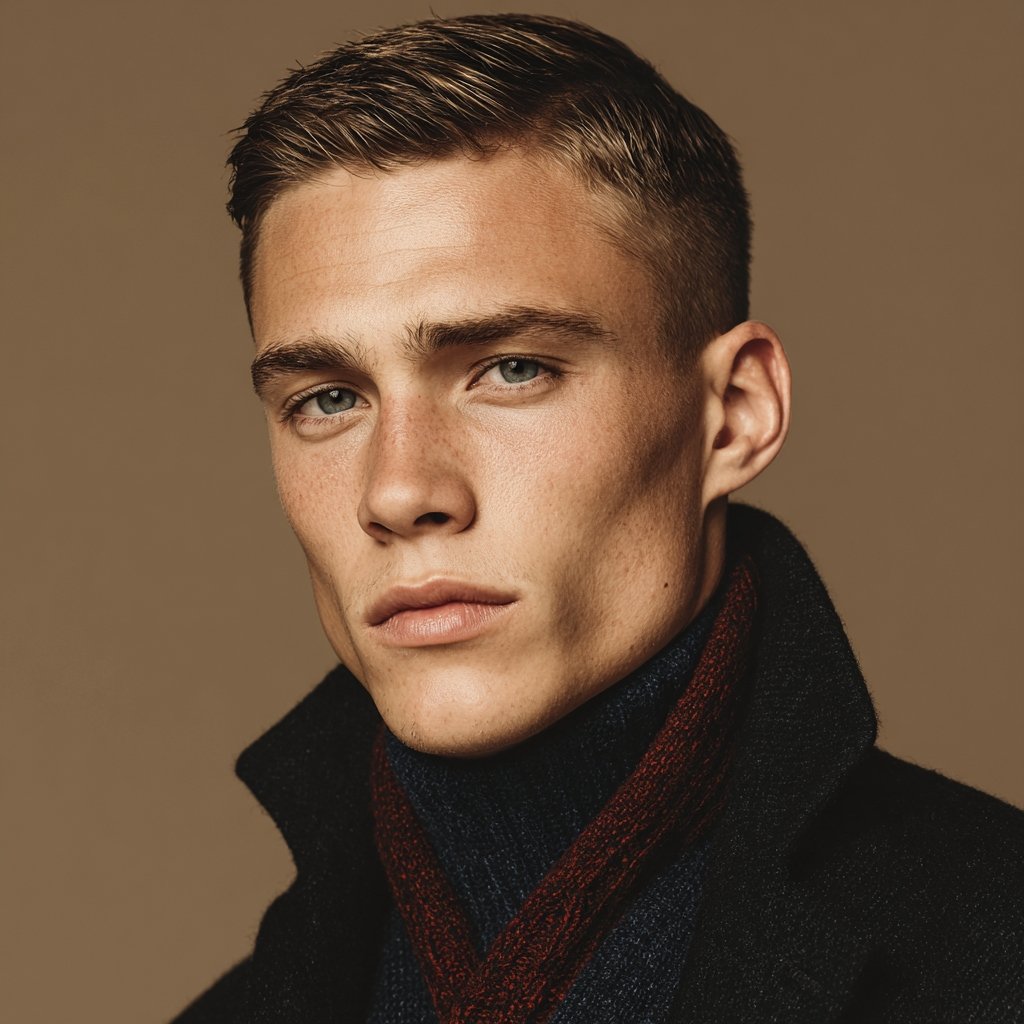
Think of the Ivy League as a longer, more stylable cousin of the crew cut — there’s enough length left on top (usually two to three inches) to comb over to one side or push straight back, while the sides stay short and tapered rather than faded to skin.
It reads as slightly more polished and traditional, which makes it a favorite for office environments, and it suits oval and rectangle face shapes especially well.
Ask for: “an Ivy League cut, two to three inches on top, tapered sides, natural side part.”
5. Slick Back Undercut
The slick back undercut shaves or clips the sides and back short — often disconnected with a hard visual break — from a longer top that’s combed straight back and held in place with a strong-hold pomade for shine and control.
It’s a bolder, more dramatic look than a standard side part and works best on straight or wavy hair with enough length to hold the slicked shape. It particularly flatters square or diamond face shapes, since the sleek silhouette complements strong bone structure rather than competing with it.
Ask for: “a disconnected undercut, sides clipped short, four to five inches on top for slick-back length.”
6. Textured Quiff
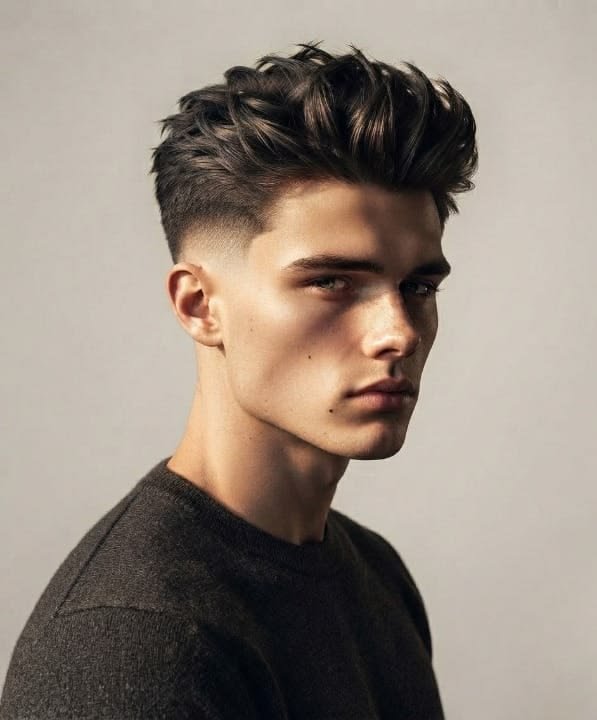
A textured quiff keeps the sides short-to-medium and tapers them up into a longer top that’s styled upward and slightly back, with volume concentrated at the front hairline rather than spread evenly.
It’s a more casual, modern take on the classic quiff and photographs particularly well because of the visible texture and lift. It flatters round and oval faces especially, since the height at the front adds visual length to shorter foreheads.
Ask for: “a taper fade with a textured quiff, extra length left at the crown for volume.”
7. French Crop
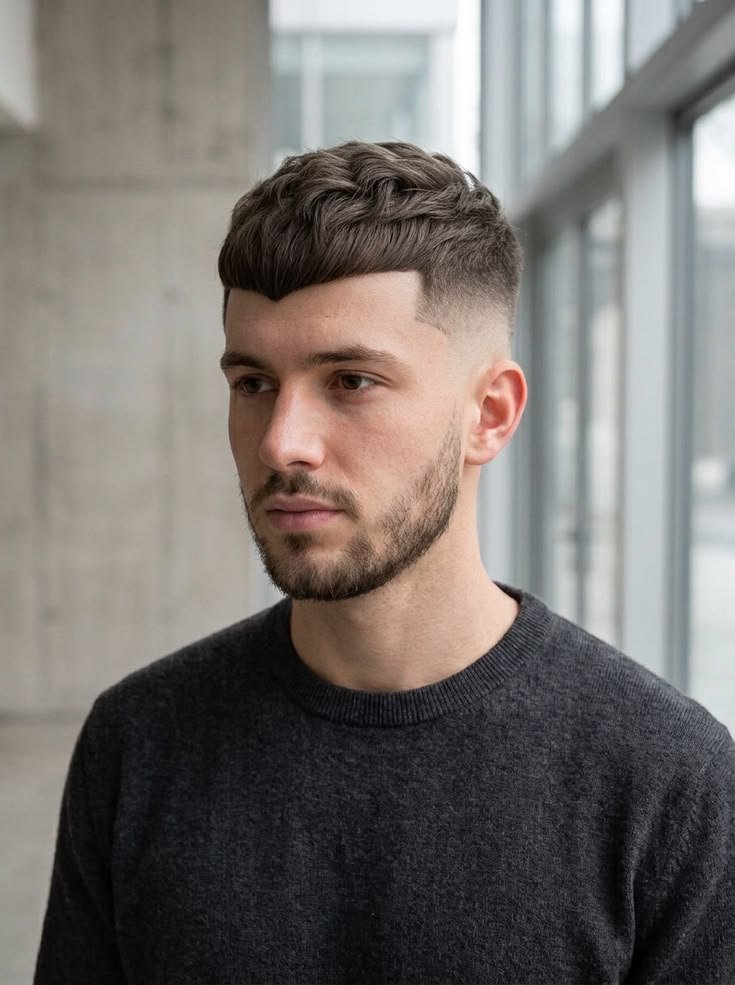
The French crop combines a short, faded back and sides with a blunt, straight-across fringe left slightly longer on top — usually just above the eyebrows. It has a slightly retro, European feel and works especially well on straight to wavy hair since the fringe needs enough weight to sit flat rather than curl upward.
It’s a strong match for oval or diamond face shapes, where the fringe helps balance a narrower forehead.
Ask for: “a French crop, low fade, blunt fringe cut straight across the brow.”
8. Faux Hawk
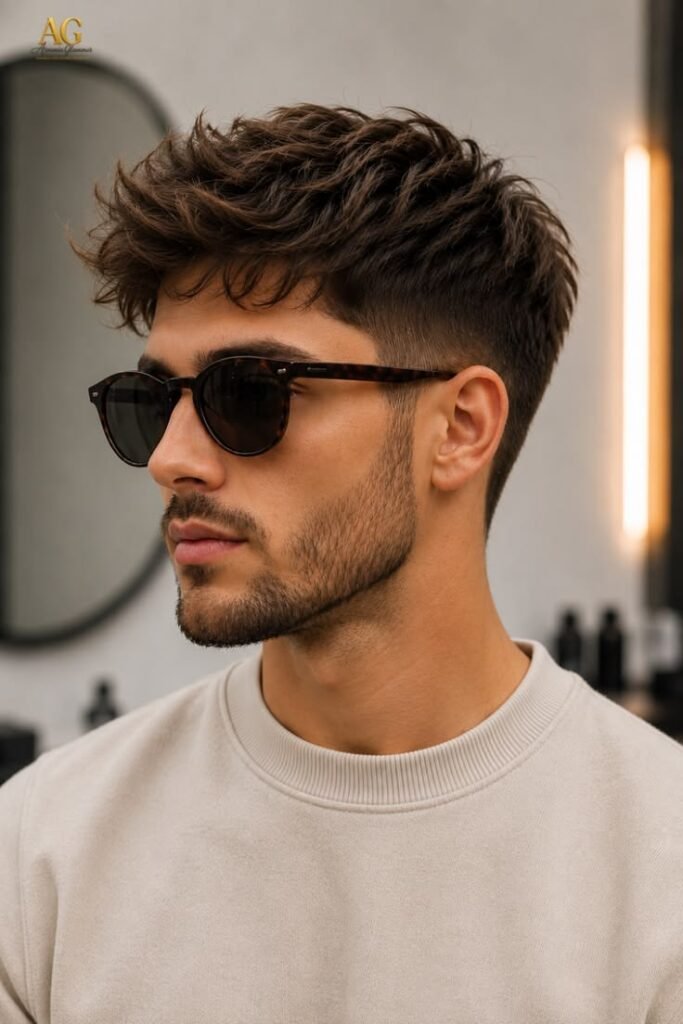
The faux hawk tapers the sides in close while leaving the top noticeably longer, styled upward into a subtle ridge running front to back without the hard shaved lines of a true mohawk.
It’s a good middle ground for anyone who wants an edgier silhouette without committing to a fully shaved mohawk. It works on wavy or straight hair and suits oval and square faces best, since the vertical line it creates elongates a wider face.
Ask for: “a faux hawk, skin fade on the sides, styled up through the center with a matte paste.”
9. Pompadour
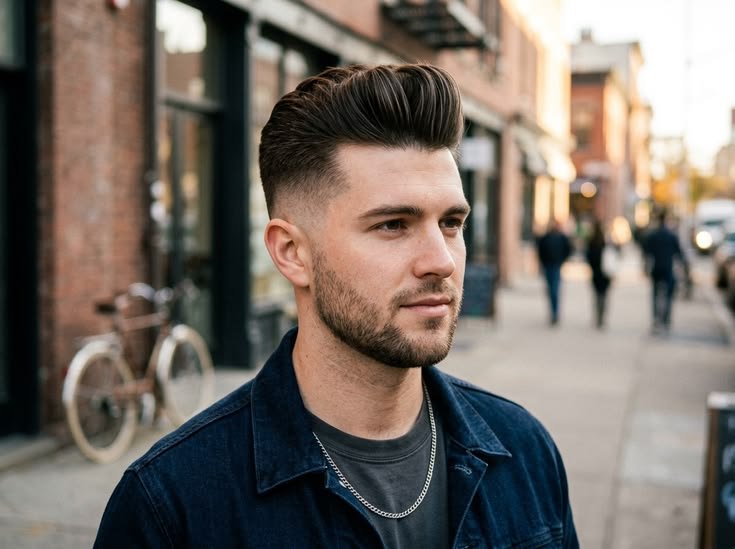
The pompadour sweeps hair up and back off the forehead with significant, structured volume at the front, paired with a shorter and tapered back and sides for contrast.
It requires more daily styling than most cuts on this list — usually a blow dryer, a round brush, and a strong pomade — but the payoff is a distinctly polished, retro-modern silhouette. It’s best suited to straight or wavy hair (curly hair tends to lose the smooth front shape) and flatters oval, square, or rectangle faces.
Ask for: “a modern pompadour, mid taper on the sides, four inches minimum left on top.”
10. Side Part
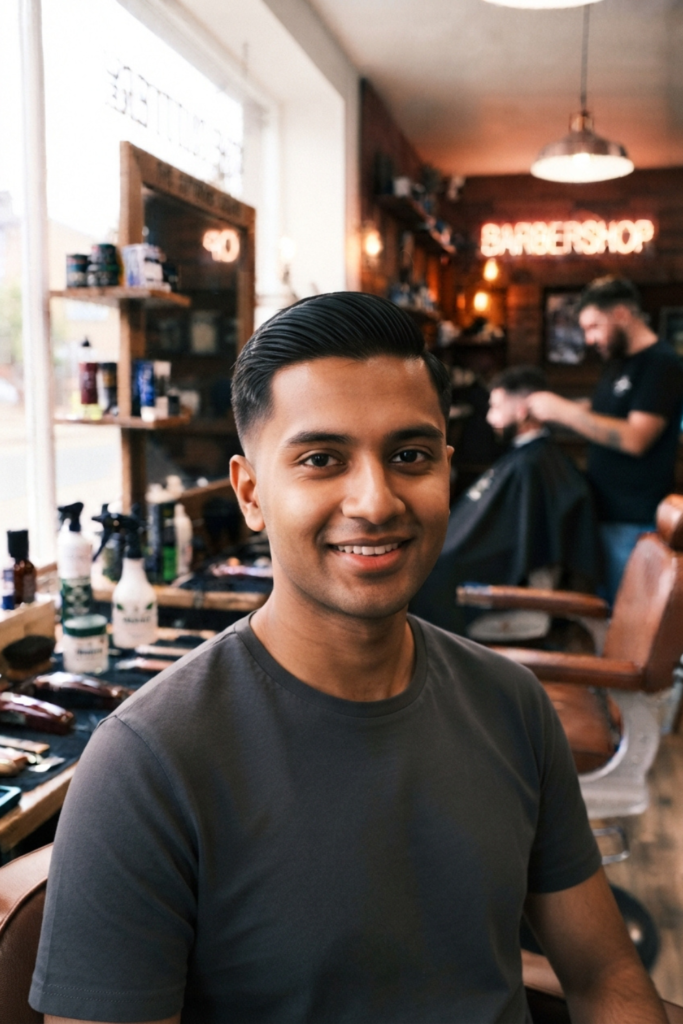
The side part is arguably the most versatile cut on this list: a defined, combed part on one side of the head paired with a clean taper on the sides, giving a polished, business-appropriate look without much daily effort.
It works with essentially any face shape and straight to wavy hair, and it can be dressed up with a comb and pomade or worn more casually with just a run-through of the fingers.
Ask for: “a classic side part, medium taper, part cut in with the clippers just above the ear so it holds its line as hair grows out.”
11. Comb-Over Fade

The comb-over fade takes longer hair on top and combs it over to one side, creating a strong visual contrast against a high or mid skin fade underneath.
The higher the fade, the more dramatic the contrast — a favorite look for anyone who wants a cut that reads as sharp and current. It suits oval, square, and diamond face shapes especially well with straight or wavy texture.
Ask for: “a comb-over with a high skin fade, three inches left on top.”
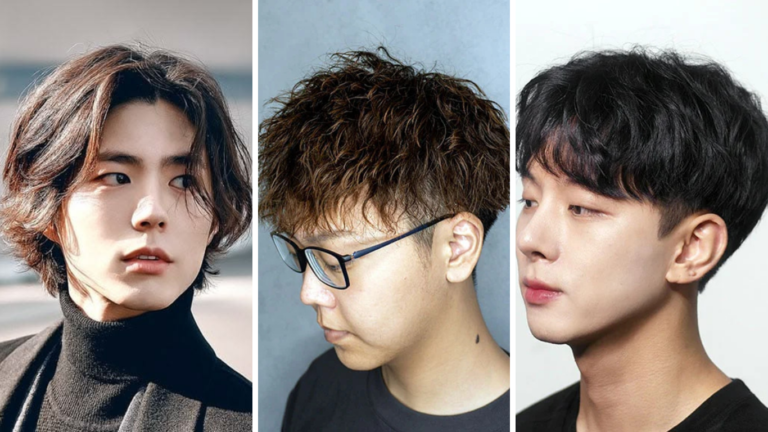
12. Curly Shag
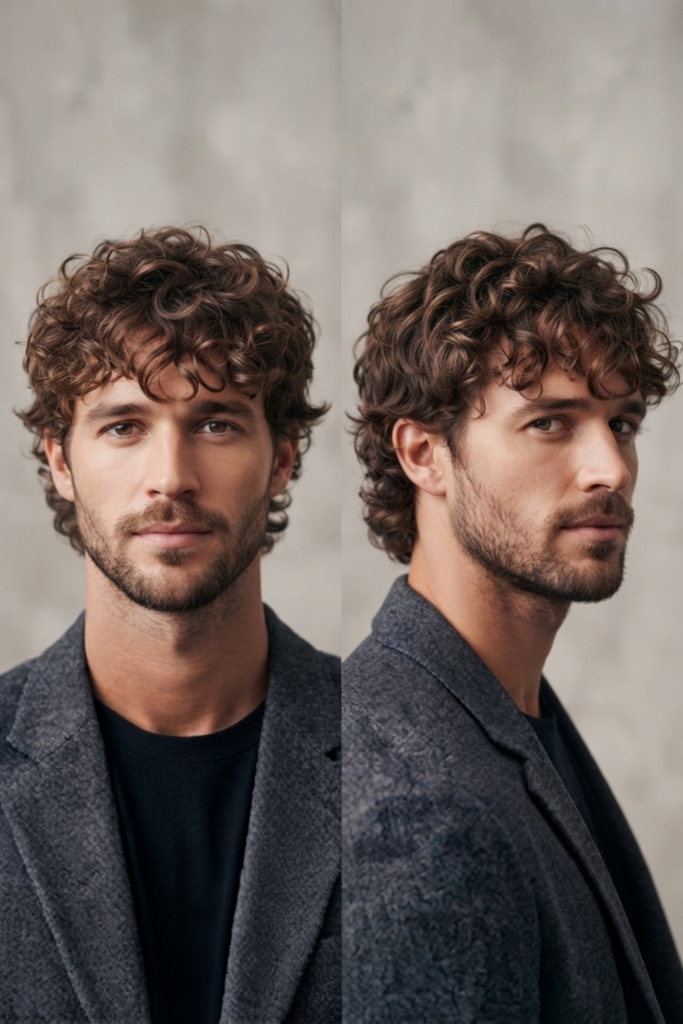
The curly shag is a layered, medium-length cut designed to let natural curl or wave fall loosely, with face-framing pieces cut around the front and heavier layering through the crown to reduce bulk.
It’s built specifically for wavy and curly hair (Type 2 to Type 3) — straight hair won’t hold the same movement — and it does a lot to soften square or rectangle face shapes thanks to the loose, irregular outline.
Ask for: “a curly shag, heavy layering around the face, point-cut ends, don’t thin out the crown or you’ll lose the shape.”
13. Curly Fringe
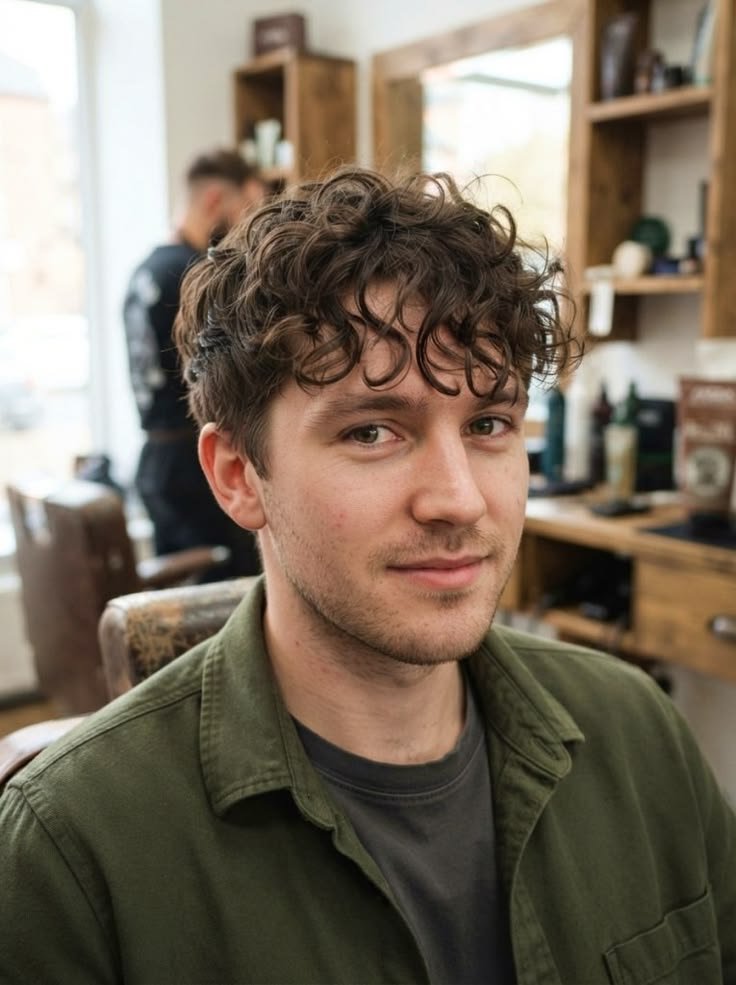
The curly fringe pairs short-to-medium sides with a voluminous, curly top left long enough for the curls to fall naturally forward into a fringe across the forehead. It’s one of the most photographed curly cuts because it makes the most of natural curl pattern rather than cutting against it.
It’s ideal for curly hair and flatters round, oval, or heart-shaped faces, where the forward fringe softens a wider forehead.
Ask for: “a curly fringe cut, taper on the sides, cut the top dry so you can actually see the curl pattern while cutting.”
14. Afro Taper
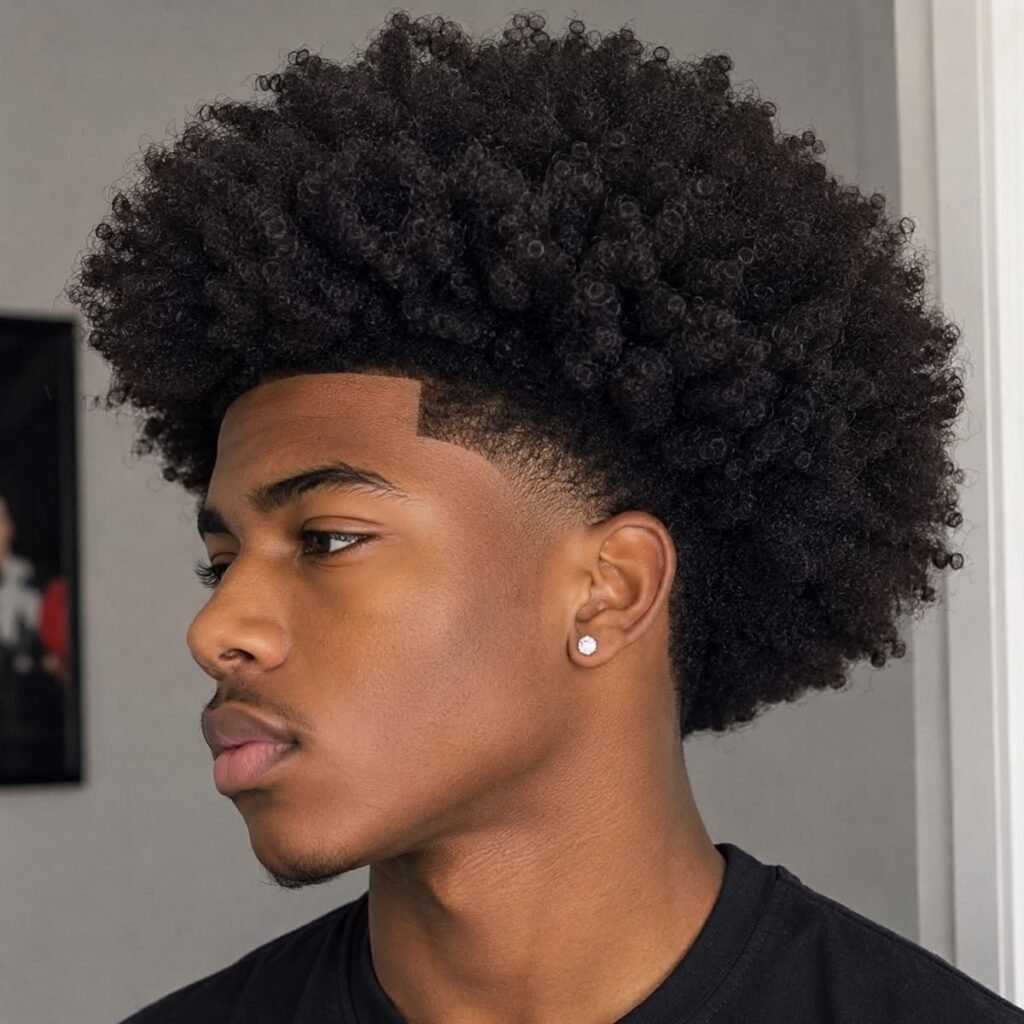
The afro taper keeps natural afro texture intact and full on top while tapering or fading the sides and back for a cleaner, more defined silhouette.
It’s a great option for anyone who wants to keep their natural texture visible and celebrated rather than chemically altered or heavily thinned.
It’s built for coily hair (Type 4) and flatters most face shapes, since the rounded top shape is fairly forgiving.
Ask for: “an afro taper, low fade blending into a rounded afro shape on top, shape up the hairline for a clean edge.”
15. Twist-Out Crop
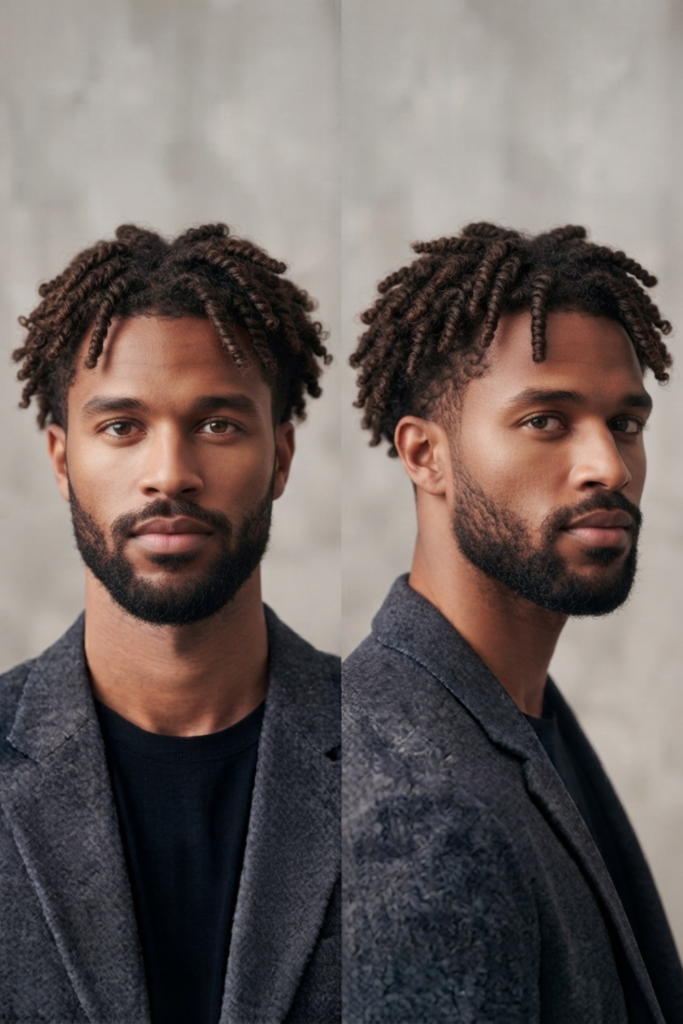
The twist-out crop pairs short, faded sides with a top that’s styled into small twists and then separated by hand once dry, creating a defined, textured twist-out pattern.
It’s a popular protective styling option that also looks sharp when kept short and neat around the perimeter. It’s designed specifically for coily and tightly curled hair.
Ask for: “a twist crop, skin fade on the sides, leave two to three inches on top for twisting.”
16. Waves (360 Waves)
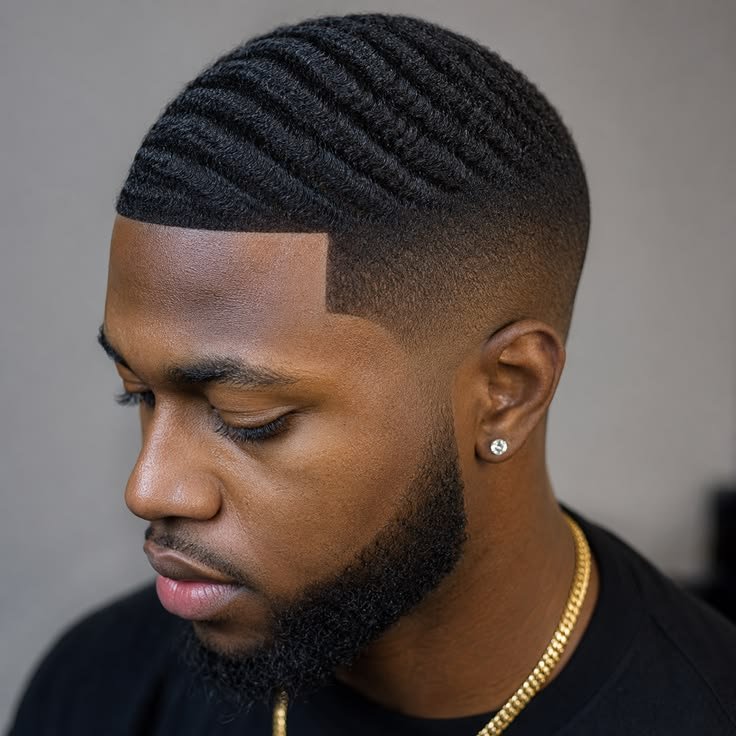
The 360-wave cut keeps hair extremely short — typically a #1 guard all over — and relies on consistent brushing (often with a durag between brushing sessions) to train the hair into a rippling wave pattern across the scalp.
It’s less about the haircut itself and more about the maintenance routine that follows it, which makes it one of the more labor-intensive styles on this list despite the minimal length. It’s best suited to coily to tightly curled hair.
Ask for: “a 360-wave cut, number 1 guard all over, no hard line on the crown so the waves can form naturally.”
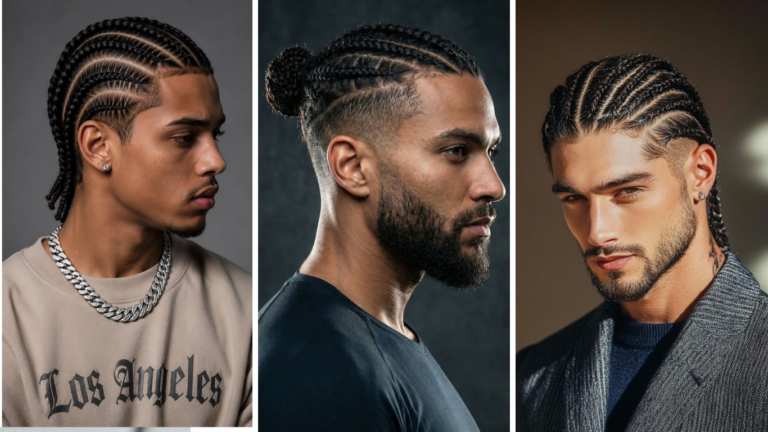
17. Man Bun / Top Knot Crop
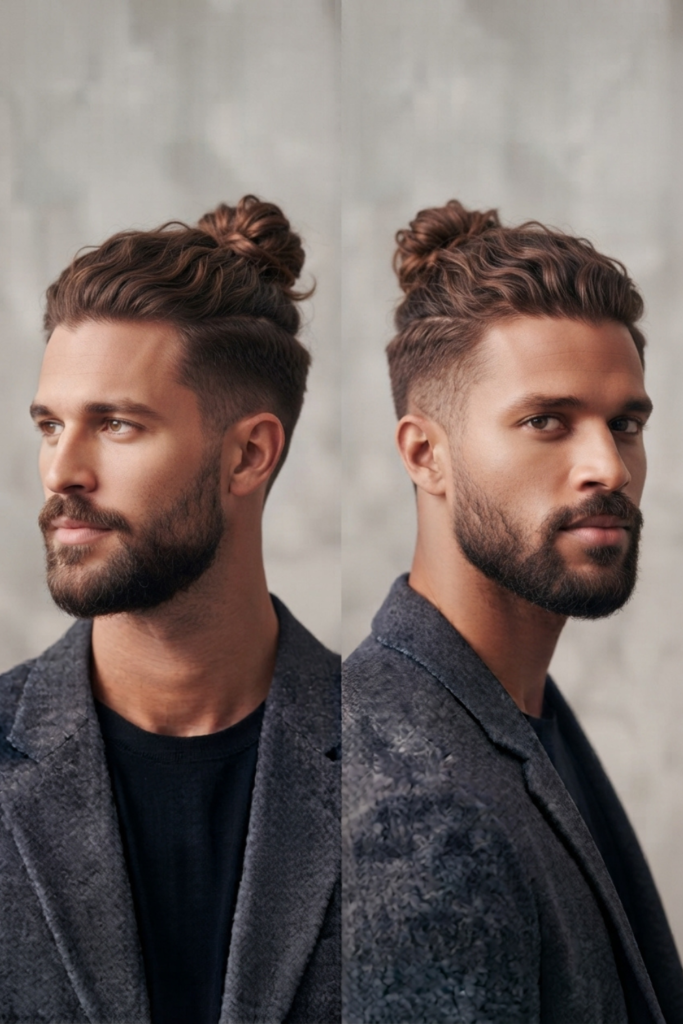
This cut keeps the sides short and faded while leaving enough length at the crown to gather and tie back into a small bun or top knot.
It’s a practical option for anyone growing their hair out who still wants a clean, groomed look on the sides in the meantime. It works with straight, wavy, or curly hair and suits most face shapes.
Ask for: “a man bun cut, skin fade on the sides, leave the top uncut for length, no layering so it grows out evenly.”
18. Curtain Fringe
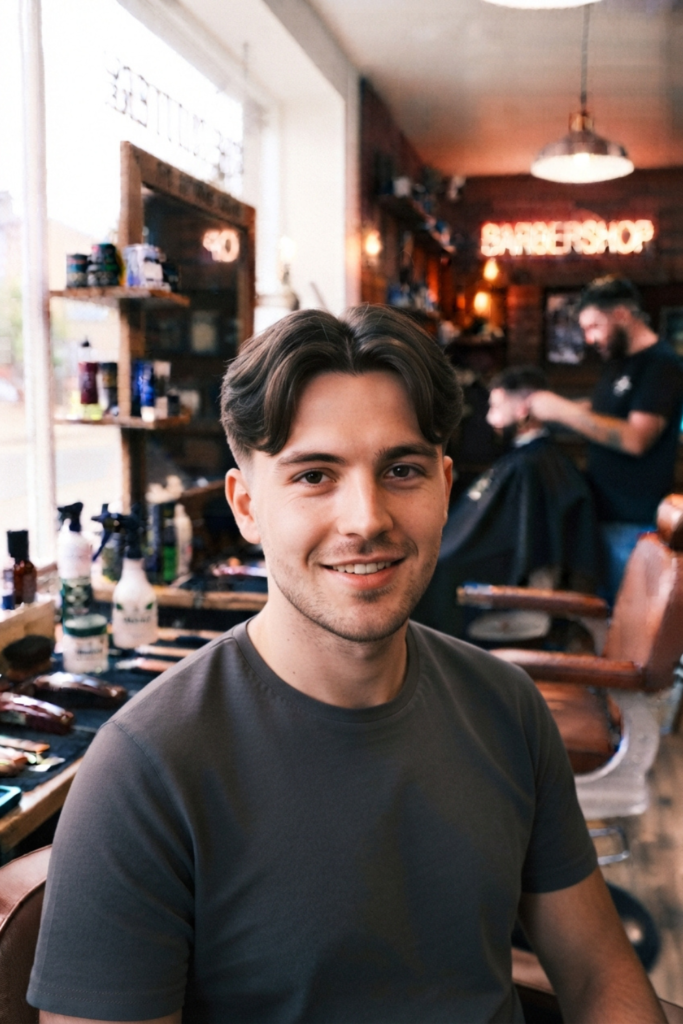
The curtain fringe is a medium-length top, center-parted and styled to fall on either side of the face like a pair of curtains, usually paired with shorter or medium-length sides.
It had a major resurgence over the last several years and remains one of the most requested styles for straight to wavy hair. It suits rectangle or oval faces particularly well, since the fringe adds width at the temples.
Ask for: “curtains, center part, six inches on top blended into the sides, light texturizing on the ends to keep them from looking blunt.”
19. Textured Fringe
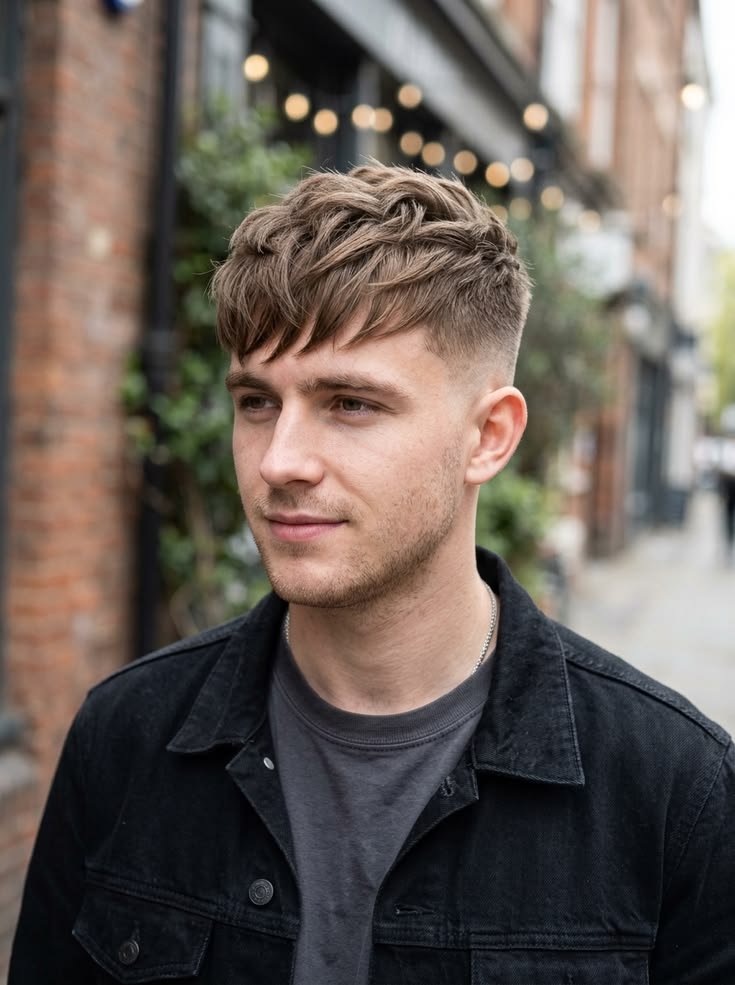
A shorter, choppier cousin of the curtain fringe, the textured fringe is a blunt or piecey fringe that sits just above the brow, paired with tapered or faded sides for contrast.
It’s a lower-maintenance alternative to curtains since there’s no center part to maintain daily. It works well on straight to wavy hair and flatters round or square faces by breaking up a wide forehead.
Ask for: “a textured fringe, mid taper, fringe cut to eyebrow length with a razor for texture.”
20. High and Tight
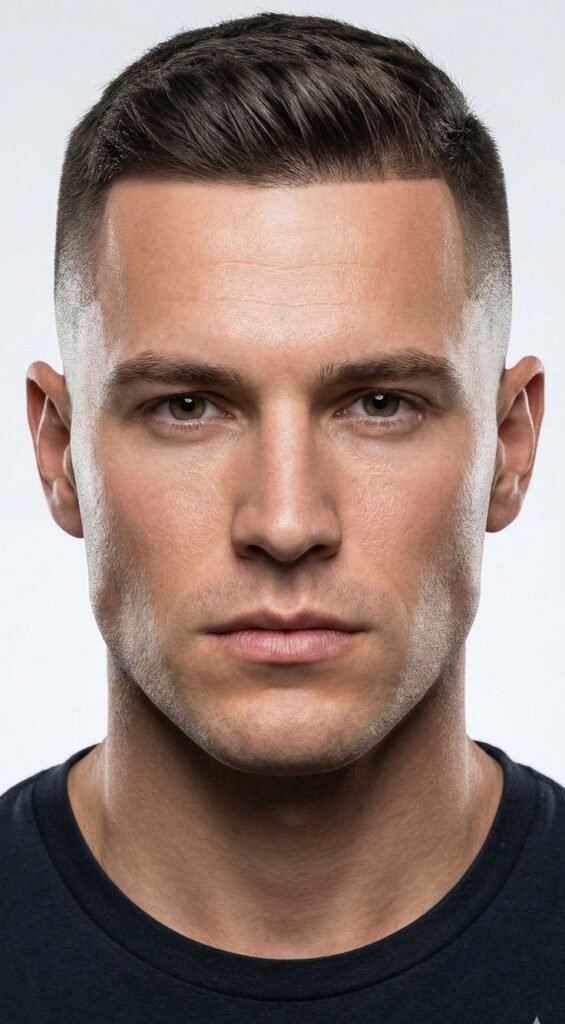
The high and tight is a more aggressive take on the buzz cut — sides shaved all the way to skin, paired with a very short, barely-there top, usually a #1 or #2.
It’s an especially clean, low-maintenance option that works on square, oval, and diamond face shapes with virtually any hair type, since there’s not enough length left for texture to matter much.
Ask for: “a high and tight, skin fade above the ear, number 1 on top.”
21. Mid Fade with Design
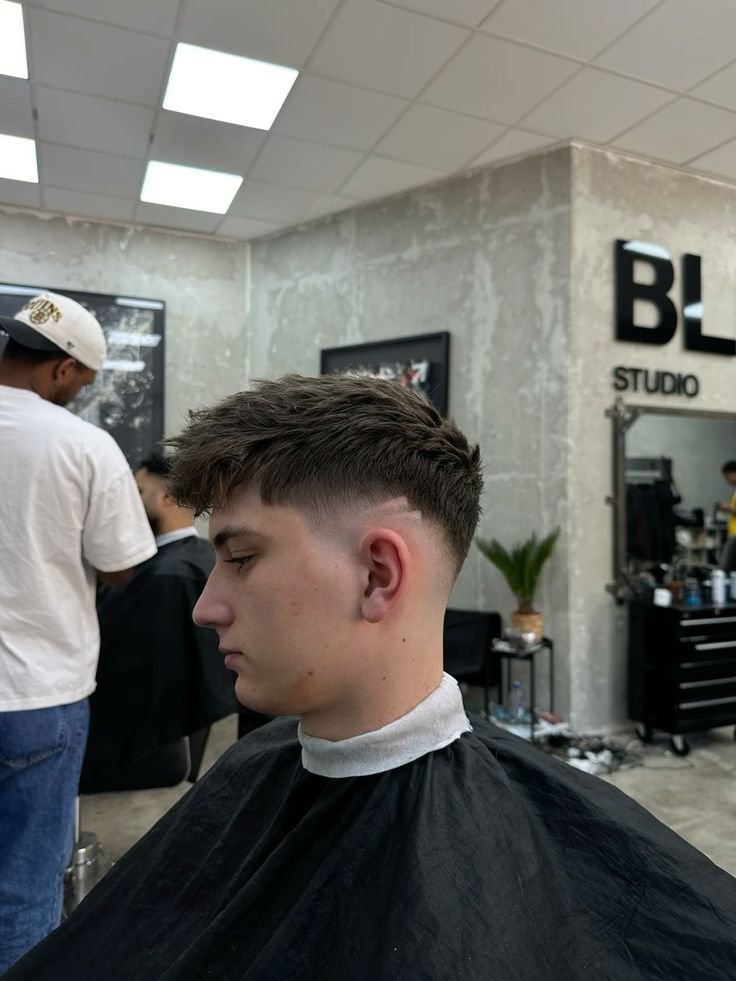
This is a standard mid-length taper fade with a shaved line, part, or geometric pattern cut into the shorter section for a bit of personality and edge.
It works across straight, wavy, or curly hair and most face shapes, and it’s a good way to make an otherwise simple cut feel more distinctive without changing the overall shape.
Ask for: “a mid skin fade with a single hard part line above the temple.”
22. Low Taper Fade
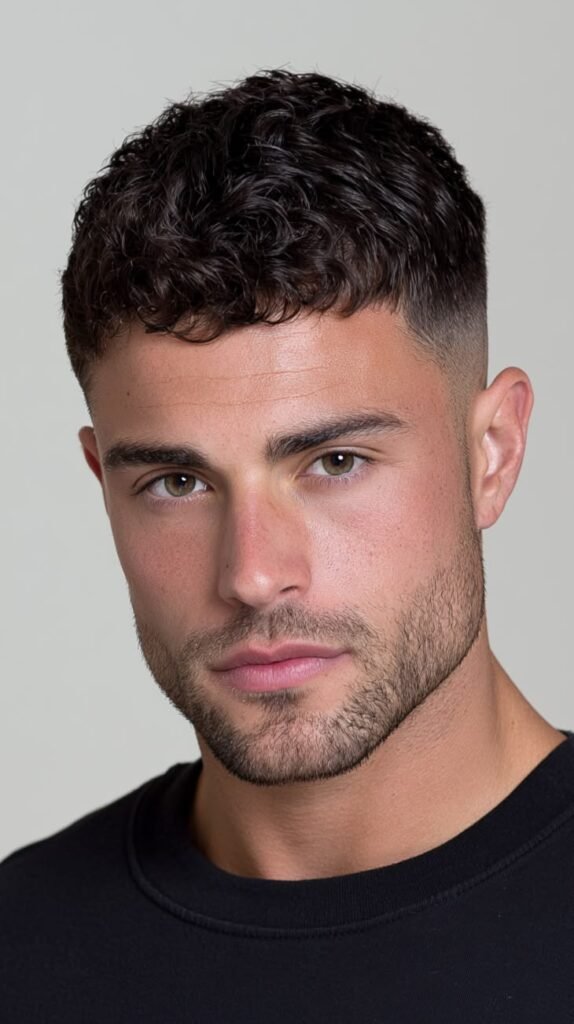
The low taper fade starts its blend just above the ears rather than higher up the head, which keeps more overall length and gives a fuller, more conservative look than a high fade. It suits any face shape and is a strong choice for work environments where a subtler cut is preferred.
Ask for: “a low taper fade, keep the length on top at three to four inches.”
23. High Taper Fade
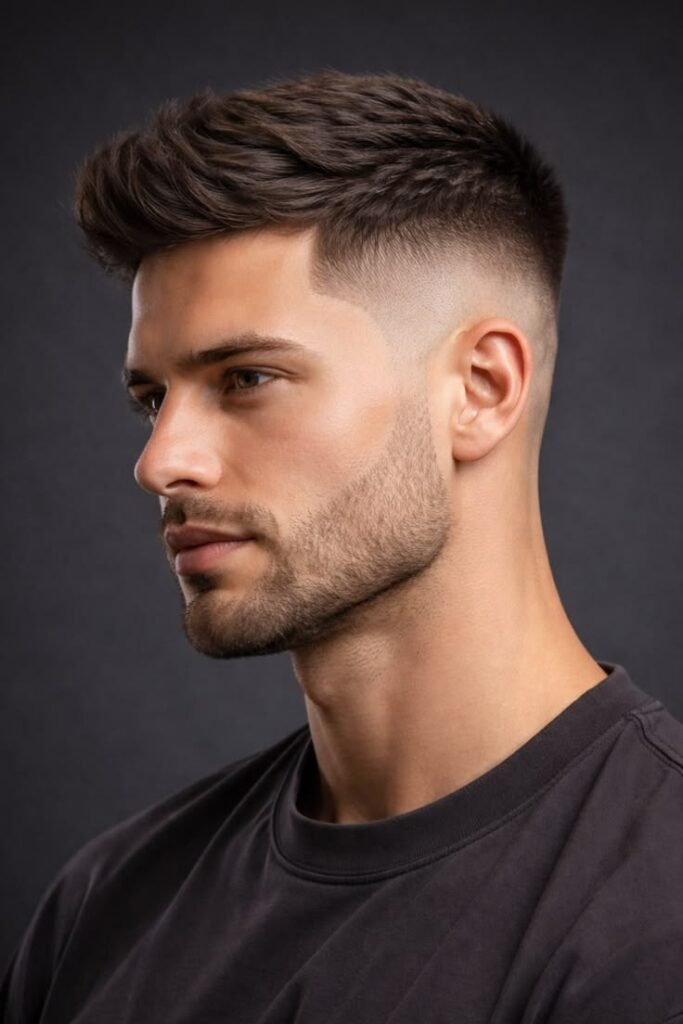
The high taper fade starts its blend much higher on the head, creating maximum contrast between the very short sides and the longer top.
It reads as sharper and more current than a low fade and works especially well on oval, square, and rectangle faces.
Ask for: “a high taper fade, blend starting above the temple, sharp neckline.”
24. Skin Fade Mohawk
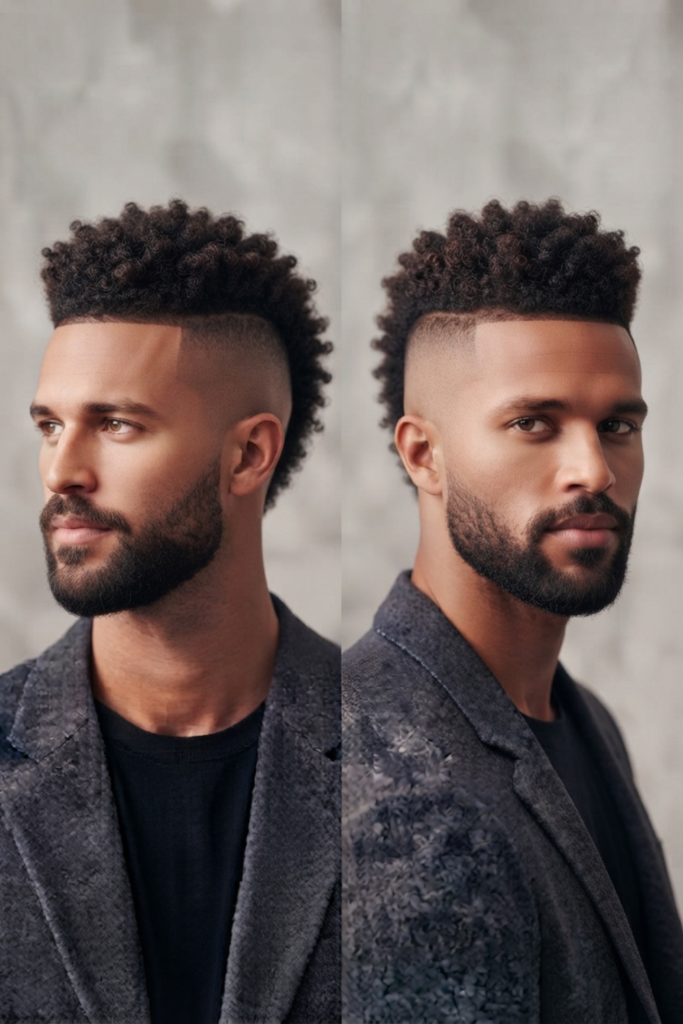
A true mohawk shaves both sides completely down to skin, leaving a strip of longer hair running down the center of the head, which can be styled upward or left more relaxed and textured depending on the occasion.
It’s one of the boldest cuts on this list and works on straight, wavy, or curly hair for round or oval faces, since the vertical strip visually lengthens the face.
Ask for: “a mohawk, skin faded on both sides, keep a two-inch center strip.”
25. Caesar Cut
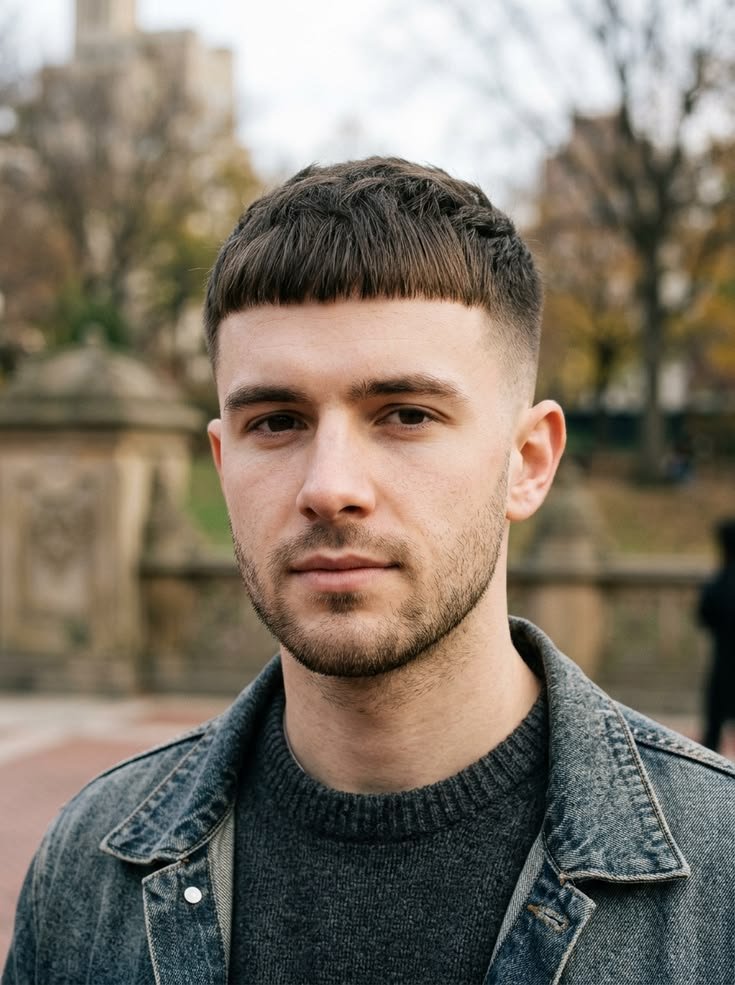
The Caesar cut features a short, horizontally-cut fringe combed slightly forward, paired with closely cropped sides and a small amount of texture on top. It’s named for its resemblance to Roman haircuts depicted in classical art and has remained popular because it’s genuinely easy to maintain. It flatters oval, round, and square faces and works with straight or fine wavy hair.
Ask for: “a Caesar cut, one-inch length on top combed forward, short tapered sides.”
26. Textured Crop with Undercut Fade
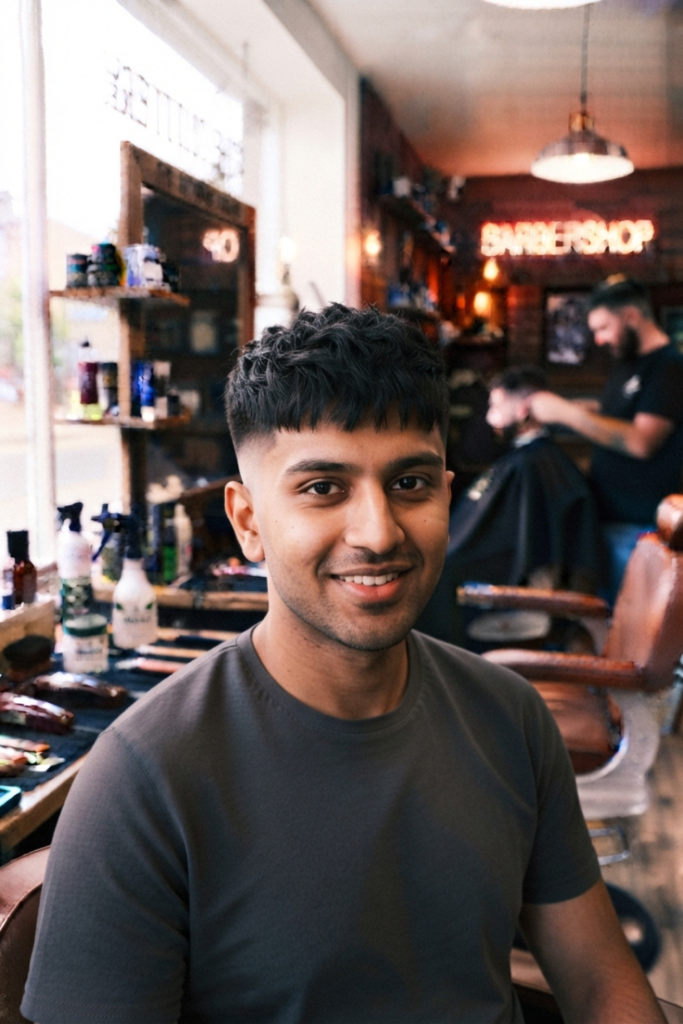
This hybrid combines the choppy, textured top of a standard textured crop with the hard, shaved undercut line typically seen on slicked-back styles, giving a cut that looks casual on top but sharp underneath.
It works well on straight to curly hair and flatters square or diamond face shapes especially. Ask for: “a disconnected textured crop, hard part optional, heavy texture on top with a matte finish.”
27. Bro Flow / Surfer Cut
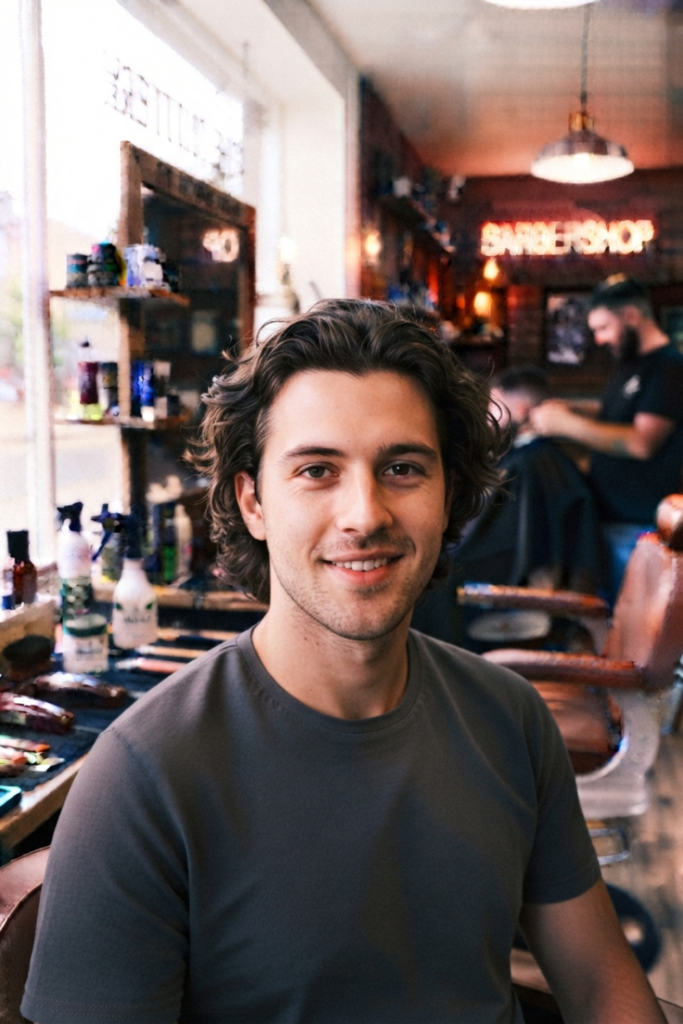
The bro flow, sometimes called a surfer cut, keeps hair medium-to-long all over — usually five to six inches — left mostly unstyled or lightly tousled with minimal layering for a relaxed, natural-movement look.
It’s grown significantly in popularity as a lower-effort alternative to more structured longer cuts, since it’s meant to look a little undone by design. It works best on wavy or curly hair and suits oval or rectangle faces.
Ask for: “a surfer cut, all one length around five to six inches, light layering only at the ends, no hard lines anywhere.”
28. Blowout Fade
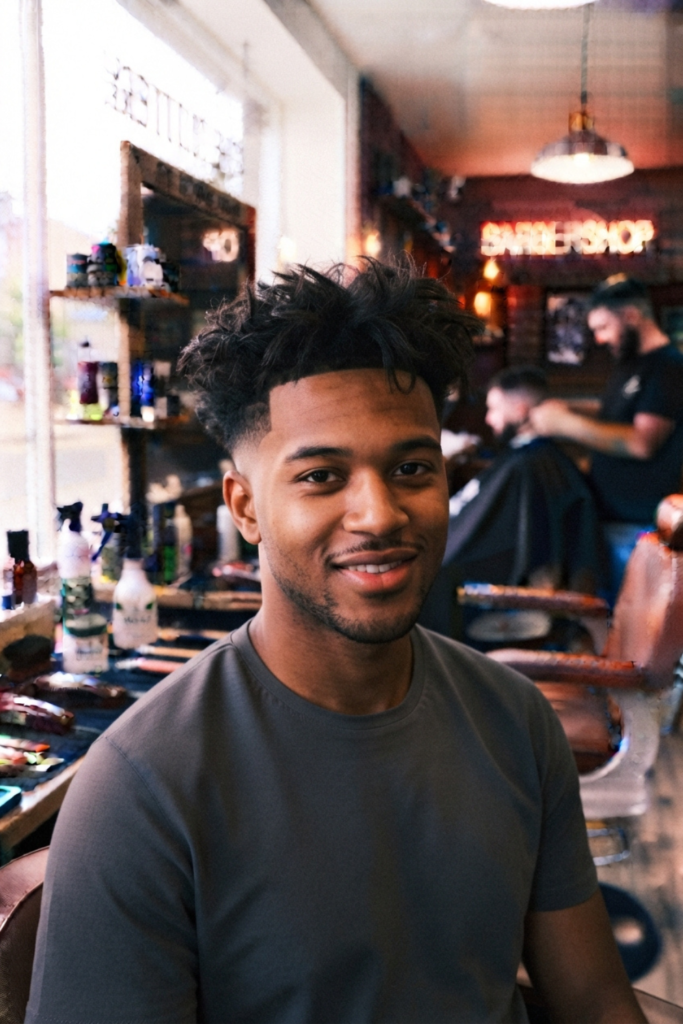
The blowout fade pairs tightly faded sides with a top that’s blown out using a round brush and diffuser for maximum height and volume, often worked with the hair’s natural curl or wave pattern rather than against it.
It’s a striking, high-impact look best suited to curly and coily hair and rounder face shapes that benefit from the added height. Ask for: “a blowout fade, skin fade on the sides, leave four to five inches on top for volume.”
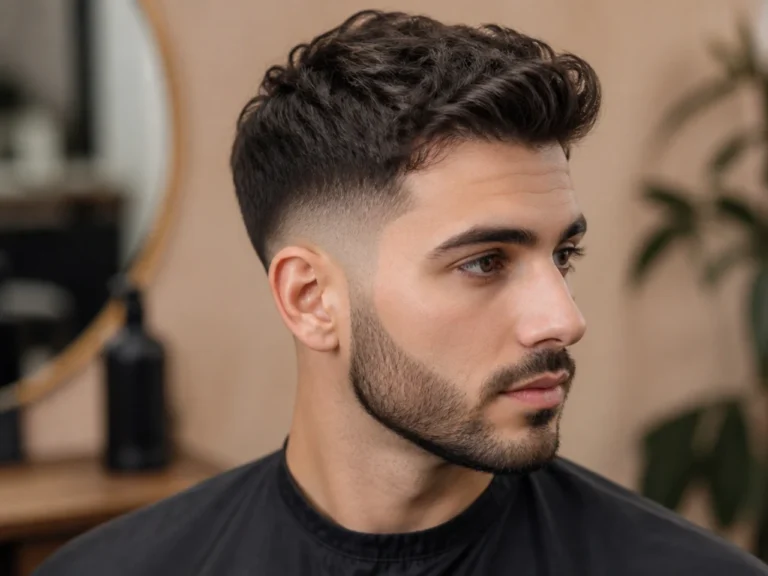
29. Low Skin Fade with Beard Line-Up
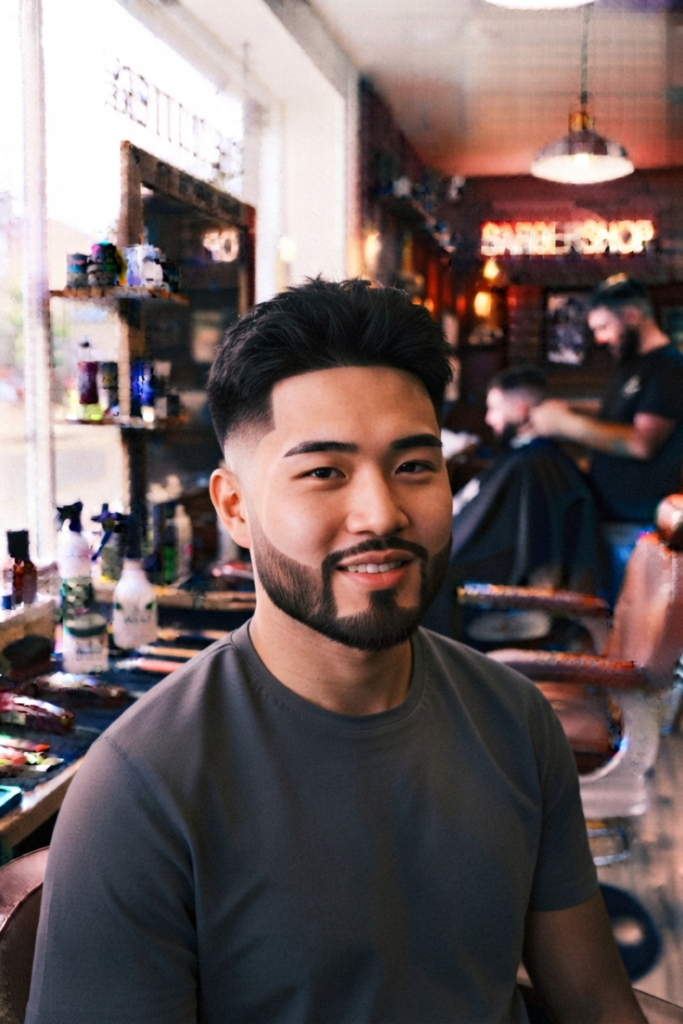
This pairs a close, clean skin fade on the sides with a sharply defined beard line, so the fade and the facial hair blend into one cohesive, fully groomed look rather than reading as two separate styling decisions.
It works for any face shape and most hair types, and it’s an especially strong choice for anyone who wears a full or heavy beard regularly.
Ask for: “a low skin fade with a beard line-up, blend the fade into the beard, no gap left at the jaw.”
30. Cropped Curls (Short Curly Crop)
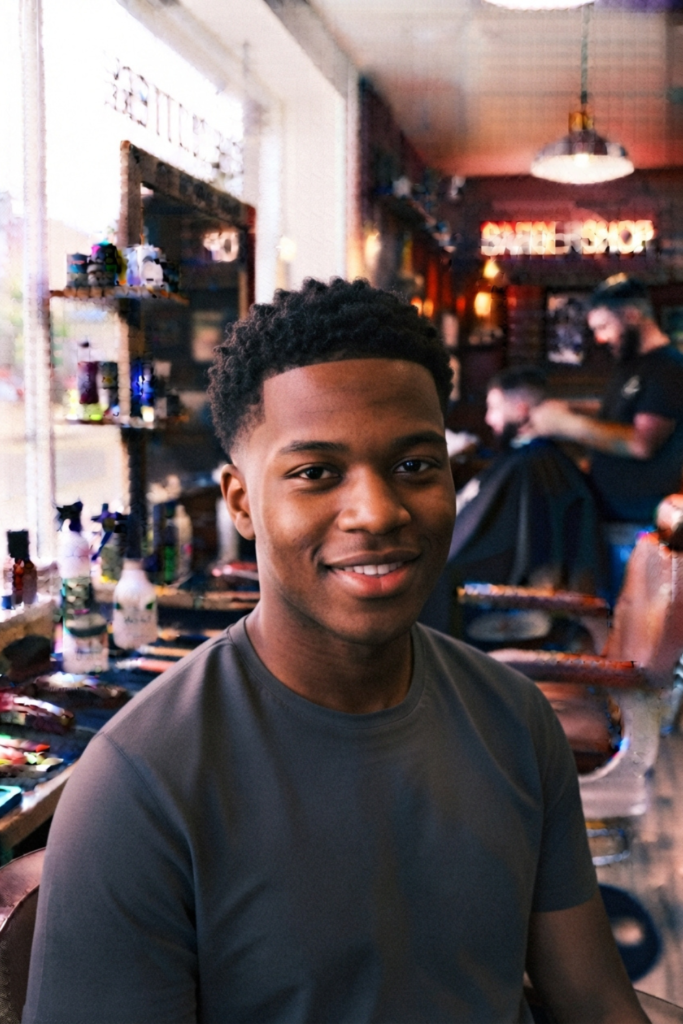
The cropped curls style keeps hair very short all over — roughly a half-inch to an inch — allowing tight curls or coils to sit close to the scalp without losing their natural pattern, since the length is trimmed with scissors rather than clippers alone.
It’s built for curly and coily hair types who want something genuinely low maintenance without sacrificing texture.
Ask for: “a curly crop, scissor-over-comb, keep an inch on top, don’t run clippers directly over the curl pattern.”
How to Maintain Any of These Cuts
The haircut itself is only half the equation — how you treat it between barber visits determines whether it still looks intentional on day twelve the way it did on day one.
If you have straight or wavy hair: Use a lightweight matte clay or paste, starting with an amount no bigger than a dime, and work it through slightly damp (not wet) hair for the most natural texture. Reapply after washing rather than piling product onto unwashed hair, which tends to look greasy rather than textured. If your cut relies on volume — a quiff or pompadour, for instance — a light dusting of volumizing powder at the roots before styling can extend how long the shape holds through the day.
If you have curly or coily hair: Apply a leave-in conditioner followed by a curl cream or gel to soaking-wet hair, then either air-dry or use a diffuser attachment on low heat. Avoid brushing curls once they’re dry — brushing breaks up the natural curl clumps and is one of the most common causes of frizz. If your cut involves a fade or taper on the sides, ask your barber how to touch it up yourself with a trimmer between visits, since curl-heavy tops tend to need less frequent cuts than the sides do.
If you have any kind of fade: Book a touch-up every two to three weeks. Fades grow out unevenly and noticeably faster than the top of the head, and a fade that’s overdue tends to look far messier than a fully grown-out haircut with no fade at all.
If you’re growing out a longer or shaggy style: A sea salt spray or texturizing spray applied to damp hair before air-drying helps create natural-looking movement without stiffness, and it can disguise the awkward in-between lengths that come with growing a cut out.
Across every cut on this list: Get a trim every four to six weeks even while growing your hair out. A trim maintains the shape and prevents split ends without meaningfully slowing down the overall growth process, which is a common misconception that keeps guys away from the barber chair when they shouldn’t be.
FAQ
How often should I get a haircut in 2026? Every three to four weeks for short fades and tapers, since the contrast at the sides grows out fastest and starts looking uneven first. For longer or more textured cuts without a hard fade, every six to eight weeks is usually enough to keep the shape intact.
What haircut is best if I have a receding hairline? A textured crop, buzz cut, or Caesar cut tends to work best, since shorter lengths on top don’t draw attention to the hairline the way longer, swept-back styles can. Avoid heavy fringes or slicked-back looks that rely on a strong, low hairline to hold their shape.
Can I get a fade with curly or coily hair? Yes — fades work on every hair type, including tightly coiled hair. The main adjustment is to leave slightly more length on top than you would with straight hair, since curls shrink up noticeably once they dry, and what looks short while wet can look considerably shorter once fully dry.
What’s the lowest-maintenance haircut on this list? The buzz cut and the high and tight require the least daily upkeep — a quick shower is essentially all the “styling” either one needs. The classic crew cut is a close third if you want a small amount of length up front.
How do I know if a fade will suit my face shape? High and skin fades tend to add visual height and length, which flatters round or square faces that benefit from a longer-looking profile. Low fades keep more width and fullness at the sides, which tends to suit narrower oval or diamond faces better than a high, close-cropped fade would.
Read also: