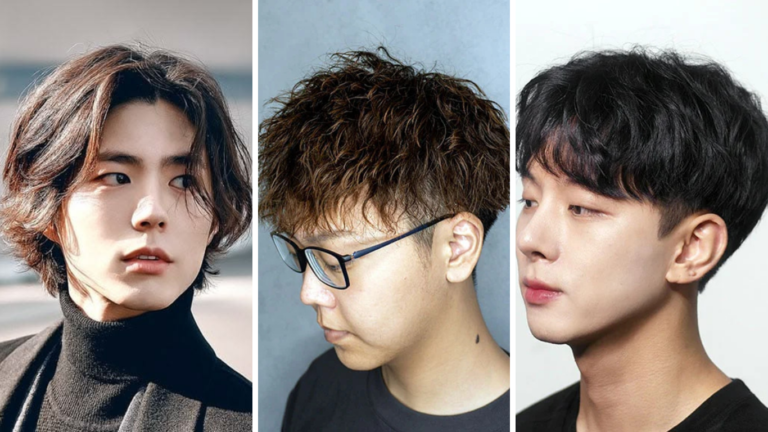
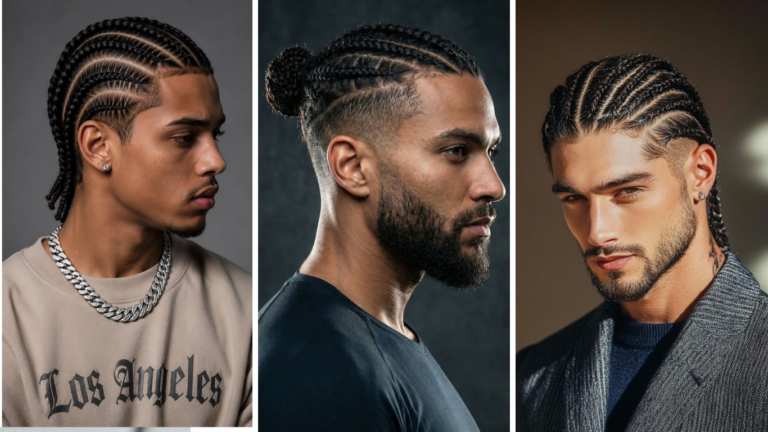
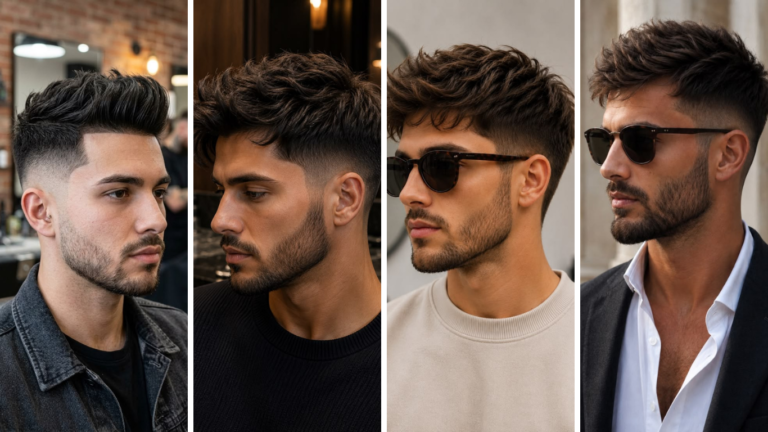
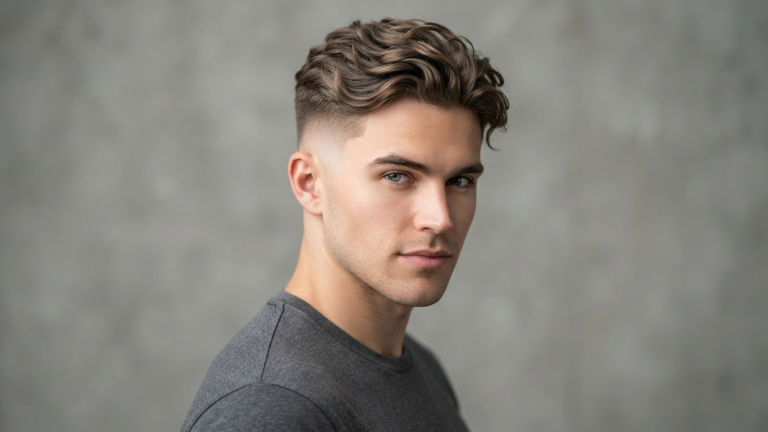
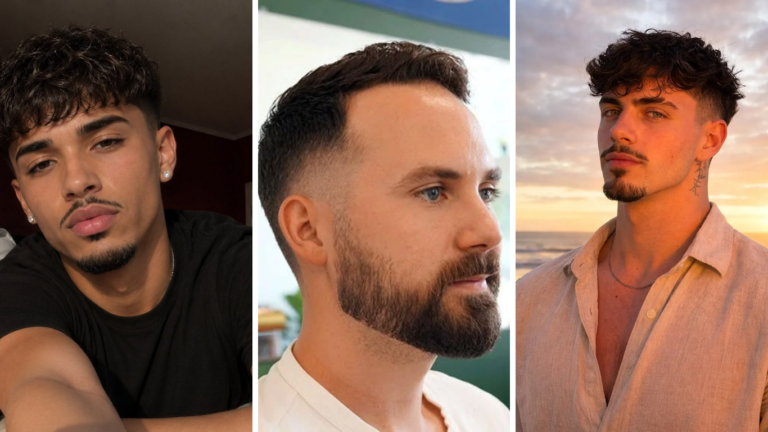
15 Best Fade Haircuts for Men (2026 Guide by Hair Type & Face Shape)
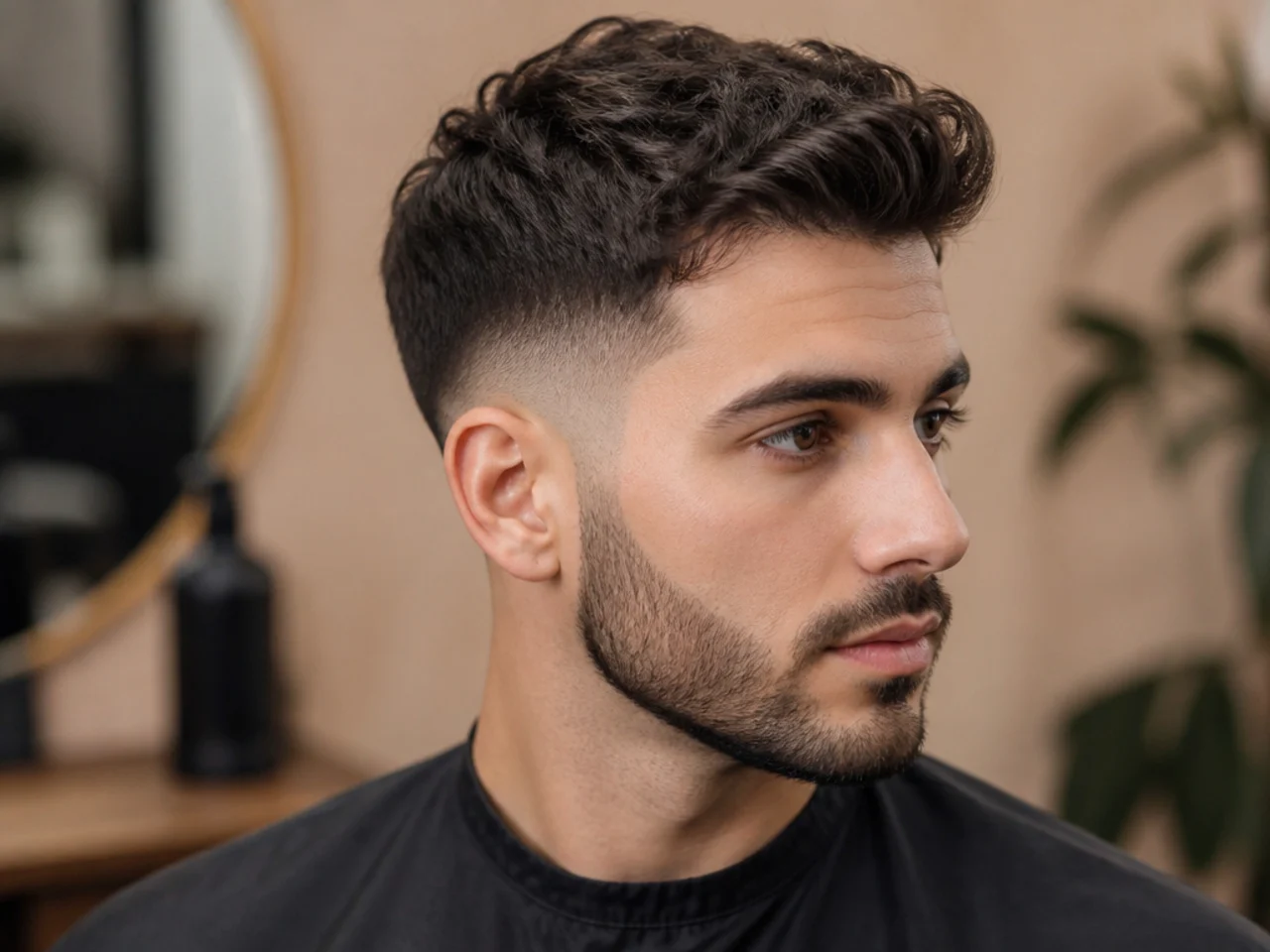
A fade haircut for men is a cut where the hair is gradually blended from short to long, moving from skin or near-skin at the sides up into more length on top.
It’s the most requested style at barbershops for a reason: it’s low-maintenance between visits, works with almost any hair texture, and can look sharp and professional or edgy and trendy depending on how high the fade sits and what you leave on top.
This guide breaks down every major fade type by height, hair texture, and face shape, so you walk into your next appointment knowing exactly what to ask for.
What Is a Fade Haircut?
A fade haircut is a technique, not a single style — the hair on the sides and back is clipped progressively shorter as it moves down toward the skin, creating a smooth gradient instead of a hard line.
Fades are categorized mainly by height (low, mid, high, skin), and they’re paired with a top style of your choice — crop, pompadour, curls, slick back, or a simple comb-over.
Because the blend does most of the visual work, a fade tends to look clean even as it grows out, which is why it’s the default recommendation for guys who don’t want to see a barber every two weeks.

How to Choose the Right Fade
Before picking a specific style, run through these four factors — they matter more than whatever’s trending on Instagram this month.
- Hair type: Straight and wavy hair blend into a fade more easily than tight curls or coily hair, which need a skilled barber to avoid a visible “helmet” line.
- Face shape: Fade height changes how long or wide your face appears — a low fade keeps width down, a high fade adds visual length.
- Maintenance tolerance: Skin and high fades need a touch-up every 2-3 weeks; low and mid fades can stretch to 4-5 weeks.
- Formality: If you’re in a conservative workplace, a low or mid taper fade reads more professional than a high fade with a hard part or design.
If you’re not sure where to start, a mid taper fade is the safest, most versatile option — it’s the “sneakers with everything” of haircuts.
Fades by Height
1. Low Fade
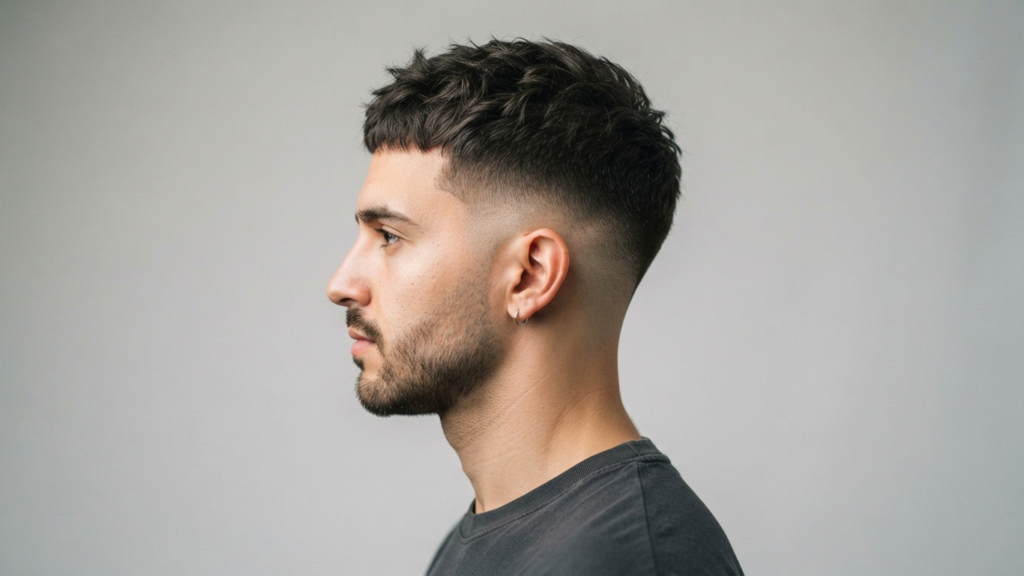
The fade starts just above the ear, leaving more length on the sides than a mid or high fade. It’s the most conservative option and the easiest to grow out without an awkward in-between phase.
Best for: Office environments, first-time fade wearers, oval and round faces
Ask for: “A low fade, start the blend about an inch above my ear, keep it subtle”
Style with: Matte clay for a natural, non-shiny finish Maintenance: every 4-5 weeks
2. Mid Fade

The blend begins around the temple, roughly midway up the side of the head. It’s the most requested fade because it works with nearly every top style and face shape.
Best for: Almost anyone — this is the default recommendation
Ask for: “A mid fade starting at the temple, blend it into a [pompadour/crop/quiff] on top” Style with: Medium-hold pomade or cream for versatility Maintenance: every 3-4 weeks
3. High Fade
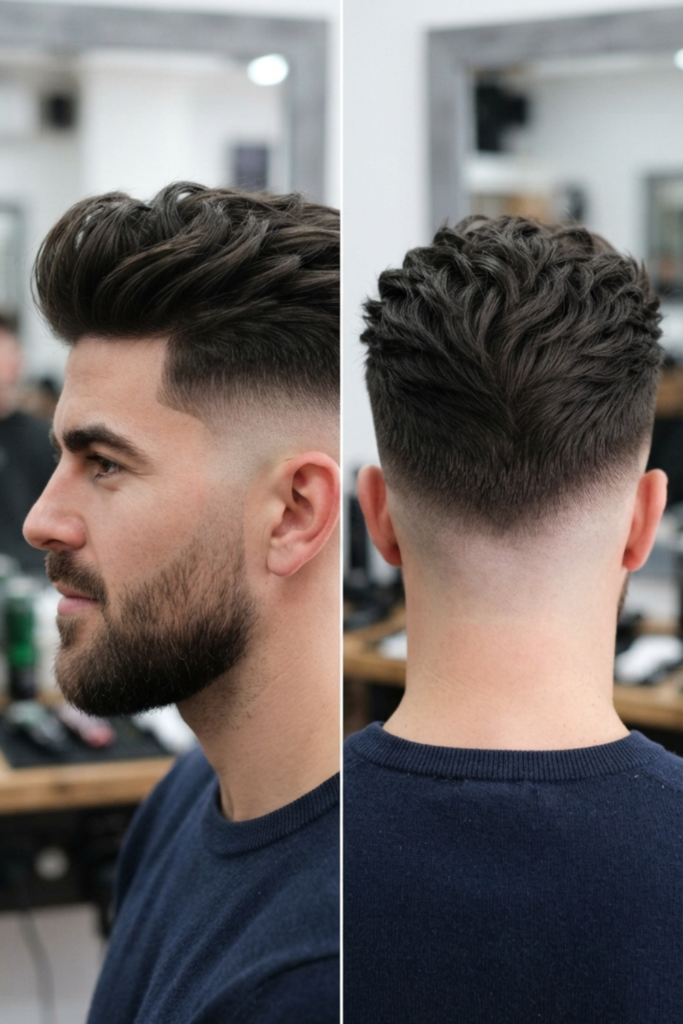
The fade starts well above the temple, close to the crown, leaving a dramatic contrast between the short sides and longer top. It reads bolder and more fashion-forward than a low or mid fade.
Best for: Thick hair, square and oval faces, guys who want a statement cut
Ask for: “A high fade, take it up near the crown, sharp contrast with the top”
Style with: Strong-hold pomade to keep volume on top defined Maintenance: every 2-3 weeks
4. Skin (Bald) Fade
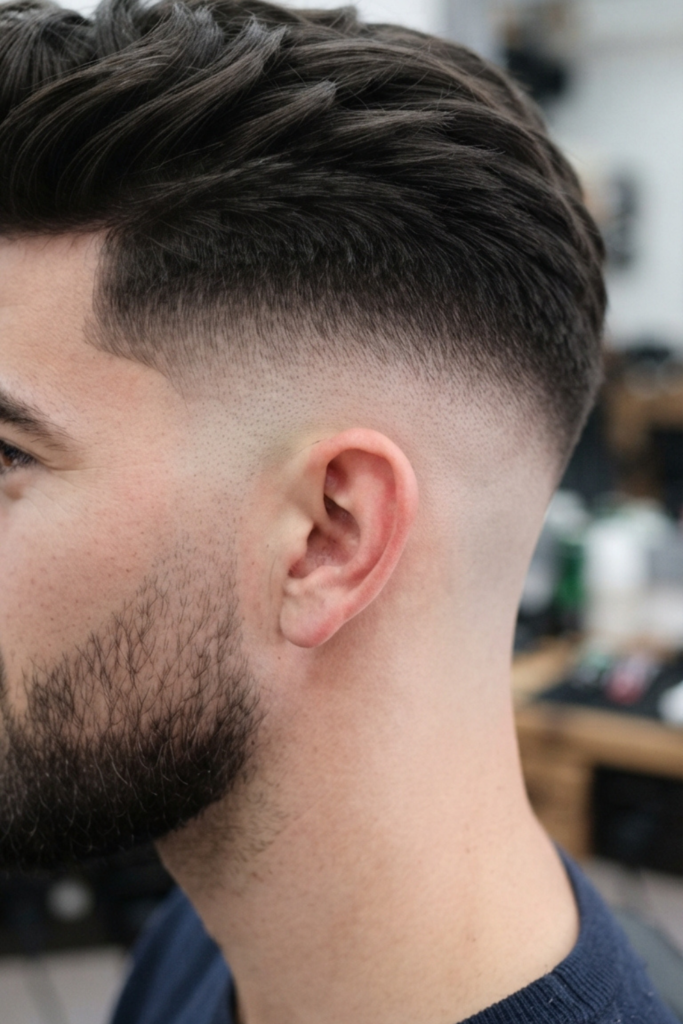
The sides fade all the way down to bare skin rather than stopping at a short guard length. It’s the crispest, most barbershop-fresh-looking version of any fade.
Best for: Straight to wavy hair, guys who don’t mind frequent visits
Ask for: “Fade it down to skin, blend it clean with no visible lines”
Style with: Lightweight matte paste on top to avoid an overly slick contrast Maintenance: every 2 weeks
5. Drop Fade
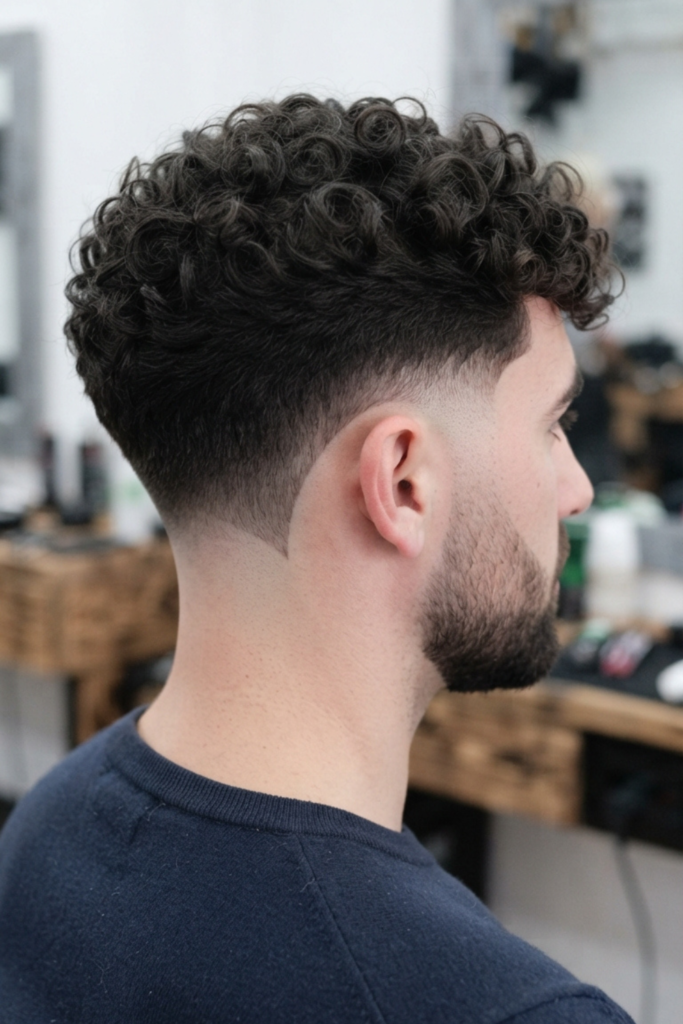
The fade line curves downward behind the ear instead of running straight around the head, following the natural curve of the skull. It adds more shape and works especially well with curly or voluminous tops.
Best for: Curly hair, round and oval faces
Ask for: “A drop fade, let it curve down behind my ear, don’t keep it straight”
Style with: Curl cream or light gel to define the top Maintenance: every 3 weeks
Fades by Hair Texture
6. Taper Fade (Straight Hair)

A taper is technically a shorter, gentler version of a fade — it thins the hair gradually without necessarily going down to skin. On straight hair, it creates the cleanest, most seamless blend of any texture.
Best for: Straight and fine hair, business-casual settings
Ask for: “A taper fade, keep some length at the sides, nothing too aggressive”
Style with: Light pomade for shine without heaviness Maintenance: every 4 weeks
Read also: 30 Best Haircuts for Men in 2026 (By Face Shape & Hair Type)
7. Fade with Curls on Top

The sides fade short while natural curls are left long and full on top, creating high contrast between the tight sides and loose volume above. This is one of the most photographed fade styles right now.
Best for: Wavy to curly hair (2B-3B)
Ask for: “Fade the sides, don’t touch my curls on top — just clean up the shape”
Style with: Curl-defining cream, applied to damp hair Maintenance: fade every 3 weeks, curls trimmed only occasionally
8. Fade for Coily/4C Hair
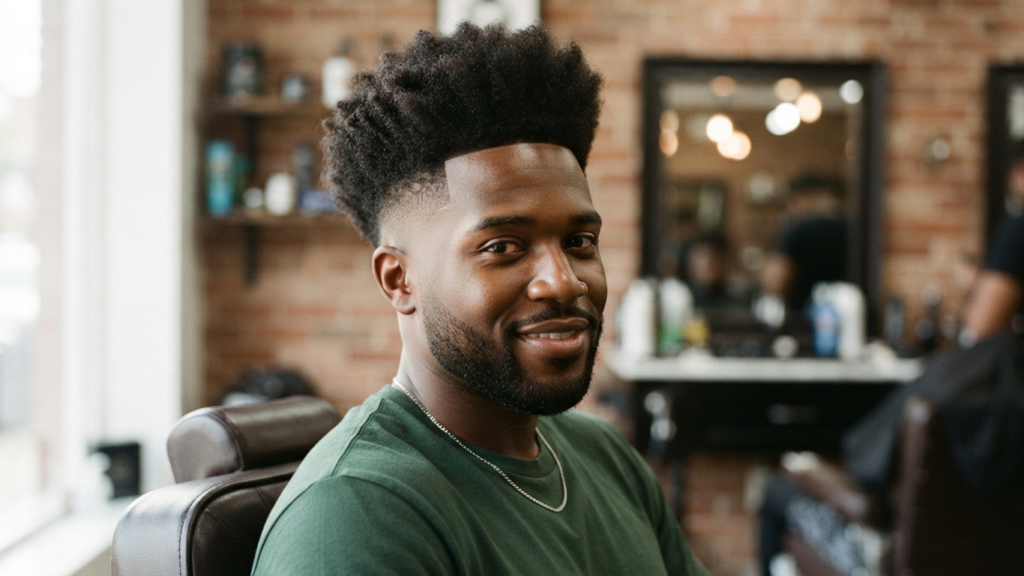
This requires a barber experienced with coily textures — the fade needs extra blending passes to avoid a visible ridge where the curl pattern changes. Done right, it’s one of the sharpest-looking fades of any hair type.
Best for: Coily and tightly-coiled hair
Ask for: “A fade with extra blending at the transition, I don’t want a hard line where my curl pattern changes”
Style with: A moisturizing curl butter or edge control for the hairline Maintenance: every 2-3 weeks
9. Textured Crop Fade

Short, choppy, textured hair on top paired with a fade underneath — low-effort styling because the cut itself does most of the work. It’s the closest thing to a “wash and go” fade.
Best for: Straight to wavy hair, guys who don’t want to style daily
Ask for: “A textured crop on top with a fade underneath, point-cut the ends”
Style with: Matte texture paste, worked in with fingers, not a comb Maintenance: every 4 weeks
Fades by Face Shape
10. Fade for Round Faces
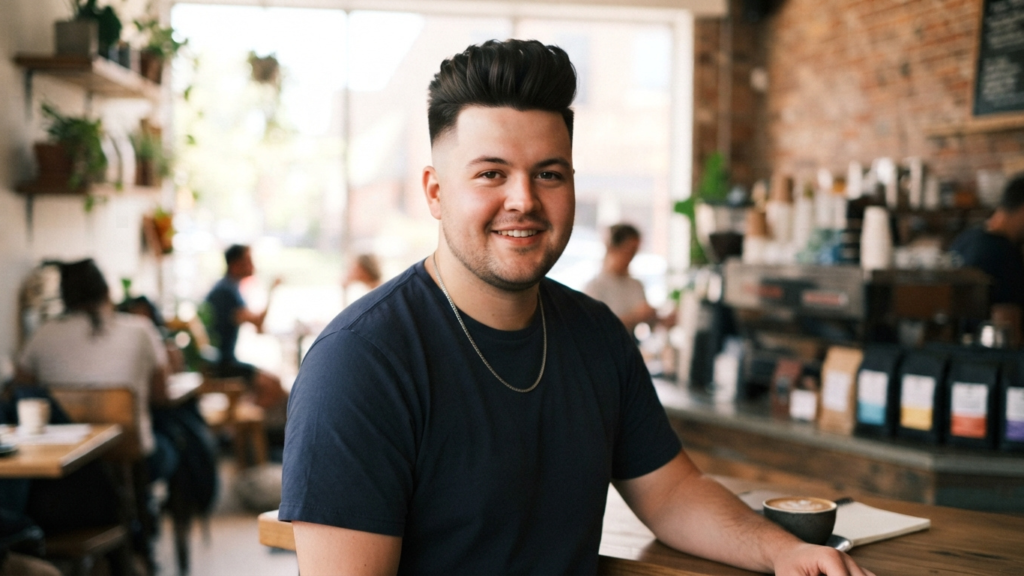
A high or drop fade with height on top elongates a round face, while a low fade tends to emphasize width — so height is your friend here. Avoid flat, closely-cropped tops that add roundness.
Best for: Round faces wanting more definition
Ask for: “A high fade with height on top, nothing flat”
11. Fade for Square Faces
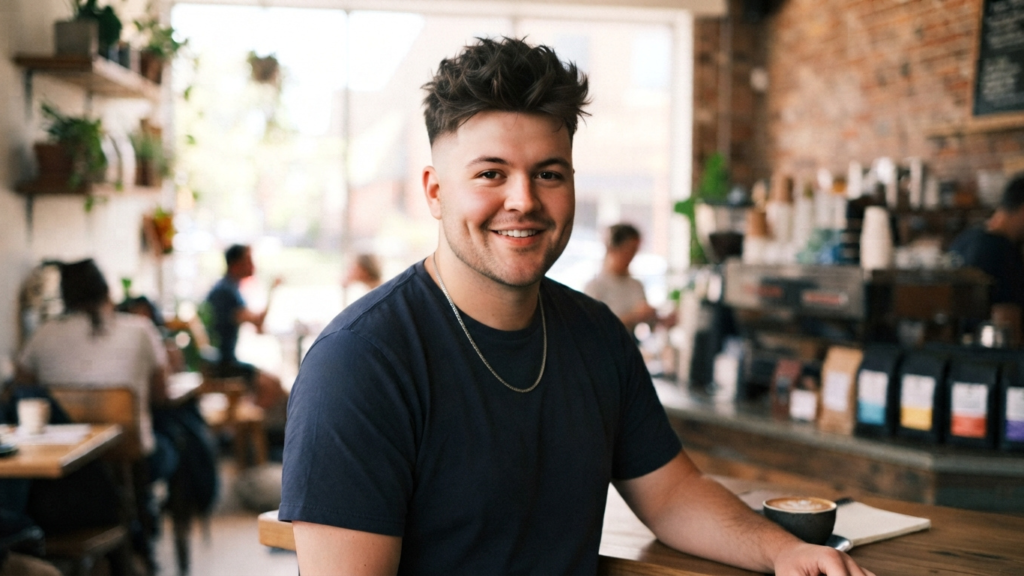
Square jaws pair well with almost any fade height since strong bone structure can carry contrast well — a mid or high fade with a textured top softens sharp angles slightly.
Best for: Square and angular faces
Ask for: “A mid fade with texture on top, soften the sides a bit”
12. Fade for Oval/Long Faces

Low to mid fades work best here since they don’t add extra vertical length the way a high fade can. A side part or fringe on top helps balance a longer face shape.
Best for: Oval and longer face shapes
Ask for: “A low fade with a side part on top”
Fades by Style & Formality
13. Classic Taper Fade with Side Part

The most traditional, boardroom-safe fade — short, clean, side-parted, barely-there gradient. It has stayed in barbershop rotation for decades because it never looks out of place.
Best for: Professional settings, fine to medium straight hair
Ask for: “A classic taper with a side part, keep it conservative”
Style with: Firm-hold pomade with a comb for a defined part Maintenance: every 3-4 weeks
14. Fade with Line-Up / Design
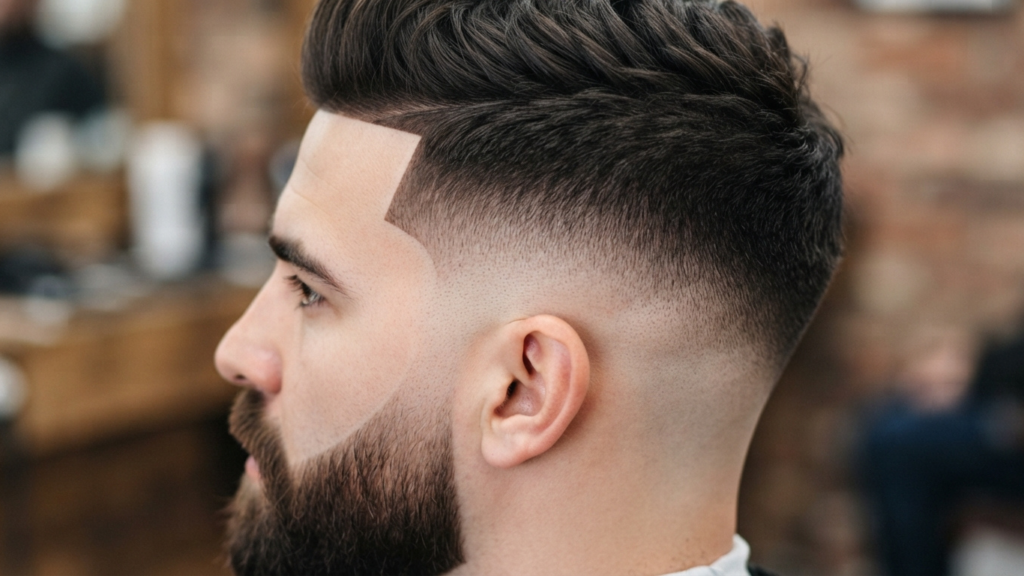
A skin fade combined with a razor-sharp hairline edge-up, sometimes with a shaved line or pattern cut into the side. It’s the most detail-oriented fade and needs the most upkeep to stay crisp.
Best for: Guys who want a statement look, thicker hair that holds a shaved line
Ask for: “Skin fade with a sharp line-up, [add: and a line/design on the side] if I want it” Style with: Beard/hairline balm to keep the edge-up looking fresh longer Maintenance: every 1-2 weeks
15. Mullet Fade
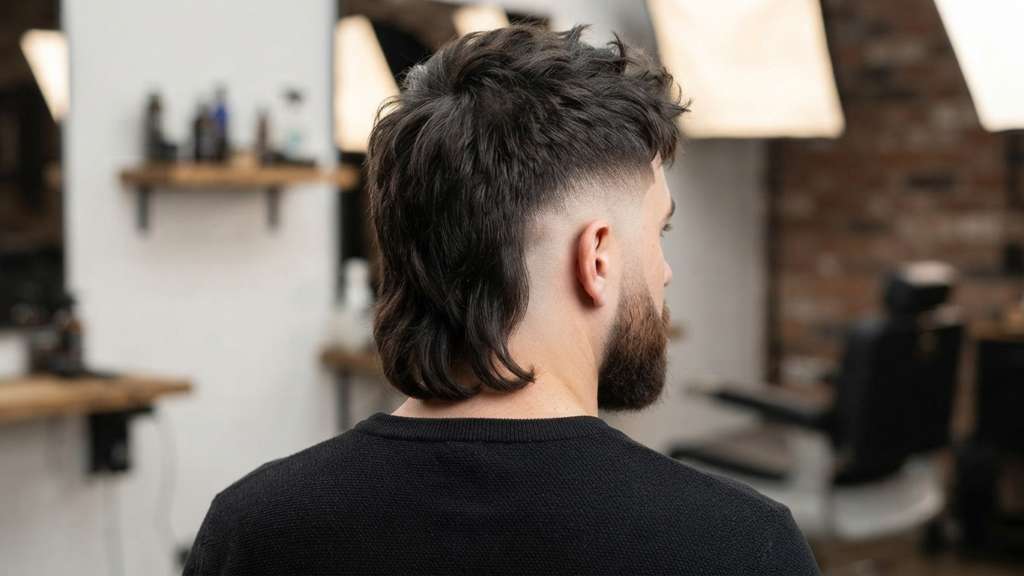
A short, faded front and sides with length deliberately left long at the back. What was a joke haircut five years ago is now a legitimate, barber-requested style.
Best for: Guys wanting a bold, non-traditional look, thicker hair
Ask for: “A fade at the sides, but leave length at the back — I want a mullet”
Style with: Light sea-salt spray for texture on the longer back section Maintenance: fade touched up every 3 weeks, back trimmed rarely
Fade Height Comparison Table
| Fade Type | Best Face Shape | Maintenance | Formality |
|---|---|---|---|
| Low Fade | Oval, Long | 4-5 weeks | Very professional |
| Mid Fade | Most shapes | 3-4 weeks | Professional to casual |
| High Fade | Round, Square | 2-3 weeks | Trendy, less formal |
| Skin Fade | Round, Square | 2 weeks | Sharp, statement-making |
| Drop Fade | Round, Oval | 3 weeks | Casual to stylish |
How to Ask Your Barber for a Fade (Script You Can Screenshot)
Barbers work faster and get better results when you’re specific. Use this script as a starting point and adjust the bracketed parts:
“I’d like a [low/mid/high/skin] fade. Start the blend [above the ear / at the temple / near the crown]. On top, I want it [longer/shorter] styled as a [crop/pompadour/quiff/curls left natural]. Please keep my hairline [natural / cleaned up with a line-up], and I’d like to come back in about [2-4] weeks.”
Bring a reference photo if you have one — even experienced barbers interpret “fade” differently, and a photo removes the guesswork.
Styling & Product Guide
- Matte clay — best for textured crops and natural finishes with no shine
- Pomade (water-based) — best for classic side parts and slicked tops, washes out easily
- Curl cream/butter — essential for curly or coily fades to define texture without frizz
- Texture paste — for messy, piece-y tops on crop or quiff fades
- Sea-salt spray — adds grit and volume, especially useful on mullet fades and longer tops
Apply product to towel-dried, not soaking wet, hair — it distributes more evenly and gives you more control over hold.
FAQ
How often do you need to get a fade haircut? Skin and high fades need a touch-up every 2-3 weeks to stay sharp, while low and mid fades can usually stretch to 4-5 weeks before the blend grows out noticeably.
What is the most low-maintenance fade? A low or mid taper fade is the most low-maintenance option since the gradient starts higher up and takes longer to visibly grow out compared to a skin fade.
Can you get a fade with curly hair? Yes — curly and coily hair can absolutely be faded, but it requires a barber experienced with textured hair to blend the transition smoothly and avoid a visible ridge.
What’s the difference between a taper and a fade? A taper gradually shortens hair without necessarily reaching the skin, while a fade goes further, blending all the way down to bare skin or a very short guard length.
Which fade is best for a round face? A high or drop fade with height left on top is generally best for round faces, since it adds vertical length and reduces the appearance of width.
Do fades work for receding hairlines? Yes — a fade often looks better on a receding hairline than longer styles because the shorter sides reduce contrast between thinning areas and the rest of the hair; a skilled barber can also shape the line-up to disguise recession.
Final tip: If you’re new to fades, start with a mid fade before committing to a skin or high fade — it’s the easiest to grow out gracefully if you decide it’s not for you.
Read also: